🏞️ Pinta Island Tortoise
🌍 What It Was
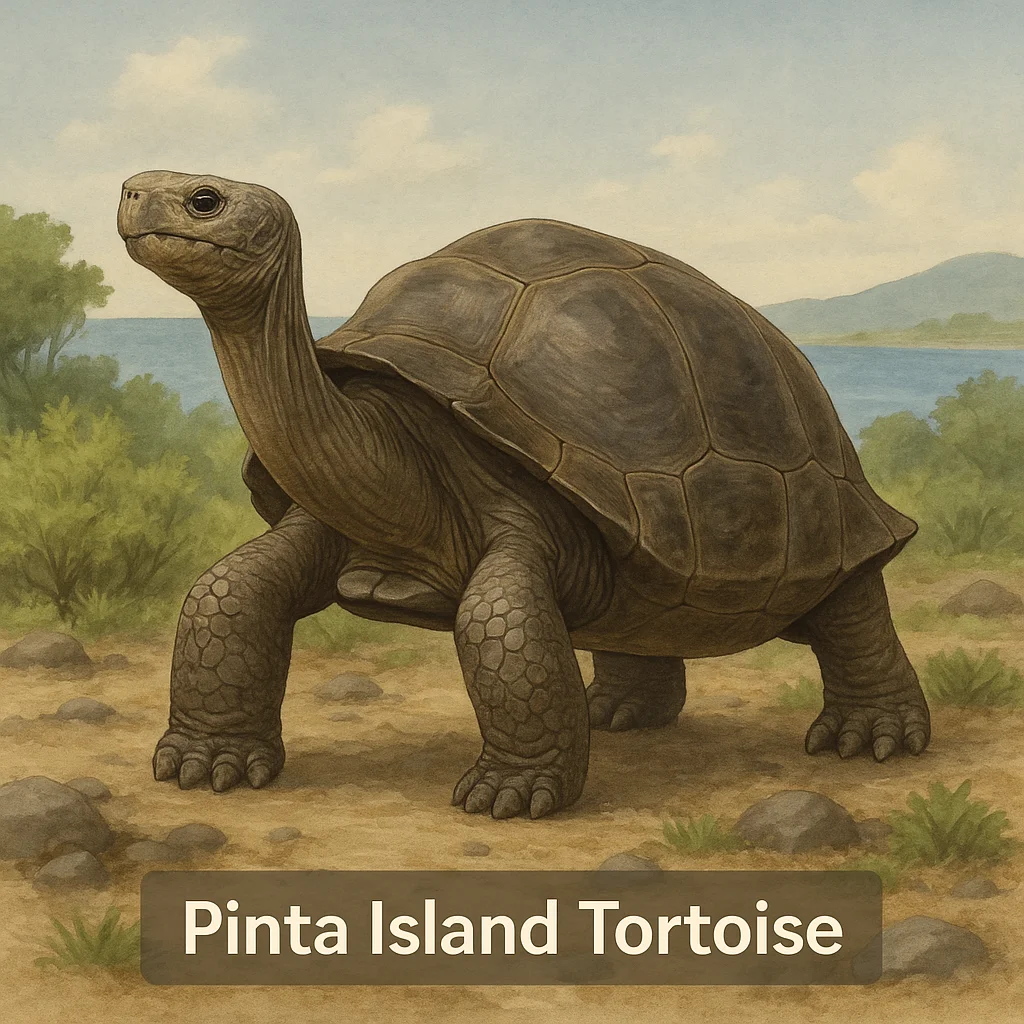
The Pinta Island Tortoise was a remarkable animal, known for being one of the giant tortoises that were once found on the Galápagos Islands. It was a species of tortoise that captured the fascination of scientists and nature enthusiasts alike due to its distinctive size and gentle demeanor.
The closest living relatives of the Pinta Island Tortoise are other Galápagos tortoises that dwell on different islands in the archipelago. These tortoises play an important role in their ecosystems, primarily by influencing the vegetation as they graze.
In this article, readers will learn about where the Pinta Island Tortoise lived, how it lived, when it disappeared, and the reasons behind its extinction. The insights shared will provide a clearer understanding of this species' historical context and the broader implications for conservation.
🧭 Where It Lived
The Pinta Island Tortoise, scientifically known as Chelonoidis abingdonii, was found exclusively on Pinta Island, which is part of the Galápagos Islands located in the Pacific Ocean. This isolated island provided a unique and distinct habitat for the tortoise.
Pinta Island is characterized by its volcanic landscape and diverse ecological zones ranging from arid lowlands to more vegetated highlands. The habitat of the Pinta Island Tortoise consisted mainly of these highland areas where they could find adequate food and shelter.
Being limited to a single island made the Pinta Island Tortoise extremely vulnerable to changes in its environment and human activities. This restricted range is a significant risk factor for many island species, leading to challenges in adapting to threats such as invasive species and habitat destruction.
🌿 Habitat and Daily Life
The climate on Pinta Island was moderate, featuring a mixture of dry and wet seasons. Conditions varied across the island, but overall, it supported a habitat that included ample vegetation and suitable nesting sites for the tortoises.
The diet of the Pinta Island Tortoise was herbivorous, consisting mainly of grasses, leaves, and cacti, which they would consume during their slow and steady foraging expeditions. Their low metabolism allowed them to survive on relatively sparse vegetation.
Breeding typically occurred in the drier seasons, with females laying several eggs in nest-like burrows dug into the ground. The hatchlings required little parental care, relying on instinct to navigate their environment from birth.
Interactions with other species were minimal; however, the tortoises could have had symbiotic relationships with certain birds that helped control pests by cleaning the tortoises' shells. Natural predators were uncommon due to the tortoises' size and the lack of native large predators on the island.
🧬 What Made It Unique
The Pinta Island Tortoise was known for its large size, with adult tortoises weighing over a hundred kilograms. Their domed shells and thick, scaly legs were adapted for moving through dense underbrush and navigating rocky terrains.
These tortoises played a crucial ecological role as mega-herbivores. By consuming large amounts of plant matter, they helped maintain the ecological balance on the island, preventing any one species of plant from becoming overly dominant.
While there is no extensive record of cultural significance, the tortoise became a symbol of conservation efforts worldwide, highlighting the importance of protecting vulnerable and endemic species.
⏳ When It Disappeared
The Pinta Island Tortoise was declared extinct in the "wild" after the death of the last known individual, Lonesome George, in 2012. Researchers believe the decline began in the mid-20th century, although exact dates and sightings are uncertain due to the remote nature of Pinta Island.
Prior reliable sightings date back several decades, emphasizing the challenge of monitoring isolated populations. Typically, a species is declared extinct only after thorough searches have failed to find any living individuals over considerable time.
Extinction in the wild signifies that while individuals may survive in captivity, no naturally reproducing populations exist in their original habitats. This distinction is crucial for understanding conservation priorities and strategies.
⚠️ Why It Went Extinct
The extinction of the Pinta Island Tortoise can be attributed to several interrelated factors, with habitat loss and fragmentation playing a significant role. Human activities such as settlement and agriculture altered the island's landscape, reducing suitable habitat for the tortoises.
Overexploitation through hunting severely depleted their numbers in earlier centuries. Sailors and settlers collected tortoises for food, significantly impacting their population. Invasive species introduced to the island, such as goats, competed for resources and damaged natural vegetation, further stressing the tortoises.
Like many island species, the Pinta Island Tortoise was particularly vulnerable to any shifts in climate or extreme weather events. These environmental pressures compounded the challenges they faced, ultimately leading to their demise.
🧩 How We Know (Evidence and Records)
Evidence for the Pinta Island Tortoise's existence and its extinction comes from several sources, including historical records, museum specimens, and field observations made by researchers over the years.
Genetic studies have provided insights into the distinctiveness of this tortoise species, reinforcing the importance of preserving its genetic legacy where possible. Photographic documentation, especially of Lonesome George, provides a visual testament to the species' unique characteristics.
Reliable records require careful validation, especially when dealing with species in remote habitats where sightings and collections are rare. Misidentifications or unverified reports must be scrutinized to ensure scientific accuracy.
🛡️ Could It Have Been Saved
Conservation actions that might have helped save the Pinta Island Tortoise include establishing protected areas on Pinta Island, implementing strict hunting restrictions, and controlling invasive species like goats.
Captive breeding programs could also have been a viable option if initiated earlier, maintaining genetic diversity and potentially reintroducing the species to its natural habitat. However, these efforts often came too late due to a lack of awareness and resources at the time.
Despite these challenges, conservation attempts for similar species have shown the importance of timely action, adequate funding, and international cooperation for protecting endangered species.
🔁 Are There Any Survivors or Close Relatives Today
The closest living relatives of the Pinta Island Tortoise are other species of Galápagos giant tortoises, which share many ecological and physical characteristics. They continue to inhabit several of the other islands in the Galápagos archipelago.
These relatives play similar ecological roles on their respective islands, contributing to seed dispersal and vegetation control. Conservation initiatives are ongoing for these tortoises to prevent further extinctions.
While no known reintroduction or captive breeding programs exist for the Pinta Island Tortoise specifically, efforts to restore ecosystems and support tortoise populations in the Galápagos remain a priority for conservationists.
❓ Common Questions and Misconceptions
Was it hunted to extinction? Hunting significantly reduced its numbers, especially during the 1800s when sailors harvested them for food.
Why didn’t it adapt or move? As an island species with limited mobility and habitat, adaption and migration were not feasible responses to rapid changes.
Could it still be alive somewhere? While considered extinct, occasional sightings in remote locations can occur, though none have been confirmed for this species.
What does 'declared extinct' actually mean? It indicates that no living individuals are known to exist in the wild after exhaustive searches.
What is the difference between endangered and extinct? Endangered means at a high risk of extinction, while extinct means no surviving individuals remain.
Why are island species so vulnerable? Island species often have small populations and are highly adapted to specific conditions, making them more susceptible to changes.
📌 Summary
- The Pinta Island Tortoise was a giant tortoise endemic to Pinta Island in the Galápagos.
- It lived exclusively on Pinta Island, a volcanic landscape with diverse habitats.
- The tortoise thrived in highland areas with moderate climate conditions.
- As herbivores, they foraged on grasses, leaves, and cacti.
- Their large size and dome-shaped shells were key physical adaptations.
- By the 2010s, the species was functionally extinct in the wild.
- Main extinction drivers included habitat alteration, hunting, and invasive species.
- Evidence of existence: museum specimens, photographs, genetic studies.
- Closest relatives are other Galápagos giant tortoise species.
- Conservation lessons highlight the need for early intervention.
- A memorable fact: "Lonesome George" became a symbol of conservation awareness.