🏞️ Ankylosaurus
🌍 What It Was
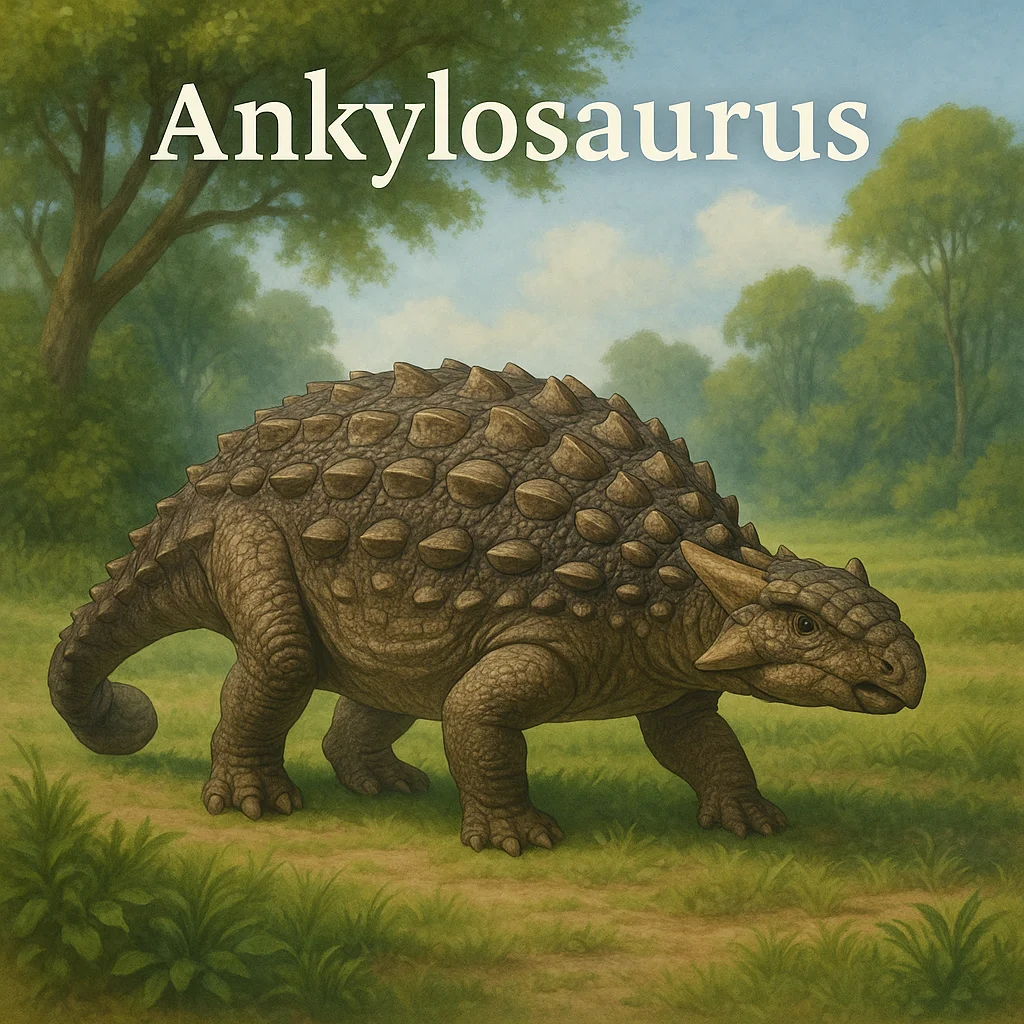
The Ankylosaurus was a heavily armored dinosaur known for its distinctive club-like tail. This herbivorous creature roamed the Earth during the late Cretaceous period and was part of a group called the Ankylosauridae. Ankylosaurus is often likened to a prehistoric tank due to its formidable defenses.
Modern relatives of the Ankylosaurus include reptiles and birds, though none share its unique body armor. As a keystone species in its ecosystem, Ankylosaurus played a significant role in the environment and its interactions with other species.
This article will explore the Ankylosaurus's habitat, lifestyle, physical adaptations, and the reasons behind its extinction, offering a window into the life of one of history's remarkable creatures.
🧭 Where It Lived
Ankylosaurus fossils have been primarily found in North America, particularly in the regions that are now Canada and the western United States. These areas provided a rich environment for various dinosaur species during the Cretaceous period.
The Ankylosaurus inhabited lush forests and open plains, where it could graze on low-lying vegetation. Its environment was diverse, with ample food resources and a climate suitable for supporting large herbivorous dinosaurs.
Though Ankylosaurus was not restricted to islands or highly localized areas, the changes in its habitat over millions of years, including climate fluctuations and geological events, played a role in its eventual extinction.
Understanding the geographic range of Ankylosaurus gives insights into its daily life and survival challenges in the ancient past.
🌿 Habitat and Daily Life
The Ankylosaurus lived in warm, temperate climates with distinct wet and dry seasons. These conditions supported diverse plant life, which was essential for its herbivorous diet. The dinosaur predominantly fed on ferns, cycads, and low-lying shrubs, foraging both day and night.
Its daily routine likely included prolonged periods of grazing, rest, and social interaction with other Ankylosauruses. It may have traveled in small groups for protection and to maintain access to food resources.
Ankylosaurus's reproduction involved laying eggs, much like modern reptiles. Parental care was minimal, with hatchlings being relatively independent shortly after emerging from their eggs.
Interactions with other herbivorous dinosaurs included competition for food, while predators like the Tyrannosaurus rex posed natural threats that Ankylosaurus could ward off using its armor and tail club.
🧬 What Made It Unique
Ankylosaurus was characterized by its massive, tank-like body and heavy armor made of large, bony plates covering its back and sides. These adaptations served as a defense mechanism against predators. The tail club, formed by fused bones, could deliver powerful strikes to ward off attackers.
The dinosaur's sense of smell and sight helped it find food and avoid danger in its environment. While not the largest dinosaur of its time, Ankylosaurus's physical adaptations made it one of the best-defended.
Though there is no direct evidence indicating cultural or historical significance to ancient human societies, its discovery and study have offered substantial insights into the evolutionary adaptations of herbivorous dinosaurs.
⏳ When It Disappeared
The Ankylosaurus went extinct around 66 million years ago, at the end of the Cretaceous period. This timeline coincides with the mass extinction event that wiped out approximately 75% of Earth's species, including all non-avian dinosaurs.
There are no records of Ankylosaurus sightings beyond this period, and fossil evidence conclusively places its extinction around the same time as its contemporaries like the Triceratops.
Because extinction declarations are based on the absence of evidence for prolonged periods following the last known existence, Ankylosaurus is considered extinct, with the debate primarily surrounding the exact causes and not the timing.
⚠️ Why It Went Extinct
Ankylosaurus's extinction resulted from a combination of factors rather than a single cause. The most significant driver was the drastic climate shifts and extreme events caused by a massive asteroid impact. This event led to rapid changes in temperature and a significant reduction in sunlight.
Habitat loss occurred due to the resultant fires and environmental upheaval, fragmenting the ecosystems and making survival more difficult for herbivorous dinosaurs.
The introduction of invasive species is not noted in this extinction event, but disease and competition with other herbivores may have played minor roles.
Ultimately, while Ankylosaurus was well-adapted to its environment, it could not withstand the catastrophic changes that led to the end-Cretaceous mass extinction.
🧩 How We Know (Evidence and Records)
The knowledge of Ankylosaurus primarily comes from fossilized remains, including bony armor plates, skull fragments, and vertebrae. These fossils have been found in North America and provide insight into its anatomy and ecology.
Paleontologists use carbon dating and stratigraphy to determine the age of these fossils, comparing them with other known specimens to confirm species identity and temporal placement.
Though fossils are the most direct evidence, additional information comes from related species, allowing scientists to make educated inferences about Ankylosaurus's lifestyle and extinction.
🛡️ Could It Have Been Saved
If Ankylosaurus had existed in a modern context, conservation efforts might have included habitat protection from deforestation and controlling climate change impacts. Habitat reserves could have provided safe havens for maintaining viable populations.
The sheer scale and rapid nature of the Cretaceous-paleogene extinction event, however, presented challenges that even the most comprehensive conservation efforts would struggle against.
No targeted conservation attempts were made at the time, as human civilization did not coexist with these ancient creatures, underscoring the importance of timely actions in contemporary species conservation efforts.
🔁 Are There Any Survivors or Close Relatives Today
While no dinosaurs like Ankylosaurus survive today, its closest living relatives are birds, which are considered avian dinosaurs. Crocodiles also share a common ancestry, though their evolutionary paths diverged significantly.
These living relatives offer insights into certain aspects of dinosaurian biology, such as reproduction and behaviors, providing a living connection to our planet's prehistoric past.
No reintroduction or captive breeding programs exist for extinct dinosaurs, but their legacy continues through the conservation of existing reptile and bird species that share evolutionary heritage.
❓ Common Questions and Misconceptions
Was it hunted to extinction? Ankylosaurus lived long before humans, so overhunting wasn't a factor in its extinction.
Why didn’t it adapt or move? The changes post-impact were sudden and severe, leaving little time for adaptation or migration.
Could it still be alive somewhere? It is highly unlikely. All evidence suggests it became extinct millions of years ago.
What does 'declared extinct' actually mean? It means there has been no confirmed evidence of the species for a considerable time after the last known sighting.
What is the difference between endangered and extinct? Endangered species are still alive but at risk of extinction, while extinct species have no surviving individuals.
Why are island species so vulnerable? Limited ranges and isolated ecosystems make island species more susceptible to changes and invasions.
📌 Summary
- Ankylosaurus was a heavily armored dinosaur with a club-like tail.
- It lived in North America during the late Cretaceous period.
- Its habitat included forests and open plains.
- Ankylosaurus was herbivorous, feeding on low-lying vegetation.
- Its distinctive armor and tail club served defensive purposes.
- Disappeared around 66 million years ago.
- Main extinction drivers were climate shifts and extreme events.
- Knowledge based on fossils and scientific estimations.
- Birds and crocodiles are its closest living relatives.
- Highlights the need for timely conservation actions today.
- Memorable as a "prehistoric tank" due to its heavy armor.