🏞️ Oil Spills: Long-term Impacts
🌍 What It Was
When we talk about oil spills, we're referring to the release of liquid petroleum into the environment, predominantly affecting oceans and coastal areas. Although we often think of them as accidents, they have long-lasting impacts on ecosystems and biodiversity.
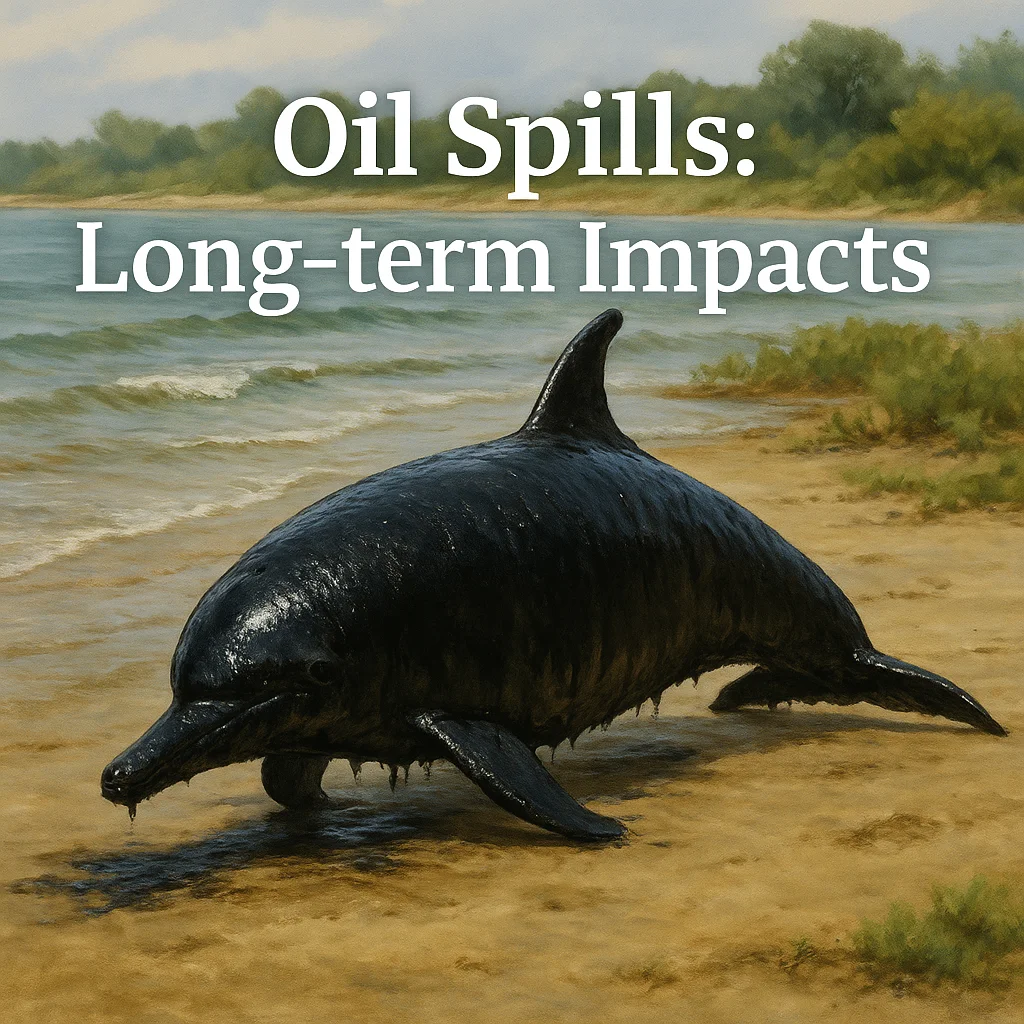
Oil spills affect a wide variety of animal species, from tiny plankton to large marine mammals, and even birds that depend on the sea for food. These spills disrupt the natural balance, affecting the food web and the health of ecosystems.
In this article, we'll explore the consequences of oil spills on biodiversity: where these spills commonly occur, how they affect different habitats, and what makes these impacts so severe and enduring. Understanding these factors helps us learn why some species disappear and others struggle to survive in heavily polluted environments.
🧭 Where It Lived
Oil spills can occur in any body of water affected by human activity, but they are most common in regions with heavy shipping traffic, like the Gulf of Mexico, the North Sea, and areas near oil drilling sites. These regions are known for their rich biodiversity, which can be severely impacted by even a single spill.
The habitats most affected by oil spills are coastal areas such as mangroves, estuaries, and beaches. These ecosystems often serve as nurseries for young marine life and are critical for the survival of many species.
Coral reefs, another vital habitat, can be poisoned by oil, disturbing the complex ecology and leading to widespread damage. Some species are highly localized, meaning they live only in one specific place, and this makes them particularly vulnerable when their habitat is contaminated by oil.
🌿 Habitat and Daily Life
The regions most affected by oil spills typically have a warm climate with moderate to high rainfall, supporting rich and diverse ecosystems. These conditions make them ideal habitats for a multitude of marine and coastal species, from birds and fish to mammals and invertebrates.
Marine animals have various feeding habits. Fish may forage in the open ocean, while crabs and mollusks feed along the sea floor, and birds dive for fish or scavenge along the shoreline. Oil pollution disrupts these activities by contaminating feeding grounds and poisoning food sources.
Reproduction is also affected. For instance, birds coated in oil may become unable to insulate themselves, and their compromised health impacts reproduction. Besides, oil can directly harm eggs and young through contamination of the nesting sites.
🧬 What Made It Unique
Oil spills often affect species with unique adaptations that allow them to thrive in their specialized habitats. For example, sea otters have dense fur for insulation in cold waters, but oil compromises this adaptation, leading to hypothermia.
Birds have waterproof feathers that can become matted and ineffective when coated with oil, leading to drowning. These adaptations usually enable them to survive and flourish, but oil spills turn these adaptations into vulnerabilities.
In addition to ecological roles such as seed dispersal or reef-building, many of these species have cultural or historical significance to local communities, which rely on them for food and traditions, making their loss more poignant.
⏳ When It Disappeared
While oil spills themselves are not species, the long-term impacts they cause can lead to the decline or extinction of affected animals. The exact timeline for such extinctions can vary widely depending on various factors, including the species' resilience and the scale of the spill.
For many species, the last confirmed recordings are related to large spills, like the Exxon Valdez spill in 1989, which had lasting impacts on marine life in Prince William Sound. Some species can move to less-affected areas temporarily, but if the spill affects their breeding and foraging habitats, recovery becomes difficult.
In some cases, species may become "extinct in the wild," meaning no known individuals remain in their natural habitat, although some may survive in captivity or through conservation programs.
⚠️ Why It Went Extinct
Oil spills drive extinction primarily through pollution, which poisons individual animals and contaminates their habitats, making survival difficult. Not only do spills kill directly through ingestion, inhalation, or contact, but they also cause long-term habitat loss and alteration.
This loss ties into habitat fragmentation, where the remaining clean areas are too small or isolated to support viable populations. Animals may not be able to find food, reproduce, or avoid predators as efficiently in fragmented habitats.
Of course, climate shifts and extreme weather can exacerbate the impacts of oil spills, altering ocean temperatures and currents, and making recovery post-spill even more challenging for affected species.
🧩 How We Know (Evidence and Records)
Scientists gather data on the impact of oil spills through various methods. Museum specimens preserved before or after a spill provide baseline data for comparison, helping us understand declines post-impact.
Field notes and photographs document the immediate aftermath in the affected regions, while genetics can trace how similar species adapt or migrate in response to loss of habitat due to spills.
Identifying and confirming affected species is complex, particularly when habitats are remote and records are sparse. In some instances, oral histories from local communities serve as crucial supplementary data.
🛡️ Could It Have Been Saved
Prevention and mitigation strategies could realistically improve outcomes for ecosystems affected by oil spills. Establishing protected areas and implementing stricter controls on shipping and drilling practices limit the risk.
Responding quickly with spill containment and clean-up technologies helps minimize damage, although it often comes too late for particularly sensitive species and habitats.
Some conservation programs have involved captive breeding and re-introduction but face the challenge of ensuring there's a suitable, safe habitat for these species to return to once oil spill effects subside.
🔁 Are There Any Survivors or Close Relatives Today
For many species affected by oil spills, close relatives may persist in other regions or have managed to survive smaller local populations. These similar species can take on ecological roles left vacant by their relatives.
For example, while specific fish populations may decline, others fill similar niches, maintaining—at least in part—the ecosystem's function in a changed environment.
In some cases, captive breeding and reintroduction efforts aim to replenish wild populations, but these projects are contingent on ongoing habitat restoration and protection from future spills.
❓ Common Questions and Misconceptions
Was it hunted to extinction? Typically, the impact of oil spills is not about hunting but pollution.
Why didn’t it adapt or move? Rapid changes caused by oil spills don't allow time for adaptation, and relocation options can be limited.
Could it still be alive somewhere? While unlikely, extinctions due to oil spills might leave undiscovered residual populations.
What does 'declared extinct' actually mean? It means that no individuals have been confirmed in the wild despite exhaustive searches.
What is the difference between endangered and extinct? Endangered species are at risk of extinction, but some individuals may still survive in the wild.
Why are island species so vulnerable? Isolation makes them uniquely adapted and often unable to compete or migrate in response to threats.
📌 Summary
- An oil spill is the release of liquid petroleum into the environment, often oceans.
- Most spills occur in regions with heavy shipping traffic.
- Habitats impacted include coastal areas, mangroves, and coral reefs.
- Marine species are disrupted in feeding and breeding due to contamination.
- Oil spills affect species with special adaptations, leading to vulnerabilities.
- The impacts of oil spills can lead to extinction, varying by species and region.
- Main extinction drivers are pollution and habitat loss from oil spills.
- Evidence of impact is collected via museum specimens and field notes.
- Close relatives of affected species often remain in other regions.
- Learning helps design mitigation strategies against future oil spills.
- The enduring damage underlines the importance of preventive conservation.