🏞️ Case Study: Pollution + Habitat Loss
🌍 What It Was
The animal in focus is the Baiji, a species of freshwater dolphin native to China. Known for its long, thin beak and pale coloring, the Baiji once roamed the Yangtze River with grace and agility.
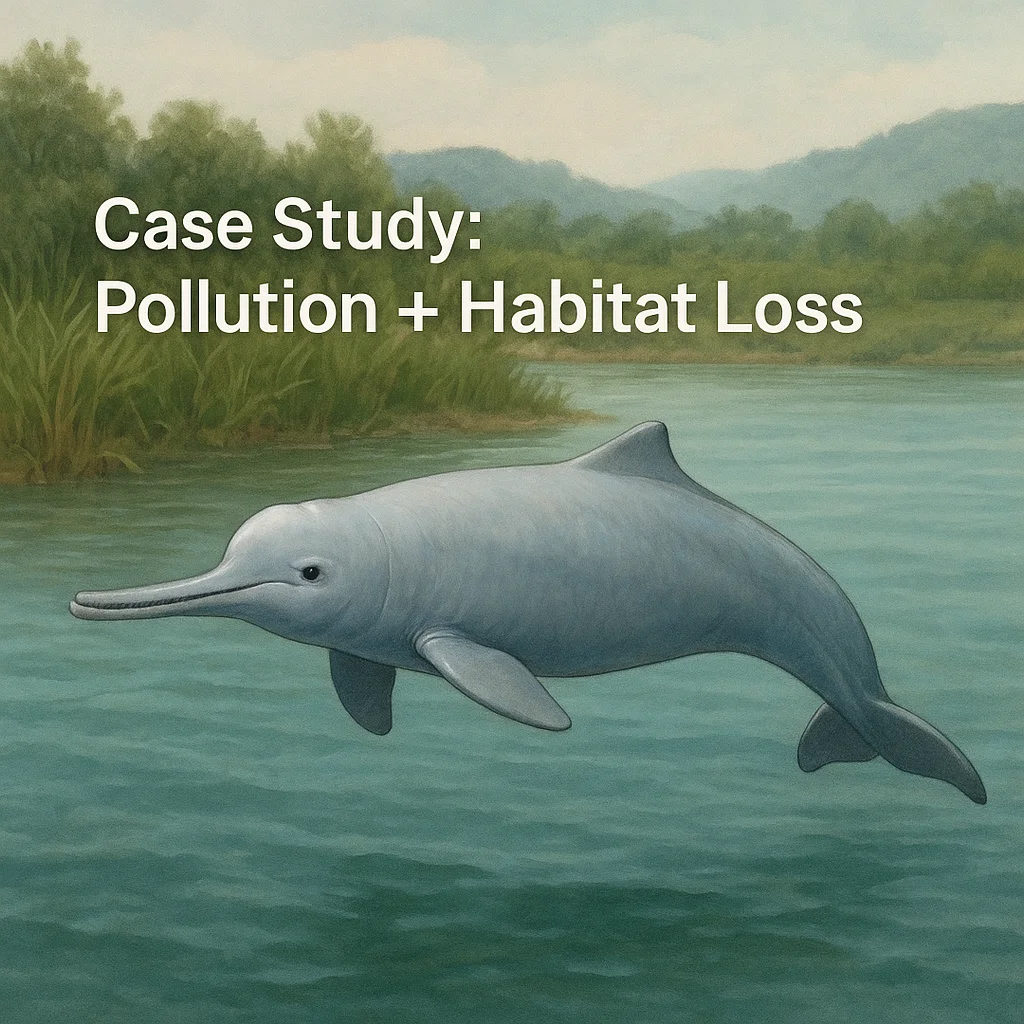
Often referred to as the "Yangtze River dolphin," the Baiji belonged to a small group of river dolphins, with the South Asian river dolphin being one of its closest living relatives. The Baiji played an important role in its aquatic ecosystem by maintaining the balance of the river's food web.
In this article, we will discover where the Baiji lived, its lifestyle, the reasons behind its extinction, and how this story serves as a cautionary tale for biodiversity conservation.
🧭 Where It Lived
The Baiji was endemic to the Yangtze River in China. Being endemic means it could only be found in a specific location, which was the middle and lower stretches of this long and significant river.
This unique dolphin depended heavily on the river's freshwater environment. It thrived in the Yangtze's slow-moving waters, which provided an abundant food supply and space for navigation.
The Baiji's survival was closely tied to the specific features of the Yangtze River. Its narrow habitat range made it particularly vulnerable to changes and disturbances, increasing its risk of extinction.
🌿 Habitat and Daily Life
The climate along the Yangtze River is generally temperate, with hot summers and cool winters, along with variable rainfall depending on the season. These conditions formed a rich ecosystem around the river.
The Baiji's diet mainly consisted of fish. It hunted using echolocation to navigate and locate prey in the often murky river waters. Baijis were known to travel in small groups or pods, exhibiting social behaviors that helped them avoid predators and efficiently search for food.
Breeding for the Baiji typically occurred in the first half of the year. Females would give birth to a single calf after a gestation period, caring for it closely during its early development. The species relied on a narrow band of river ecosystems, often competing with other aquatic creatures for food and territory.
🧬 What Made It Unique
The Baiji was known for its distinctive long snout and pale bluish-gray coloration. Its physical characteristics, including a high-pitched vocalization for echolocation, were well suited for life in turbid river waters.
Baijis played an ecological role as mid-level predators, helping to control fish populations in the Yangtze River. Additionally, they held cultural significance for local communities, often symbolizing the health of the river ecosystem.
⏳ When It Disappeared
The last confirmed sighting of the Baiji was in the early 2000s, with a survey in 2006 failing to locate any individuals. Despite unconfirmed reports of sightings in subsequent years, scientists have declared the species "functionally extinct."
Occasional anecdotal reports suggest the possibility of hidden survivors, but no concrete evidence supports their continued existence. As such, the Baiji serves as a sobering example of how ecological change can lead to disappearance.
Functional extinction indicates that the population is too small to sustain reproduction and viable offspring, marking a critical point beyond which recovery is nearly impossible without intervention.
⚠️ Why It Went Extinct
The Baiji's extinction was driven by multiple factors, with habitat loss and pollution being primary causes. The extensive construction of dams along the Yangtze River disrupted natural water flows and fragmented the habitat, severely limiting available territory.
Pollution from industrial activities was another significant threat. Contaminants polluted the river water, harming the Baiji's health and reducing fish populations, its primary food source. Boat traffic also increased, leading to collisions that injured dolphins.
While overfishing and hunting were not primary threats, they contributed indirectly by depleting fish stocks and increasing habitat pressure. Invasive species and climate changes further compounded these pressures, creating unsustainable living conditions.
🧩 How We Know (Evidence and Records)
Scientists used a variety of evidence types to study the Baiji. Historical records, museum specimens, and field surveys provided baseline data for its condition and numbers.
Photographs and sonar equipment aided in confirming sightings before the species' numbers dwindled to critical levels. Genetic analysis from collected samples has also helped to confirm identification, ensuring that mistaken identity did not skew conservation efforts.
The Yangtze's challenging conditions made in-field verification difficult at times. Consequently, gaps in evidence often arise from limited access to remote river areas and the dolphins' elusive nature.
🛡️ Could It Have Been Saved
The decline of the Baiji could potentially have been addressed through various conservation measures, like habitat protection and pollution reduction. Establishing protected zones along key river regions might have enhanced the dolphin's chances of survival.
Captive breeding was considered but faced several logistical and financial barriers. Unfortunately, the necessary actions were delayed by lack of resources and coordination, rendering many efforts unsuccessful by the time they were implemented.
Some late-stage initiatives aimed at reducing boat traffic and improving fishing practices met with limited success, primarily due to the scale and advancement of industrial activities along the river.
🔁 Are There Any Survivors or Close Relatives Today
With the Baiji now extinct, the only related species are other river dolphins like the South Asian river dolphin. These dolphins share some ecological roles and adaptations but inhabit entirely different regions.
Though no active reintroduction programs are underway for the Baiji, efforts to protect surviving river dolphin species involve habitat conservation and pollution control, indirectly honoring the conservation lessons learned from the Baiji's disappearance.
❓ Common Questions and Misconceptions
Was it hunted to extinction? No, hunting was not a major factor in its extinction.
Why didn't it adapt or move? It was highly specialized for its environment, making adaptation difficult.
Could it still be alive somewhere? It's unlikely; no confirmed sightings have emerged in decades.
What does "declared extinct" actually mean? It means exhaustive surveys failed to find any surviving members.
What is the difference between endangered and extinct? Endangered species still have surviving populations, while extinct species do not.
Why are island species so vulnerable? Limited space and resources make islands dependent on delicate ecological balance.
📌 Summary
- Species: Baiji, or Yangtze River dolphin
- Location: Yangtze River, China
- Habitat: Freshwater river environments
- Diet: Primarily fish
- Unique traits: Long snout, echolocation abilities
- Last known period alive: Early 2000s
- Main extinction drivers: Habitat loss, pollution
- How we know: Surveys, photographs, genetic analysis
- Closest relatives: South Asian river dolphin
- Key conservation lesson: Importance of timely action
- Takeaway: The critical need for habitat protection