🏞️ Agricultural Runoff and Dead Zones
🌍 What It Was
Agricultural runoff is a byproduct of farming activities where water from rain or irrigation carries fertilizers and pesticides from fields into nearby rivers, lakes, and eventually oceans. This runoff can contain excess nutrients such as nitrogen and phosphorus.
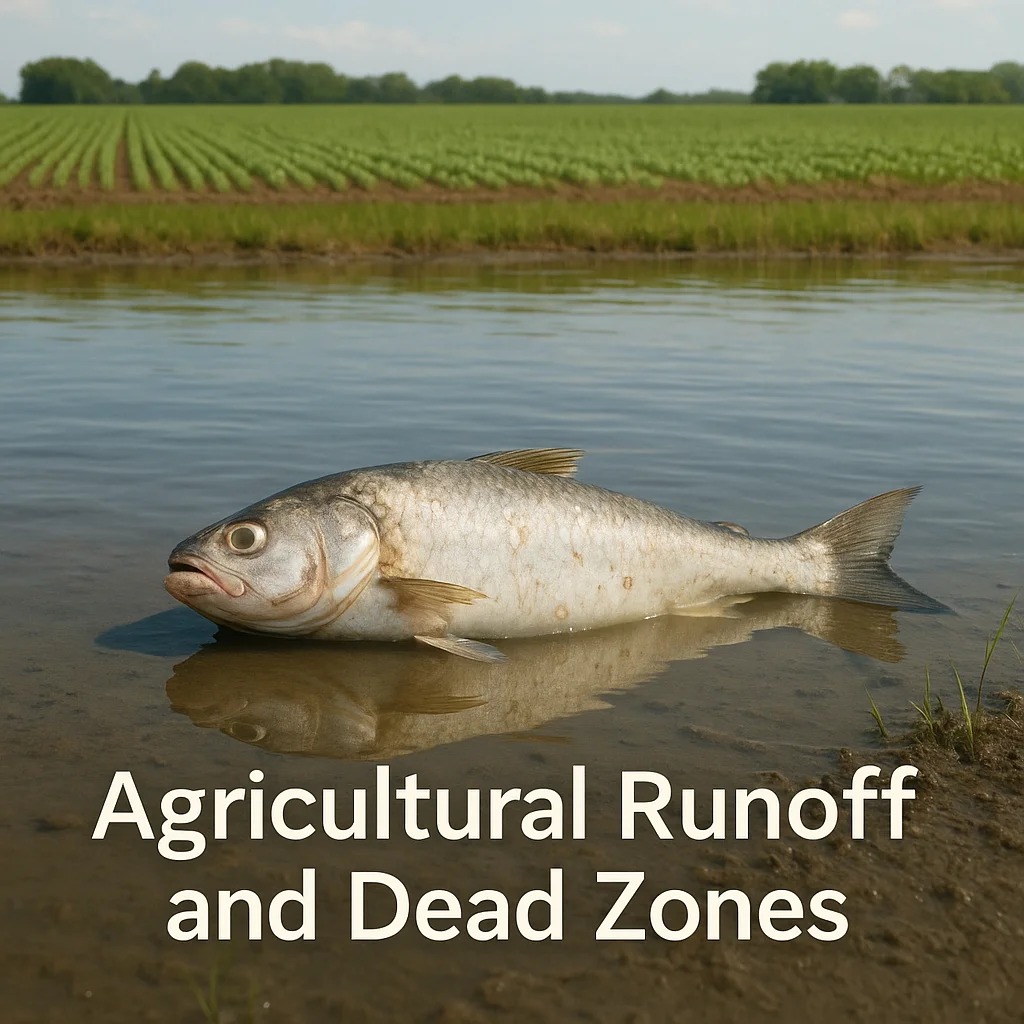
Dead zones, also known as hypoxic zones, are areas in water bodies where the oxygen concentration is so low that most marine life cannot survive. These zones are a direct result of nutrient pollution caused by agricultural runoff, among other factors.
In this article, readers will learn about what dead zones are, where they occur, how they affect ecosystems, and what measures can be taken to mitigate their impacts. We will explore how agricultural runoff contributes to the development of these areas and the broader ecological implications.
🧭 Where It Lived
Dead zones are prevalent in coastal areas where large rivers like the Mississippi meet the ocean. These regions receive significant agricultural runoff from extensive farming activities upstream. The Gulf of Mexico is one of the most well-known locations for these occurrences due to the Mississippi River Basin.
Another notably affected area is the Chesapeake Bay in the United States, influenced by pollution from its densely populated watershed, which includes urban and agricultural runoff. Similarly, dead zones also appear in other parts of the world, such as the Baltic Sea in Europe and regions affected by the Yangtze River in China.
These areas are severely impacted because the influx of nutrients from runoff into these shallow coastal waters facilitates an overgrowth of algae. When the algae die and decompose, they consume oxygen, drastically reducing levels available for marine organisms, which further accelerates the formation of dead zones.
🌿 Habitat and Daily Life
The environments impacted by dead zones vary in climate but typically include coastal and estuarine habitats where fresh and saltwater mix. These areas are critical breeding and feeding grounds for a diverse array of marine life including fish, crabs, and mollusks.
The nutrient-rich runoff promotes excessive algal blooms in these waters. While algae are a natural part of aquatic ecosystems, their explosive growth in nutrient-polluted water bodies disrupts the balance and can lead to significant oxygen depletion.
Fish and other marine life rely on oxygenated water, and when oxygen levels fall due to algal decomposition, these species can suffocate. This disrupts their breeding cycles, feeding behaviors, and overall survival, leading to changes in marine biodiversity and food web dynamics.
🧬 What Made It Unique
Dead zones are characterized by low oxygen levels and poor water quality. Physically, these areas may not appear very different from healthy marine environments. However, their unique aspect lies in the invisible chemical changes that occur due to excessive nutrient pollution.
The significant impact of these changes highlights the places' ecological roles as indicators of human impact on marine systems. They serve as potent symbols of how human practices, like agriculture, have far-reaching consequences for aquatic ecosystems.
Culturally, dead zones have gained attention in media and science as symbols of environmental neglect, pressing conversations around sustainable farming and the health of marine environments. Regions affected often depend heavily on fishing and tourism, driving home the socioeconomic significance.
⏳ When It Disappeared
The first reports of declining oxygen levels in coastal regions date back to the mid-1900s, closely following the rise of intensive agriculture and the use of synthetic fertilizers. Systematic research into these phenomena became prominent by the latter half of the 20th century.
Dead zones fluctuate with seasons, often expanding during the hotter summer months when increased temperatures and calm waters exacerbate oxygen depletion. Although not 'extinct' in the traditional sense, these areas experience temporary relief from mitigation efforts or natural alterations in temperature and water flow.
It's important to clarify that the goal isn't for dead zones to disappear but to significantly shrink and diminish in reoccurrence through sustainable practices and policies, highlighting a continuous battle rather than a fixed timeline.
⚠️ Why It Went Extinct
The primary driver behind the creation of dead zones is nutrient pollution from agricultural runoff. Fertilizers applied to crops are carried by rain into waterways, where nitrogen and phosphorus amplify algal blooms.
Other contributing factors include industrial pollution and urban runoff containing various contaminants, exacerbating the problem by adding different pollutant sources. Together, these pollutants create a compounded effect, stressing aquatic ecosystems.
Besides pollution, the reduction of natural wetlands further amplifies the problem. Wetlands act as nutrient buffers, and their degradation or conversion limits their ability to filter runoff effectively, highlighting the interconnected issues of habitat loss and pollution.
🧩 How We Know (Evidence and Records)
Evidence of dead zones primarily comes from water quality monitoring and scientific studies measuring oxygen levels. These research activities utilize advanced technology, like satellite imagery and remote water sampling via specialized drones.
Historical data, alongside contemporary observations, provides patterns and context for how these phenomena have developed and expanded over time. Comparing past and present data helps in identifying trends and potential future scenarios.
In addition to modern techniques, oral histories from communities dependent on fishing reflect changes in fish populations and other marine life, lending credence and urgency to scientific documentation.
🛡️ Could It Have Been Saved
Mitigation of dead zones involves managing agricultural practices to reduce nutrient runoff. Techniques like buffer strips, precision farming, and reduced chemical use are strategies that could significantly aid in recovery efforts.
Conservation actions often face trade-offs, such as balancing agricultural productivity with environmental health. Sustainable practices need alignment with economic viability to result in long-term success.
There have been successful cases of reducing dead zones through collaborative regional efforts, such as stricter regulations and public awareness campaigns, underscoring that restoration is achievable with concerted action.
🔁 Are There Any Survivors or Close Relatives Today
While 'survivors' in the context of species may not apply, ecosystems impacted by dead zones share similarities in their recovery potential. Methods used to combat dead zones can act as a blueprint for rehabilitating other polluted aquatic systems.
The focus is often on ecosystem-level recovery rather than individual species, with aquatic plants and species like oysters (natural water filters) playing roles in ecological restoration efforts.
As programs continue to develop sustainable agriculture and water management, parallels can be drawn with conservation efforts for endangered species and habitats, advocating for holistic environmental health.
❓ Common Questions and Misconceptions
Was it hunted to extinction? No, dead zones result from environmental conditions and not direct biological elimination.
Why didn’t it adapt or move? While some mobile marine species can move, many organisms, especially plants and sessile animals, cannot escape quickly declining oxygen levels.
Could it still be alive somewhere? Dead zones fluctuate and are not permanently 'extinguished,' but recovery requires significant effort.
What does 'declared extinct' actually mean? The term doesn't apply as it refers to permanent loss of species rather than environmental conditions.
What is the difference between endangered and extinct? Endangered refers to species at risk, while extinct means there are no living individuals remaining.
Why are island species so vulnerable? They often have limited ranges and specialized habitat needs, making them more susceptible to changes and stresses like those leading to dead zones.
📌 Summary
- Agricultural runoff involves excess nutrients from farming entering water systems.
- Dead zones occur in coastal areas where water bodies meet the ocean.
- Aquatic habitats such as estuaries are affected, leading to biodiversity loss.
- Nutrient pollution causes excessive algal blooms, depleting oxygen.
- Ecosystems show the interconnected impact of human activities.
- First recognized in the mid-1900s, dead zones are now globally tracked.
- Main drivers include nutrient pollution, habitat loss, and industrial runoff.
- Scientists use water monitoring and historical data to understand dead zones.
- Conservation efforts focus on sustainable agriculture and water management.
- The lesson highlights the need for integrated environmental approaches.
- Raising awareness and regulatory measures can aid recovery and prevention.