🏞️ The Fur Trade and Vanishing Species
🌍 What It Was
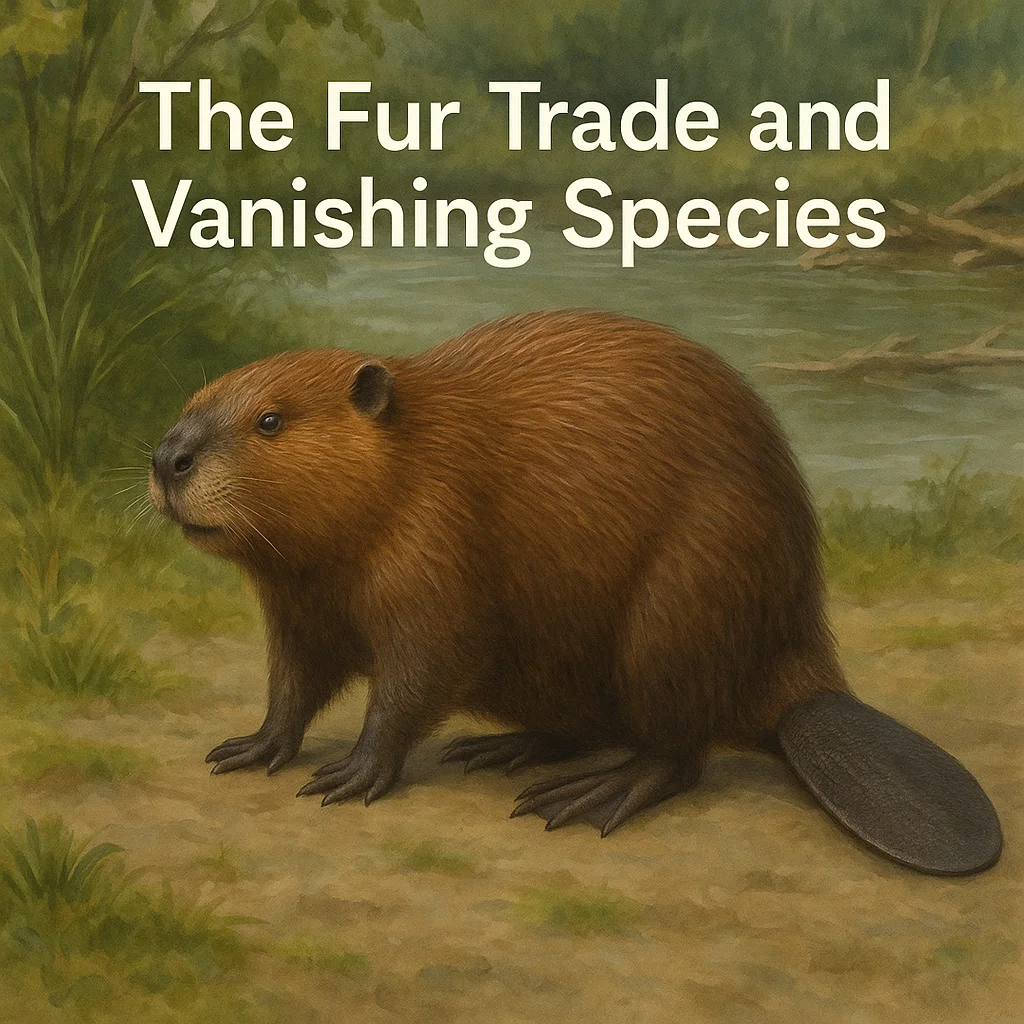
The fur trade, a significant economic activity from the 16th to the 19th centuries, involved the large-scale trapping and trading of animal pelts. Many animals fell victim to this industry, notably beavers, whose soft, water-repellent pelts were highly prized. Beavers are rodent species closely related to creatures like woodchucks and mice.
This trade played a pivotal role in the ecosystems where these animals lived. Beavers, for example, are considered ecosystem engineers because they create wetlands that offer habitats for a variety of species. This article explores the fur trade's impact on such species, touching on their habitats, behavior, and ultimate decline.
We will delve into the regions these animals inhabited, how their lives were shaped by their environments, the unique characteristics that made them targets, and eventually, the reasons behind their dwindling numbers and disappearance.
🧭 Where It Lived
Many fur-bearing animals, like the beaver, inhabited regions across North America and parts of Europe and Russia. These areas are typically characterized by a range of environments, from the temperate forests of Canada to the snowy landscapes of Siberia.
Beavers, for instance, are particularly adapted to riparian zones—areas adjacent to rivers and streams. These habitats provide the trees and vegetation they use for building dams and lodges, essential for their survival. The presence of water is crucial, as it aids in transportation and offers protection from predators.
Because these environments are unique and limited in their distribution, any disturbances pose significant risks to the species relying on them. Island or remote populations of fur-bearing animals, isolated by nature, faced higher risks due to their inability to migrate or adapt quickly to changing conditions introduced by human activity.
🌿 Habitat and Daily Life
The climates of these habitats are generally varied, with cold winters and mild summers being typical. Seasonal changes dictate the life patterns of these animals, such as mating and food storage. For beavers, colder months mean retreating into secure lodges with food collected over the warmer months.
The diet of beavers mainly consists of tree bark and aquatic vegetation. They are primarily nocturnal to avoid predators and spend their nights foraging. Building dams and lodges is a crucial activity that helps create new habitats and influences water flow, benefiting a range of aquatic and terrestrial species.
Reproduction for beavers involves a breeding season in late winter, leading to the birth of kits in the spring. Parental care is significant, with young staying with their family for several years to learn essential survival skills and social structures.
🧬 What Made It Unique
Beavers are distinguished by their large, flat tails and strong two-layered fur, adapted for their aquatic lifestyle. Their tail aids in swimming, while their dense fur provides insulation in cold water. These adaptations are critical for their role as keystone species within their ecosystems.
Besides their ecological role, beavers have special adaptations for gnawing and tree cutting, possessing large incisors and a diet tailored to fibrous materials. Their wetlands increase local biodiversity by providing habitats for other species.
Historically, beavers held cultural significance for various indigenous cultures who used every part of the animal for clothing, tools, and food—without driving them to extinction. This sustainable interaction was disrupted by the commercial fur trade.
⏳ When It Disappeared
The impact of the fur trade escalated during the 17th and 18th centuries, peaking when beaver populations began to decline sharply. Last confirmed records for many populations coincided with the late 1800s as trappers expanded deeper into the wilderness.
Uncertain records from remote areas meant that some populations could have persisted longer, but lack of sightings over time typically confirmed their local extinctions. Declaring a species "extinct" involves confirming no individuals are surviving in the wild, often after exhaustive searches fail to reveal any presence.
In certain areas, the species could be classified as "Extinct in the Wild" if a few individuals persisted in human-controlled environments, like zoos, without natural populations remaining.
⚠️ Why It Went Extinct
Multiple factors led to the decline of fur-bearing animals. Chief among them was overhunting due to the lucrative nature of the fur trade. Trappers relentlessly pursued these animals for their valuable pelts, leading to a drastic reduction in numbers.
Habitat loss and fragmentation, primarily from expanding agriculture and urbanization, also played a role. As forests were cleared, the essential environments for many species disappeared, reducing their ability to survive and reproduce.
Introduced species, such as competitive predators or invasive plants, altered the balance of ecosystems. For instance, novel predators could prey on young or unguarded individuals more effectively than native predators.
Although less documented, climate shifts and extreme weather events further challenged these species, altering their habitats and available resources in unpredictable ways that hindered their recovery.
🧩 How We Know (Evidence and Records)
The evidence documenting the decline of fur-bearing species comes from a diverse range of sources. Historical records from trappers, field notes, and trading logs provide initial insights into population trends.
Museum specimens, cataloged over centuries, offer physical evidence of past populations, helping researchers identify distinct features and confirm extinction events. These specimens are crucial for genetic studies, offering a biological timeline.
Modern science also involves verifying species identity through genetic comparisons, assisting in distinguishing species that are physically similar but genetically distinct. Oral histories and photographs provide additional context, capturing human perspectives and observations that complement scientific data.
🛡️ Could It Have Been Saved
Realistic conservation efforts that might have aided fur-bearing species include setting quotas on hunting and creating protected reserves that preserve critical habitats. The lack of early restrictions allowed the industry to decimate populations unchecked.
Control of invasive species and habitat restoration could have bolstered natural populations by decreasing competition and providing stable environments. Unfortunately, action often came too late, as population numbers dwindled beyond recovery.
In later years, attempts to introduce legal hunting quotas met with varying success. Some unsuccessful efforts included the reintroduction of species into areas with suitable habitats but lacking the original genetic diversity needed to sustain new populations.
🔁 Are There Any Survivors or Close Relatives Today
Close relatives of many fur-bearing species remain, such as the beaver family, Castoridae, which includes the North American and Eurasian beaver species still seen today. These animals share traits such as dental adaptations for gnawing and a propensity for building dams.
Ecological replacements, in some situations, fill similar roles. For example, other wetland mammals contribute to habitat creation, although perhaps not as efficiently as beavers.
Where captive breeding programs exist, they aim to bolster numbers and reintroduce individuals into safe, managed areas. However, this is dependent on addressing the original threats that caused declines in the wild.
❓ Common Questions and Misconceptions
Was it hunted to extinction? Many fur-bearing species faced overhunting, a major contributor to their decline.
Why didn’t it adapt or move? Their specialized adaptations and isolated habitats limited their ability to adapt quickly to rapid changes.
Could it still be alive somewhere? While remote populations sometimes persist, extensive searches usually confirm extinctions.
What does 'declared extinct' actually mean? It means that no known individuals exist in the wild, despite efforts to locate them.
What is the difference between endangered and extinct? "Endangered" species are at high risk of extinction, while "extinct" species are already gone.
Why are island species so vulnerable? Isolation, small populations, and limited genetic diversity make island species more susceptible to threats.
📌 Summary
- The fur trade involved hunting animals for their valuable pelts.
- Main regions affected included North America, Europe, and Russia.
- Animals depended on forested riparian zones.
- Beavers were primarily nocturnal, building dams and structures.
- Special adaptations included large incisors and water-repellent fur.
- The last known periods of decline were in the 1800s.
- Main extinction drivers were overhunting and habitat loss.
- Evidential records include historical documents and museum specimens.
- Closest living relatives are modern beaver species.
- Conservation can learn from such histories to prevent future extinctions.
- Remember the delicate balance required to preserve species and habitats.