🏞️ Illegal Wildlife Trade: A Modern Pressure
🌍 What It Was
The illegal wildlife trade encompasses the unlawful harvest and trade of live animals, plants, or their derivatives. This trade includes a vast array of species ranging from tigers and rhinos to lesser-known animals like pangolins and certain reptiles. These species are often targeted for their perceived medicinal value or as exotic pets.
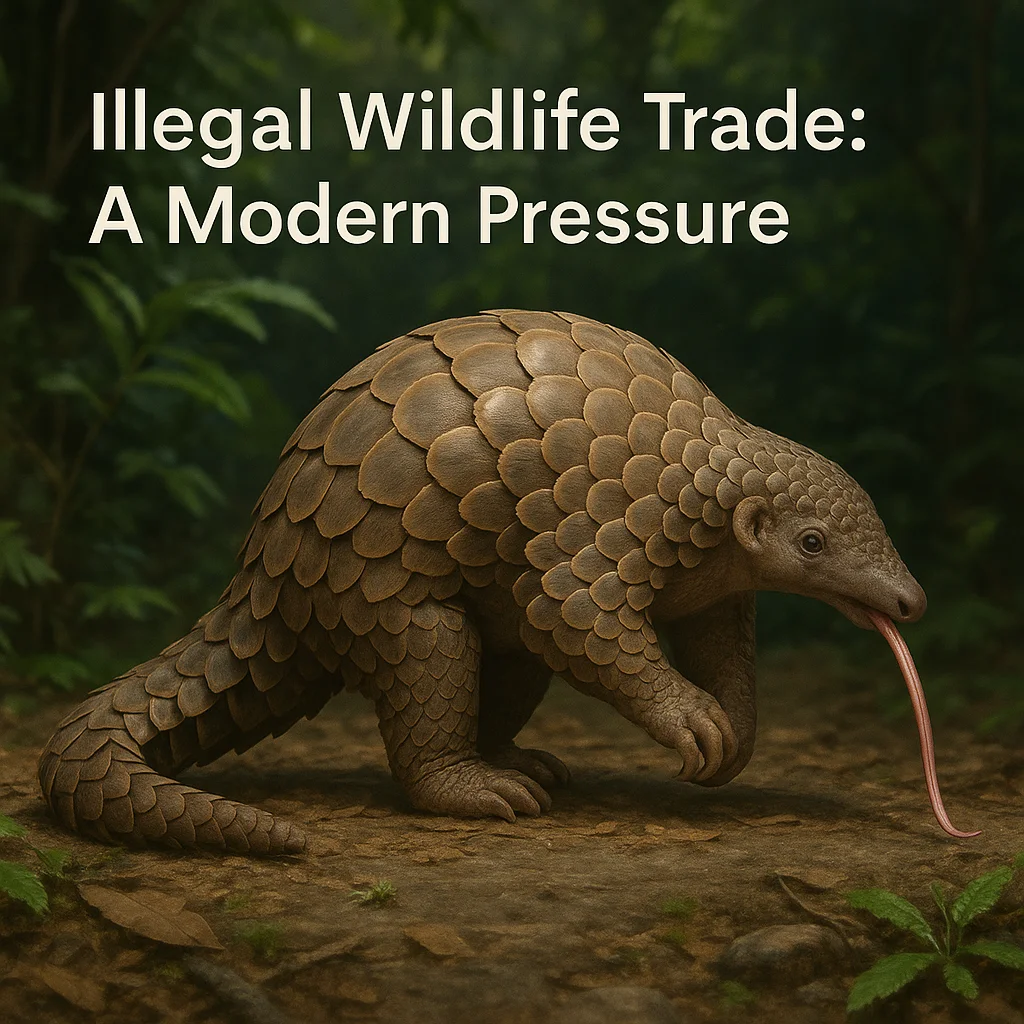
This illicit trade impacts biodiversity across the globe, affecting the balance of ecosystems. Close relatives of animals involved in the wildlife trade often suffer indirectly from habitat destruction or population changes prompted by the removal of key species.
In this article, you will learn about the geographic spread of the illegal wildlife trade, the habitats affected, the unique animal traits that make them targets, the timeline of species impact, and the multi-faceted reasons behind their decline.
🧭 Where It Lived
Illegal wildlife trade affects animals across multiple regions around the world. African elephants, for instance, are spread across the savannahs and forests of Africa, while tigers roam the jungles of Asia. The demand for exotic pets also targets species native to South America, such as parrots and certain reptiles.
Many of these species are found in biodiverse regions that are quickly losing habitat due to human activities. Forests, wetlands, and coastal regions are particularly susceptible. These vulnerable habitat types often host a variety of species under threat from human encroachment and exploitation.
Species with limited geographic ranges, such as those found on islands, face a heightened risk. Isolated populations cannot easily recover when numbers are diminished, whether by poaching or habitat destruction.
🌿 Habitat and Daily Life
The climate and environment of habitats affected by illegal trade vary considerably. Tropical climates in rainforests provide the lush vegetation necessary for many species, while savannahs offer the grasslands needed for large herbivores.
Diet and foraging habits denote how these species interact with their environment. Herbivores may graze on specific plants, while carnivores hunt native fauna. Social structures, including pack or herd behavior, affect how they forage or migrate together.
Reproduction and life cycles can be complex. Some species have long gestation periods and few offspring, which limits their capacity to recover quickly from population declines. Others may have intricate mating rituals or seasonal breeding times.
🧬 What Made It Unique
Physical traits like size, fur patterns, or brightly colored feathers make certain animals targets for illegal trade. These attributes, while beneficial for survival and adaptation, unfortunately, make them attractive to poachers and traders.
Certain species have ecological roles such as seed dispersal or controlling prey populations. This balance can be disrupted when key species are over-exploited.
Many animals are also part of cultural or historical traditions, and their parts are often used in traditional medicine or as status symbols, increasing their vulnerability to illegal trade.
⏳ When It Disappeared
The timeline of illegal wildlife trade's impact on species is ongoing, with some species losing significant numbers rapidly, while others face a slow decline over decades. The declaration of a species as "extinct" follows a period during which no sightings or evidence of the species can be confirmed.
For some species, the last confirmed records are recent, such as certain rhinoceros species declared extinct in the wild but surviving in captivity. The process to declare extinction is careful, often involving multiple checks and extensive surveys in known habitats.
With some species, there remains a degree of uncertainty. Remote or inaccessible habitats can prevent comprehensive surveys, leaving room for hope that viable populations might exist undetected.
⚠️ Why It Went Extinct
Multiple factors contribute to the extinction crisis exacerbated by illegal trade. Habitat loss and fragmentation alter environments, causing species to lose the natural spaces required for survival. Forests and wetlands disappear at alarming rates, impacted by logging, agriculture, and urbanization.
Overhunting and collection for trade severely deplete populations. Animals with specific features, whether for ornamentation or perceived medicinal properties, are captured and killed in large numbers.
Introduced species, often brought in by human activities, can become invasive, competing with native species for resources. Invasive predators can also pose direct threats, impacting the survival of indigenous animals.
Climate change exacerbates these issues, causing shifts in weather patterns that lead to extreme events and altered habitats. Such changes can make existing conditions unsuitable for certain species, further stressing populations.
🧩 How We Know (Evidence and Records)
Multiple evidence types help scientists track illegal trade impact and species decline. Museum specimens, scientific field notes, photographs, and even oral histories provide valuable data points.
Genetic tools now allow for the tracing of animal products through DNA sequencing, providing a method to verify and trace illegal trade activities.
Some species are challenging to confirm due to their elusive nature or habitation in difficult-to-access environments, adding complexity to conservation efforts.
🛡️ Could It Have Been Saved
Conservation actions such as habitat protection, hunting limits, and captive breeding might have mitigated some impacts. Enforcing anti-poaching measures and creating wildlife corridors can help decrease pressures on vulnerable species.
Trade-offs, such as the resources needed for enforcement and management, often delay effective actions. In many cases, by the time extensive conservation efforts are attempted, populations are already critically low.
There are instances where late conservation attempts have had success, often involving multiple nations and strict international cooperation.
🔁 Are There Any Survivors or Close Relatives Today
Often, close relatives of traded species survive, but they may face similar threats. For example, various ungulates share the habitat and behaviors of frequently poached counterparts, requiring similar conservation actions.
Ecological replacements, such as other apex predators or herbivores, can sometimes fill the niches left in ecosystems, but they do not fully substitute in biodiversity loss terms.
Reintroduction and captive breeding programs occasionally offer hope for species recovery, though they are challenging and resource-intensive endeavors.
❓ Common Questions and Misconceptions
Was it hunted to extinction? Illegal wildlife trade combined with other factors contributes significantly to population declines, sometimes leading to extinction.
Why didn’t it adapt or move? Many species have specific habitat needs or face barriers preventing movement to new areas, making adaptation or migration difficult.
Could it still be alive somewhere? While unlikely for most declared extinct species, the possibility remains if uncharted territories haven't been fully explored.
What does 'declared extinct' actually mean? It indicates that after thorough searches, no individuals have been found for a defined period, and it's unlikely any survive.
What is the difference between endangered and extinct? Endangered species are at high risk of extinction but still have living members, while extinct species have no surviving individuals.
Why are island species so vulnerable? Island species often lack defenses against new predators or competitors and face limited space and resources.
📌 Summary
- Illegal wildlife trade includes the illicit harvest of live animals and plants.
- Affects diverse regions, including Africa, Asia, and South America.
- Habitats impacted include forests, savannahs, and wetlands.
- Targeted species often have unique physical traits or ecological roles.
- Cultural value increases demand for certain animal parts.
- Extinction occurs through a combination of trade and habitat loss.
- Multiple causative factors affect survival and reproduction.
- Species disappearance supported by various forms of evidence.
- Relatives and ecological replacements sometimes fill roles.
- Conservation enforced too late often leads to milestones missed.
- Essential takeaway: biodiversity protection is vital for ecosystem health.