🏞️ Bycatch and Unseen Marine Losses
🌍 What It Was
Bycatch refers to the unintentional capture of non-target species such as dolphins, turtles, and seabirds during commercial fishing activities. It is a significant issue in the marine environment due to its impact on species that are not the intended targets of fishing operations.
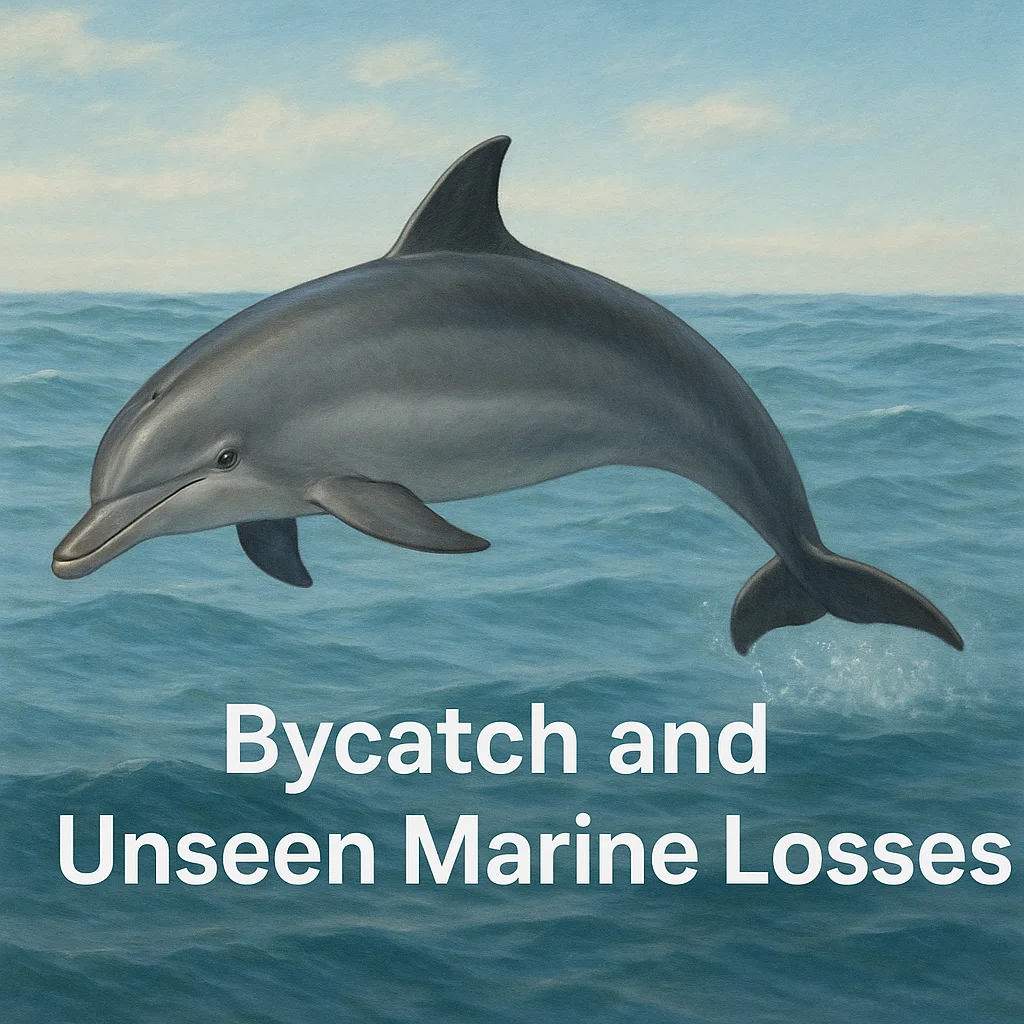
These affected animals often play crucial roles in their ecosystems, such as maintaining the balance of marine food webs. Their closest living relatives are often better-known species like whales, sea turtles, and common seabirds, which can give us some insight into their function within the marine ecosystem.
This article will help you understand where these bycatch incidents primarily occur, their impact on marine life, and why these losses often go unnoticed. We will cover the habitats they inhabit, their daily activities, key characteristics, the timeline of their decline, and the reasons behind their invisible disappearance.
🧭 Where It Lived
Bycatch occurs in oceans worldwide, but certain regions are more affected due to intensive fishing practices. Some of these regions include the North Atlantic, the Pacific Ocean, and parts of the Indian Ocean. Each of these areas boasts rich marine biodiversity.
Many marine creatures that fall victim to bycatch inhabit diverse ecosystems such as coral reefs, open ocean, and coastal shallows. These habitats offer food, breeding grounds, and protection from predators. Unfortunately, they are also the settings for extensive fishing operations.
Species living in isolated or narrow ranges, like island-dependent sea birds or localized fish populations, face heightened risks because any disturbance or removal can have a dramatic and immediate impact on their numbers. This isolation makes them less resilient to external threats.
🌿 Habitat and Daily Life
The habitats prone to bycatch are generally characterized by moderate to warm temperatures and varying levels of precipitation. Oceans can feature drastic seasonal changes, with migrations related to breeding or feeding.
Animals caught as bycatch rely on specific diets such as plankton, smaller fish, crustaceans, or even marine plants. Their hunting techniques are adapted to these needs, whether it's diving into the depths or skimming the surface.
Most species reproduce seasonally, and life cycles may include migrations to suitable breeding sites. Parental care varies, with some providing substantial help in raising the young, while others offer minimal attention after birth.
Interactions with other species include both predator-prey relationships and more complex ecological roles like seed dispersal underwater, supporting coral growth or controlling prey populations.
🧬 What Made It Unique
Many marine species vulnerable to bycatch have unique physical traits such as streamlined bodies for efficient swimming or specialized beaks and fins suited to their environment. These adaptations are crucial for survival in their natural habitats.
Special senses like echolocation in dolphins or acute vision in sea birds help them thrive. Additionally, these species play vital ecological roles, such as maintaining fish populations and health of marine ecosystems.
Some of these species hold cultural and historical value, symbolizing freedom or representing important food sources in various human cultures without any romanticizing.
⏳ When It Disappeared
The disappearance of marine species due to bycatch is often gradual and unnoticed. Last confirmed records might be decades or years old, and sightings can be sparse. Extinction is typically declared when thorough assessments show no evidence of the species' existence in the wild.
Uncertainties can arise from poor records, remote and challenging habitats, and misidentifications of surviving individuals. These factors complicate the confirmation of extinction status.
Some species are declared "Extinct in the Wild," meaning they only exist in captivity or controlled environments, highlighting the gravity of their loss.
⚠️ Why It Went Extinct
The primary drivers of marine species' extinction through bycatch include habitat loss, overfishing, invasive species, disease, climate change, and pollution.
Habitat loss from human activities reduces available living spaces and breeding grounds. Overfishing depletes vital food sources and can cause direct harm. Bycatch can also involve introduced or invasive species capturing native species.
Diseases, often exacerbated by environmental stressors, can drastically affect populations. Climate shifts can alter living conditions, making survival difficult while pollution contaminates habitats and affects health.
These causes often work together, creating complex domino effects that impact species survival and reproduction, eventually leading to extinction.
🧩 How We Know (Evidence and Records)
Evidence for marine species extinction comes from various sources, including fossils or subfossils found in marine sediments, museum specimens, and historical records such as old fishing logs or photographs.
Genetic analysis can help verify species identities and dates but requires preserved DNA samples. Oral histories from coastal communities can also offer insights but must be cross-referenced with scientific data.
Some species are notoriously hard to confirm because they are nocturnal, cryptic, deeply diving, or living in remote parts of the ocean, making them elusive to research efforts.
🛡️ Could It Have Been Saved
Conservation actions that might have reduced bycatch include setting protected marine areas to shield vulnerable habitats, introducing more selective fishing gear, and regulating fishing practices to minimize capture of non-target species.
However, these measures often come with trade-offs, affecting fishing economies and livelihoods. Conservation actions sometimes commence too late, when population numbers are already critically low.
In some instances, late conservation efforts, such as improved fishing regulations, did help stabilize or recover certain species, demonstrating potential positive effects when action is timely and supported universally.
🔁 Are There Any Survivors or Close Relatives Today
Many species caught as bycatch have close living relatives, such as other dolphins or bird species, that share similar ecological roles and adaptations.
While some ecosystems may see new species fulfilling similar roles, these are not direct replacements and often lack the same ecological contributions.
Reintroduction or captive breeding programs rarely address bycatch issues directly, since the challenge lies in altering fishing practices rather than repopulating affected environments.
❓ Common Questions and Misconceptions
Was it hunted to extinction? Bycatch incidents are not usually hunting; they're unintentional. However, overfishing contributes likewise.
Why didn’t it adapt or move? Rapid changes from human activities outpace natural adaptability and migration capacities.
Could it still be alive somewhere? Possibly, but unnoticed survival is unlikely without confirmed sightings or evidence.
What does 'declared extinct' actually mean? It's based on exhaustive surveys finding no evidence of the species in the wild.
What is the difference between endangered and extinct? Endangered species still have surviving members at risk, while extinct ones have none in the wild.
Why are island species so vulnerable? Isolation restricts population size and genetic diversity, magnifying vulnerability to disturbances.
📌 Summary
- Bycatch affects non-target marine species during fishing.
- It occurs worldwide, especially in regions with high fishing activity.
- Habitats include coral reefs, open oceans, and coastal areas.
- Diet consists of fish, plankton, and other marine life.
- Unique adaptations include streamlined bodies and specialized senses.
- Progressive declines often go unnoticed until too late.
- Main drivers include overfishing, habitat loss, and pollution.
- Evidence from fossils, specimens, and historical records informs us.
- Closely related species continue to exist and highlight lost roles.
- Conservation requires timely efforts in regulation and habitat protection.
- A memorable takeaway is the unseen impact of human activities on non-target marine life.