🏞️ Lesser Bilby
🌍 What It Was
The lesser bilby was a small marsupial native to Australia. It belonged to the bandicoot family and was known for its burrowing habits and nocturnal lifestyle. Unlike its larger relative, the greater bilby, the lesser bilby was distinguished by its smaller size and more specific habitat requirements.
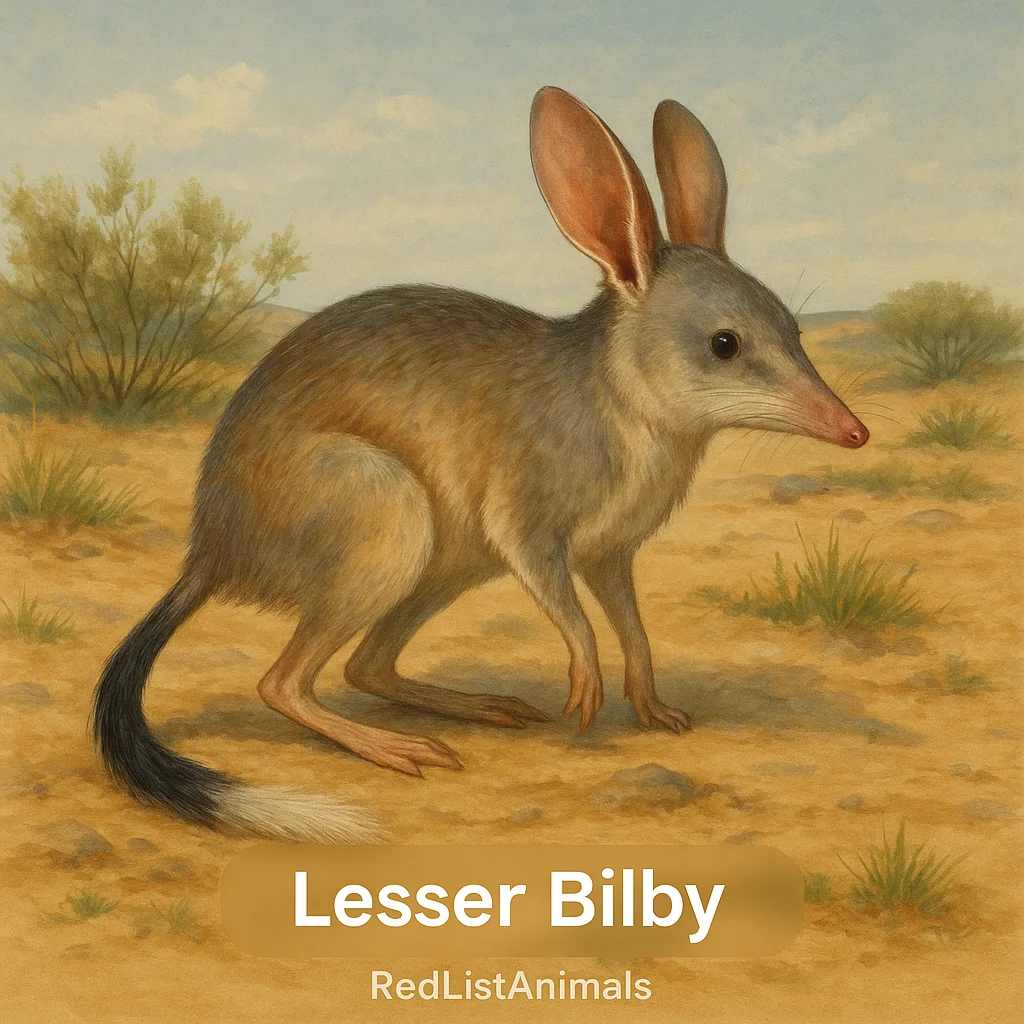
This animal played an important role in its ecosystem, contributing to soil turnover through its digging activities. While the greater bilby survives today, the lesser bilby was an integral part of its unique arid environment before its extinction.
In this article, we will explore where the lesser bilby lived, how it survived in its environment, when it disappeared, and the reasons behind its extinction.
🧭 Where It Lived
The lesser bilby was endemic to Australia, meaning it was found nowhere else in the world. It primarily inhabited the sand dune regions of central and western Australia, including parts of the Northern Territory and South Australia.
This marsupial preferred arid and semi-arid environments characterized by sand dunes and sparse vegetation. Such habitats provided the necessary conditions for burrowing and finding food. The sparse vegetation of these areas was well-suited to its diet and lifestyle.
Being confined to specific regions of Australia put the lesser bilby at an increased risk of extinction. Habitat specialization meant any changes in its environment, caused by natural or human activities, could have a significant impact on its survival.
🌿 Habitat and Daily Life
The climate in the lesser bilby's habitat was typical of Australia's desert regions, with high temperatures during the day and cooler conditions at night. Rainfall was scant, leading to arid conditions for much of the year. This climate influenced the lesser bilby's behavior, making it largely nocturnal to avoid daytime heat.
Their diet consisted of insects, seeds, bulbs, and fruit. Foraging at night, they used their keen senses of smell and hearing to locate food. Lesser bilbies were solitary creatures, coming together only during the breeding season.
Reproduction involved females raising their offspring in burrows. The young would stay in the mother's pouch for the initial months before making brief forays into the outside world. Such adaptations were crucial for survival in the harsh desert environment.
🧬 What Made It Unique
The lesser bilby had several adaptations that made it well-suited to its environment. Its small size, approximately that of a rabbit, and sandy coloration allowed it to blend into its surroundings, escaping predators. Long ears not only provided excellent hearing but also helped to dissipate heat.
Its forelimbs were adapted for digging, allowing it to create elaborate burrow systems that provided shelter from the heat and predators. The lesser bilby’s ability to consume a varied diet also allowed it to survive in areas with sparse resources.
While there is little documentation of its cultural significance, the lesser bilby was part of the natural heritage of indigenous Australian cultures, sharing the landscape with them and influencing the biodiversity of its habitat.
⏳ When It Disappeared
The lesser bilby was last reliably sighted in the 1930s. Reports suggest small populations might have persisted into the 1960s, but these were not confirmed. Declaring a species extinct requires careful evidence, such as the absence of sightings despite thorough searches in its known habitat.
Remote habitats can complicate extinction declarations, as isolated populations may survive undetected. However, ongoing surveys have not found evidence of the lesser bilby's continued existence, leading to its classification as extinct.
Many factors, including its limited range and habitat specialization, contributed to its disappearance, complicating efforts to ascertain its last exact presence.
⚠️ Why It Went Extinct
Several factors contributed to the extinction of the lesser bilby. Habitat loss and fragmentation due to human activities such as land development and agriculture significantly impacted its survival. These changes reduced the available space and resources necessary for maintaining healthy populations.
Introduced species like foxes and feral cats also played a significant role. These predators posed a direct threat to the lesser bilby, which had not evolved defenses against such predators.
Climate shifts, including changes in temperature and rainfall patterns, further stressed the lesser bilby population. Desert environments are highly sensitive to such changes, affecting water availability and food resources.
🧩 How We Know (Evidence and Records)
Evidence of the lesser bilby comes from several sources, including museum specimens collected in the early 20th century, field notes from researchers, and oral histories from indigenous communities. These provide insights into the animal’s ecology and behavior.
Scientists can verify identity and dates through these specimens, comparing them with related species. Limited sightings and the elusive nature of the lesser bilby, due to its nocturnal lifestyle, made it challenging to study before its extinction.
This difficulty highlights the challenges in confirming extinctions, especially for species in remote or inaccessible regions.
🛡️ Could It Have Been Saved
Conservation actions that might have helped the lesser bilby include habitat protection, controlling introduced predators, and perhaps captive breeding programs. Such efforts could have preserved critical habitat areas and reduced predation pressures.
Unfortunately, by the time the full extent of its decline was realized, it was likely too late for effective intervention. Increased awareness and earlier conservation actions might have made a difference.
While late conservation attempts were minimal, they emphasize the need for proactive measures in preserving endangered species before populations dwindle beyond recovery.
🔁 Are There Any Survivors or Close Relatives Today
The greater bilby is a close living relative of the lesser bilby and shares many physical and ecological characteristics. Conservation efforts for the greater bilby are ongoing, aiming to prevent a similar fate.
This includes habitat management and reintroduction programs in areas free of invasive predators. Although the lesser bilby itself is extinct, the greater bilby serves as an ecological replacement, continuing some roles in the environment.
Such efforts underscore the importance of preserving remaining related species to maintain biodiversity and ecological balance.
❓ Common Questions and Misconceptions
Was it hunted to extinction? While hunting was not the primary factor, human activities contributed to habitat loss and introduced invasive species.
Why didn’t it adapt or move? The lesser bilby's specialized habitat requirements and environmental changes limited its ability to adapt or relocate.
Could it still be alive somewhere? Its extinction is based on thorough surveys and absence of sightings, but remote habitats mean absolute confirmation is difficult.
What does 'declared extinct' actually mean? It means there have been exhaustive searches and studies, finding no evidence of the species' existence in the wild.
What is the difference between endangered and extinct? Endangered species are at significant risk of extinction, but still exist, while extinct species have no surviving individuals.
Why are island species so vulnerable? They often have small populations and limited ranges, making them more susceptible to changes and invasive species.
📌 Summary
- The lesser bilby was a small marsupial native to Australia.
- Endemic to the arid and semi-arid regions of central and western Australia.
- It inhabited sandy deserts, relying on burrows for shelter.
- Diet included insects, seeds, bulbs, and small animals.
- Had adaptations for digging and nocturnal life.
- Last confirmed records date back to the 1930s.
- Extinction drivers: habitat loss, invasive species, climate change.
- Evidence includes specimens, field notes, and indigenous accounts.
- Greater bilby is its closest living relative.
- Importance of early conservation action is a key takeaway.
- Lesser bilby's story highlights the fragility of specialized species.