🏞️ Xerces Blue Butterfly
🌍 What It Was
The Xerces blue butterfly was a small, vibrant butterfly known for its striking blue wings. It belonged to the family Lycaenidae and was distinctive for its brilliant blue coloring on the dorsal side and a softer, grayer underside. This butterfly was one of the first North American butterflies to become extinct. Its closest living relatives are the other species in the genus Glaucopsyche, which share similar physical traits and ecological roles.
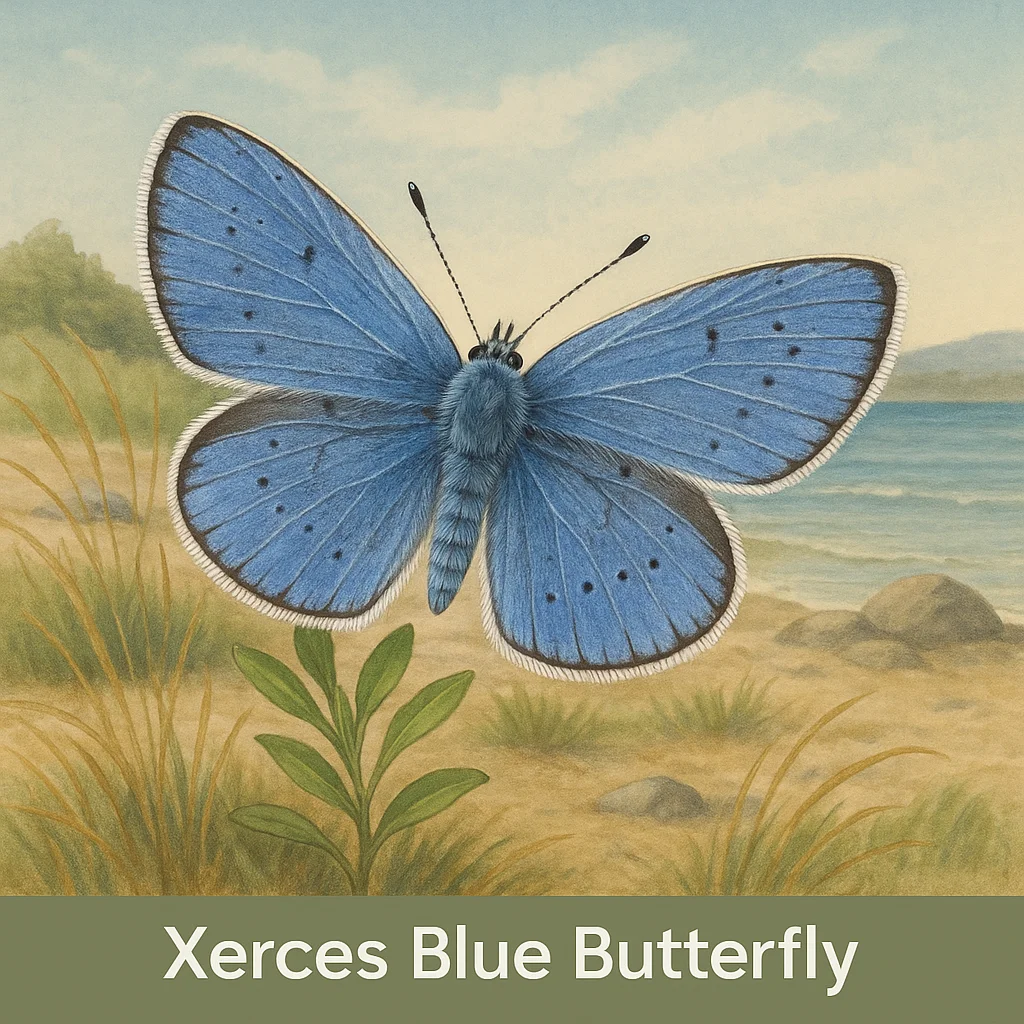
The Xerces blue played a role in its ecosystem as a pollinator, interacting with various plants for nectar. This article will guide you through where this butterfly lived, its lifestyle, the reasons behind its extinction, and more. You will gain an understanding of how this species was interconnected with its environment and the lessons it provides for conservation today.
The butterfly was a part of the coastal dune ecosystem of San Francisco, California, a unique and delicate habitat that contributed to its allure and vulnerability. As we explore the life and extinction of the Xerces blue butterfly, we will see how its story is a microcosm of the broader challenges faced by species in similarly restricted and sensitive environments.
🧭 Where It Lived
The Xerces blue butterfly was endemic, meaning it was native to and restricted to a specific location. Its range was confined to the coastal dunes of the San Francisco Peninsula in California. The limited geographic range made it particularly vulnerable to changes in its habitat. Because it was island-limited in terms of its ecological niche, habitat alterations had a significant impact on its survival.
The coastal dune ecosystems where the Xerces blue butterfly thrived were characterized by sandy soils, native grasses, and low shrubs that offered nutrition and breeding grounds. These areas were shaped by the sea breeze, providing a unique microclimate essential for the species' lifecycle. The area was also prone to changes due to urban development, which became a key driver of the butterfly's extinction.
Habitat specialization often increases extinction risk, as species become highly dependent on certain environmental conditions for survival. The Xerces blue is an example of this, as its existence hinged solely on a very specific habitat that was relatively small and isolated. This limited distribution made the species less resilient to environmental changes and human impacts.
🌿 Habitat and Daily Life
The climate of the San Francisco Peninsula where the Xerces blue butterfly lived was mild with wet winters and dry summers. This Mediterranean-type climate supported a diverse range of plants that the butterfly depended on for food. The Xerces blue subsisted primarily on nectar from native flowers, using its proboscis to feed.
This butterfly was primarily active during the daytime, engaging in typical behaviors such as basking in the sun, mating, and foraging. Basking in sunlight was crucial for thermoregulation, allowing the butterfly to maintain its body temperature for optimal function. Males were known to be territorial and would compete for access to mates.
The reproductive cycle of the Xerces blue involved laying eggs on the host plants where caterpillars would feed after hatching. The butterfly had a short lifecycle, with several generations produced each year, a characteristic common in butterfly species. Predators likely included birds and other insects, which kept population numbers naturally regulated.
🧬 What Made It Unique
The Xerces blue butterfly was notable for its intense blue coloration, a result of tiny scales on its wings that reflected light to create a shimmering effect. This distinctive appearance set it apart from many other species and contributed to its allure among early naturalists and collectors.
These butterflies played a crucial ecological role as pollinators within their limited habitat, aiding in the reproduction of the plants they visited. The relationship between the Xerces blue and coastal plants highlighted the interconnectedness of species within this ecosystem.
Culturally, the Xerces blue has gained a symbolic significance in conservation circles. The loss of this butterfly has spurred awareness about the fragility of ecosystems and the impact of human activities on biodiversity. Today, its name is commemorated by the Xerces Society, an organization focused on invertebrate conservation, promoting conservation efforts to protect vulnerable species.
⏳ When It Disappeared
The last confirmed sighting of the Xerces blue butterfly occurred in the early 1940s. By this time, it was already exceedingly rare. The butterfly was declared extinct when no further sightings were recorded, and its natural habitat in San Francisco had been drastically altered by urban development.
Records indicate that as the butterfly's habitats were converted into residential and commercial areas, the populations dwindled. Systematic searches and observations failed to find any remaining individuals, leading to its extinction declaration. The concept of being "extinct in the wild" contrasts with "extinct" in that individuals may survive in captivity, but this was not the case for the Xerces blue.
There is always a degree of uncertainty when declaring a species extinct, particularly for those in remote or less-accessible locales. For the Xerces blue, its limited range and extensively studied habitat provided enough evidence to conclusively declare it extinct.
⚠️ Why It Went Extinct
The extinction of the Xerces blue butterfly is attributed primarily to habitat loss and fragmentation. Urbanization in the San Francisco Peninsula led to the destruction and alteration of their coastal dune habitats, leaving the butterflies without their essential environment for survival and reproduction.
Habitat fragmentation, which occurs when a large habitat is divided into smaller, isolated patches, further compounded the issue. This made it difficult for the remaining populations to interbreed, reducing genetic diversity and resilience. The buildings and infrastructure development in the region were the main physical barriers that fragmented this once-continuous habitat.
While overcollection for scientific purposes may have played a minor role, it was not the driving force behind the extinction. Unlike some animals, the Xerces blue was not directly hunted or collected on a scale large enough to pose a significant threat.
Pollution and the introduction of invasive plant species, which altered the native flora, indirectly impacted their survival by changing the composition of available food sources. These invasive plants outcompeted native ones, depriving the Xerces blue of critical resources.
While climate change was not as prominently discussed in the early 20th century, shifts in climate patterns possibly affected seasonal behaviors and resources availability crucial for the butterfly's lifecycle. Despite these factors, habitat destruction remains the most evident and documented cause of extinction.
🧩 How We Know (Evidence and Records)
Evidence of the Xerces blue butterfly's existence and extinction comes primarily from historical records, museum specimens, and documented field observations. Museum collections house preserved specimens that have been critical for research and education, providing physical evidence of the species' characteristics.
Photographs and detailed field notes from entomologists who studied these butterflies in their natural habitat offer invaluable insights into their behavior and ecology. These records help establish the timeline of their decline and eventual disappearance.
Identifying species accurately throughout history has proved challenging, but careful examination of morphological traits, like wing coloration and patterns, supports the confirmation of the Xerces blue's extinction. Advances in genetic analysis, while not available at the time of the butterfly's extinction, have since become tools for verifying species identity and evolutionary relationships.
🛡️ Could It Have Been Saved
The conservation of the Xerces blue butterfly could have benefited from early intervention through habitat protection and restoration measures. If these initiatives had been implemented before extensive urban development, they might have helped preserve the intact coastal dune ecosystem.
Enforcement of limits on land conversion and habitat fragmentation could have created a network of protected areas, promoting a viable population size and genetic diversity. The eradication or control of invasive plant species might have ensured the availability of native plants for feeding and breeding.
However, conservation awareness and strategies at the time were not as developed as they are today. By the time the severity of the threat was realized, it was too late for effective conservation actions to reverse the population decline. The tale of the Xerces blue butterfly underscores the importance of proactive conservation efforts for species showing early signs of vulnerability.
🔁 Are There Any Survivors or Close Relatives Today
No Xerces blue butterflies survive today; the species is fully extinct. However, its closest relatives can be found within the same subfamily Lycaeninae. These include other species of the genus Glaucopsyche, which continue to exist in various parts of the world.
Although none of these butterflies serve as true replacements, they fulfill similar ecological roles as pollinators within their respective ecosystems. Efforts today focus on protecting these remaining species and their habitats to prevent similar extinctions.
No reintroduction or captive breeding programs exist for the Xerces blue butterfly. Instead, conservationists use its story as a warning and inspiration to protect similarly threatened species and maintain biodiversity.
❓ Common Questions and Misconceptions
Was it hunted to extinction? No, hunting or overcollection was not the primary driver of its extinction.
Why didn’t it adapt or move? Being highly specialized and with a limited range, it couldn't adapt quickly enough to the rapid habitat changes.
Could it still be alive somewhere? Given its complete lack of sightings since the early 1940s and extensive habitat destruction, it is considered extinct.
What does 'declared extinct' actually mean? It means there are no surviving individuals known to exist after extensive searches and research.
What is the difference between endangered and extinct? Endangered means at a high risk of extinction, while extinct means there are no living members of the species.
Why are island species so vulnerable? They often have limited distributions and specialized habitats, making them more vulnerable to changes.
Can habitat protection help? Yes, preserving natural habitats can prevent extinctions by maintaining the ecosystem species rely on.
Are butterflies important to ecosystems? Yes, they are key pollinators and contribute to the health of plant communities.
📌 Summary
- The Xerces blue was a small, vibrantly colored butterfly.
- It lived on the coastal dunes of the San Francisco Peninsula in California.
- Its habitat was sandy dunes with native grasses and shrubs.
- The butterfly fed on nectar and had a short, generational life cycle.
- Blue wings were a notable adaptation for mating signals.
- Last confirmed sightings were in the early 1940s.
- Main extinction causes include habitat loss and fragmentation.
- Evidence comes from museum specimens and historical records.
- Closest living relatives are other Glaucopsyche species.
- Conservation today emphasizes early intervention and habitat protection.
- The Xerces blue is a poignant example of fragile ecosystems at risk.