🏞️ Why Invertebrate Extinctions Are Underreported
🌍 What It Was
Invertebrates are animals without a backbone, encompassing a wide range of species including insects, spiders, mollusks, and crustaceans. They are incredibly diverse and make up over 90% of all animal species on Earth. Despite their abundance and importance, invertebrate extinctions often fly under the radar.
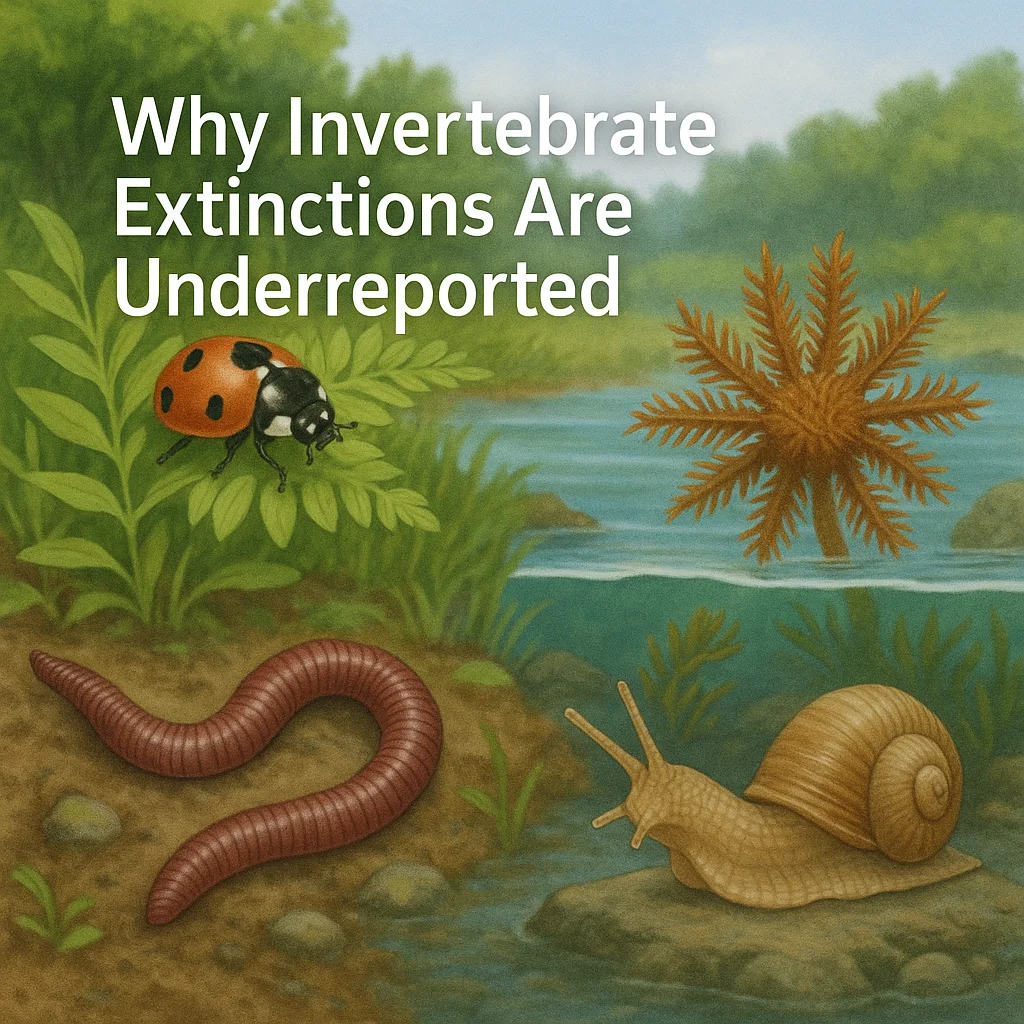
These creatures play essential roles in their ecosystems, such as pollination, decomposition, and serving as food for other animals. Their closest living relatives can be seen in bees, butterflies, and various marine creatures like octopuses and squids.
In this article, we'll explore where these invertebrates lived, their lifestyles, and the factors contributing to their underreported extinctions. You'll learn about their habitats, distinctive features, extinction timelines, and the challenges involved in tracking their existence and disappearance.
🧭 Where It Lived
Invertebrates occupied a fascinatingly wide range of geographic areas, from dense tropical rainforests to arid deserts, and from deep ocean floors to high mountain ranges. Each region housed unique species adapted to specific environmental conditions.
For example, tropical rainforests hosted millions of insect species, relying on the warm, humid conditions to thrive. Coral reefs were rich with marine invertebrates, such as corals and sea stars, relying on warm shallow waters to build complex ecosystems. These regions were biodiversity hotspots but also represented vulnerability when environmental conditions changed drastically.
Invertebrates confined to specific areas, such as isolated islands or unique habitat patches, faced increased extinction risks due to limited geographic ranges and specialized habitat needs. This localization made them especially susceptible to environmental changes and human activities.
🌿 Habitat and Daily Life
Invertebrates thrived in various climates, each species intimately connected to its environment for survival. In tropical regions, warm temperatures and abundant rainfall supported a plethora of insects, while temperate zones fostered species that adapted to seasonal changes.
Diet and foraging habits varied widely among invertebrates. Some were herbivores, feeding on plants and algae, while others were predators or detritivores, cleaning up dead organic matter. Their original roles included key behaviors such as pollination by bees and butterflies or nutrient cycling by earthworms and beetles.
Reproduction and life cycles varied astonishingly among invertebrates. Many insects had short life cycles with rapid reproduction rates, while others, like some mollusks, lived longer but reproduced less frequently. Interactions with other species included symbiotic relationships, such as that between corals and algae, and complex food webs where they served as prey and predators.
🧬 What Made It Unique
Invertebrates displayed an incredible range of physical traits and adaptations. Insects had exoskeletons for protection, while mollusks had shells. Many invertebrates exhibited bright colors or patterns as defenses or mating strategies.
Their ecological roles were diverse and critical. Bees and other pollinators supported plant growth and reproduction, while marine invertebrates like corals contributed to reef building, fundamental for marine biodiversity.
In human cultures, certain invertebrates held significant roles. Silk moths were crucial in textile industries, and honeybees were central to agriculture. Although often overlooked, invertebrates greatly influenced human development and sustenance.
⏳ When It Disappeared
Extinction timelines for invertebrates are often murky due to insufficient records. The last confirmed sightings or collections can date back several decades. For some, the lack of sightings in recent years led to their presumed extinction.
Declaring an invertebrate extinct can be challenging. Invertebrates like insects are small, elusive, and often inhabit difficult-to-access areas, making them harder to monitor comprehensively. Often, absence of evidence rather than definitive proof leads to extinction declarations.
Some species might exist as "functionally extinct", where so few individuals remain that their impact on the ecosystem is negligible. Others may be declared "extinct in the wild", meaning they exist only in captivity or managed reserves.
⚠️ Why It Went Extinct
Invertebrate extinctions are typically linked to multiple factors. Habitat loss due to deforestation, urban development, and agriculture has annihilated countless invertebrate habitats. Fragmentation of ecosystems breaks up populations, reducing genetic diversity and survival odds.
Overhunting and collection also play a role, although less documented in invertebrates compared to larger animals. Nevertheless, some invertebrates like butterflies and exotic insects have been overcollected for the pet trade or scientific curiosity.
Invasive species have introduced competition and predation pressures. Non-native species often outcompete native invertebrates or directly prey upon them, altering the delicate balance of native ecosystems.
Diseases, climate changes, and pollution further compound extinction risks, stressing invertebrate populations and disrupting lifecycles. Climate shifts cause habitat changes too rapid for adaptation, while pollution, from chemicals to plastics, contaminates essential living spaces.
🧩 How We Know (Evidence and Records)
Understanding invertebrate extinction relies heavily on various types of evidence such as fossils, scientific collections in museums, and observational field notes. These records provide insight into past populations and distribution.
For invertebrates, direct evidence like photographs can be scarce. Oral histories from local populations sometimes offer insights into changes in an area's biodiversity over time, although these need corroboration with scientific data.
Scientists use genetic analysis to verify the identities and relationships of species. This is crucial, as similar-looking species may have very different ecological roles, and misidentification can lead to incorrect extinction declarations.
🛡️ Could It Have Been Saved
Conservation efforts that might have aided invertebrate survival include protected habitats, regulations on collection, and controlling invasive species. However, actions often came too late, after populations were unsustainably low.
In some cases, captive breeding programs have been proposed, although these efforts can be challenging due to the specific habitat and diet needs of many invertebrates. Trade-offs, such as economic interests and resource allocation, often delayed crucial conservation actions.
Late attempts at conservation included awareness campaigns and legal protections, which have had mixed results in reversing decline trends. Invertebrate conservation must balance immediate action with long-term strategies for ecosystem preservation.
🔁 Are There Any Survivors or Close Relatives Today
While specific invertebrate species may have gone extinct, their close relatives often remain. For instance, many insect families or mollusk species still thrive, sharing similar ecological roles and characteristics.
Ecological replacements sometimes occur, where different but similar species fill the vacated niche left by extinct invertebrates. This can help maintain ecosystem functions, although the long-term balance may be altered.
Reintroduction efforts focus more on vertebrates, but invertebrate conservation and management are gaining attention, highlighting their importance in biodiversity and ecosystem stability.
❓ Common Questions and Misconceptions
Was it hunted to extinction? In some cases, yes, through overcollection, but usually habitat loss was a bigger factor.
Why didn’t it adapt or move? Rapid environmental changes and localized populations limited their ability to adapt or relocate.
Could it still be alive somewhere? Possible but unlikely, if it was declared extinct after exhaustive searches.
What does 'declared extinct' actually mean? It means no individuals have been observed in the wild despite extensive surveys.
What is the difference between endangered and extinct? Endangered species are at risk of extinction, while extinct species are believed to have no surviving individuals.
Why are island species so vulnerable? Island species have small, restricted populations making them more susceptible to changes and invasions.
📌 Summary
- Invertebrates are animals without backbones, including insects and mollusks.
- They lived in diverse regions, from forests to reefs.
- Habitats included tropical rainforests, coral reefs, and deserts.
- Diet and behaviors varied widely, playing roles like pollination and decomposition.
- Unique adaptations included exoskeletons and ecological roles like nutrient cycling.
- Extinction timelines are often unclear, with last sightings sometimes decades old.
- Main extinction drivers: habitat loss, collection, invasive species, and pollution.
- Evidence comes from fossils, collections, and field notes.
- Closest relatives remain, but some roles filled by other species.
- Conservation needs to be faster and consider long-term ecosystem health.
- Invertebrates are crucial for biodiversity, highlighting the need for their conservation.