🏞️ What “Data Deficient” Means for Invertebrates
🌍 What It Was
Understanding what "Data Deficient" means for invertebrates is an essential step in grasping conservation challenges. Invertebrates, which include animals such as insects, mollusks, and crustaceans, are a diverse group with a variety of forms and lifestyles. Unlike the more familiar vertebrates, invertebrates do not have a backbone or spine.
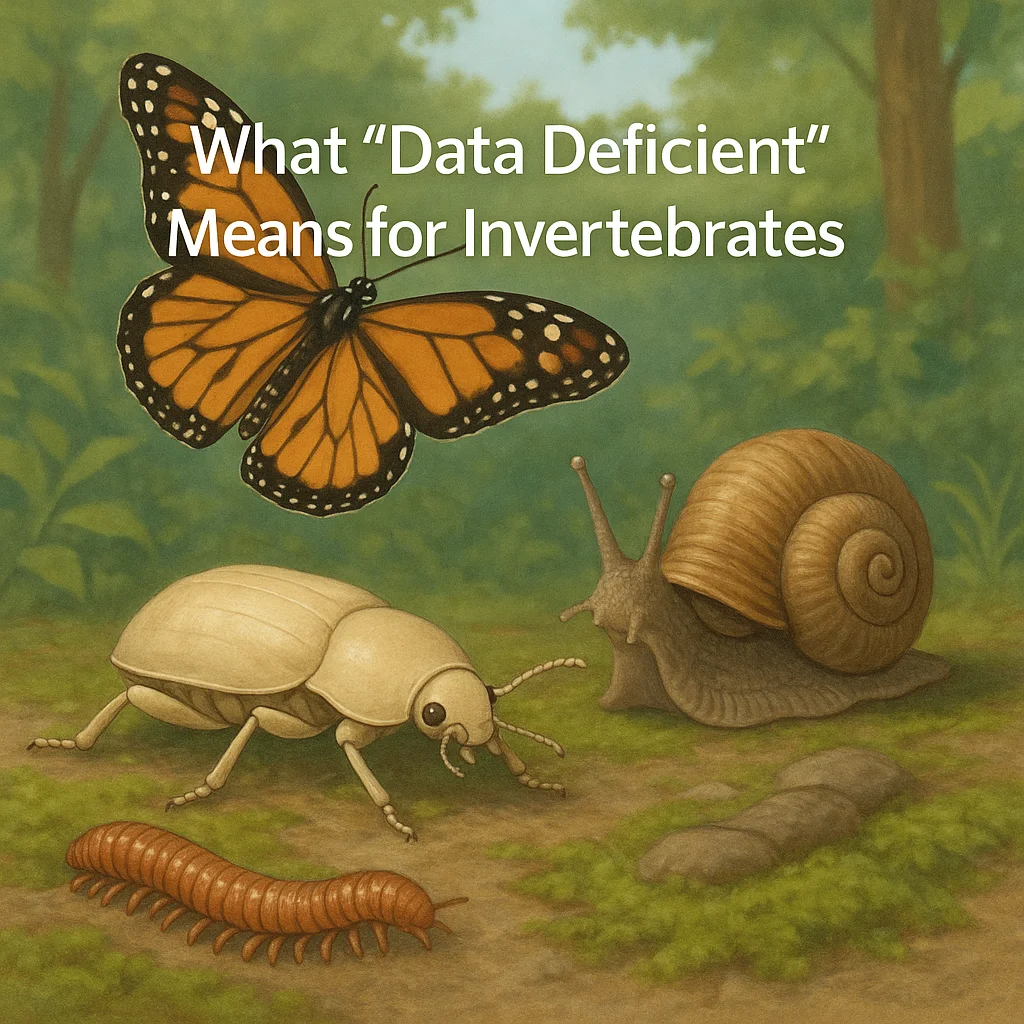
Invertebrates are incredibly diverse, making up more than 95% of animal species. They are crucial to ecosystem functioning. They serve as pollinators, decomposers, and as part of food webs. The closest living relatives to a specific extinct or data deficient invertebrate would depend on its classification within the broader invertebrate group. Each species plays a distinct role in its ecosystem, which can be dramatically altered if one species goes extinct.
This article will guide you through where these animals lived, their lifestyle, the proposed reasons for their disappearance, and what "Data Deficient" signifies in this context.
🧭 Where It Lived
Invertebrates lived across a variety of geographic ranges, from the tropical regions of the Amazon rainforest to the cold depths of the ocean. The specific range of an invertebrate species was often dictated by its habitat preferences, such as forested areas, grasslands, or coral reefs.
For instance, some invertebrates, like certain beetle species, were specialized to live on particular tree types, making them endemic to specific areas. This endemism often increased their risk of extinction, especially when their habitat faced destruction or change.
Many invertebrates also occupied highly specific niches, such as freshwater streams or high-altitude alpine zones. These invertebrates would be especially vulnerable to changes in their habitats, whether from natural processes or human activities.
🌿 Habitat and Daily Life
The environments in which invertebrates lived vary immensely. They could be found in virtually every climate type, from scorching deserts to lush jungles and cold ocean waters. Their lives depended heavily on these environments, as they required specific conditions for survival.
The diet of invertebrates was just as varied as their habitats. Some were herbivores, feeding on plants, while others were predators or scavengers. Their foraging styles influenced their role in the ecosystem, whether it be pollination or decomposition.
Reproduction among invertebrates differed widely. Some had a quick life cycle with r-strategist tendencies, producing many offspring with little care, while others invested considerably in fewer offspring. Their interactions with other species included predation, parasitism, and symbiotic relationships.
🧬 What Made It Unique
Invertebrates exhibit a range of physical traits and adaptations tailored to their specific roles in their ecosystem. For example, some possess bright coloration for attracting mates or warning predators. Some marine invertebrates have bioluminescence for communication in the dark ocean depths.
Many invertebrates have developed special senses and abilities that aid in survival. For instance, the compound eyes of insects provide a broad field of vision, crucial for detecting predators and locating food and mates. Invertebrates often performed ecological roles critical to their habitats, like seed dispersal and nutrient cycling.
In some cultures, invertebrates have held significant historical and cultural importance, featuring in art, mythology, and as symbols in various societies.
⏳ When It Disappeared
Determining when an invertebrate species disappeared can be challenging due to the scarcity of records and the elusive nature of many species. Last confirmed records can help create a timeline, but many species are declared extinct only after extensive surveys have failed to locate any survivors.
The declaration of extinction often considers the absence of sightings within the expected range, despite thorough searches. Misidentifications and remote habitats add layers of complexity to these assessments.
When an invertebrate is considered "Extinct in the Wild," it often means that no wild populations remain, with perhaps a few individuals surviving in captivity if conservation efforts were made.
⚠️ Why It Went Extinct
The extinction of invertebrates can often be traced to several interacting factors. Habitat loss or fragmentation can be a primary driver; when forests are cleared or coral reefs are damaged, the specific conditions needed by invertebrates can vanish.
Overexploitation through activities like collecting for trade or research can severely deplete populations, especially those with limited ranges or unique characteristics.
Introduced species can introduce new predators or competitors, outcompeting or preying upon native invertebrates and disrupting established ecological balances.
Disease can be highly lethal, especially when combined with other stressors like climate change. Shifts in climate or extreme weather events can alter habitats, making them inhospitable for sensitive species.
Pollution, whether in the form of pesticides or industrial waste, can poison or physically harm invertebrates, directly leading to population declines.
🧩 How We Know (Evidence and Records)
Evidence for understanding invertebrate populations comes from diverse sources including fossils, museum specimens, field notes, and photographs. Fossils tell us about past species, showing long-term trends over geological time.
Museum specimens provide physical evidence and aid in detailed taxonomic studies, while field notes and photographs help document sightings and behaviors in the wild.
Verifying identity and dates requires cross-referencing these sources with genetic studies and expert analysis. For many invertebrates, especially rare or elusive ones, confirmation can be difficult due to their secretive or nocturnal habits, or the inaccessibility of their habitats.
🛡️ Could It Have Been Saved
There are conservation actions that could have helped mitigate the risks faced by at-risk invertebrate species. Protecting critical habitats is fundamental in preserving the conditions these species need to thrive.
Hunting limits and measures against overexploitation could have been enforced to safeguard populations from unsustainable harvesting practices.
Controlling invasive species, combined with captive breeding programs, might have offered a reprieve for dwindling populations, provided enough genetic diversity was maintained.
Unfortunately, conservation actions often come too late, usually after major declines have already occurred. Late-stage conservation efforts may struggle due to limited funding, political will, or public awareness.
🔁 Are There Any Survivors or Close Relatives Today
Many invertebrates have close relatives that continue to exist today, even if the exact species has become extinct. These relatives often share ecological niches or similar traits, allowing them to perform akin roles in the ecosystem.
In some cases, ecological replacements can fill roles left vacant by extinct species. These replacements might be different species that have adapted to fill similar ecological functions within their altered environment.
Reintroduction or captive programs are seldom used for invertebrates, except in cases with significant ecological or cultural importance, as their survival often depends on complex ecological interactions.
❓ Common Questions and Misconceptions
Was it hunted to extinction? While overexploitation is a factor, usually it combines with habitat loss or other pressures.
Why didn’t it adapt or move? Many invertebrates are highly specialized and cannot quickly adapt to changing conditions or easily relocate.
Could it still be alive somewhere? In some remote or poorly studied areas, it’s possible, but thorough surveys are needed to confirm.
What does 'declared extinct' actually mean? It means exhaustive efforts have failed to locate the species; it's considered gone from the wild.
What is the difference between endangered and extinct? Endangered means the species is at high risk of extinction, while extinct indicates none are known to survive.
Why are island species so vulnerable? Island species often have small populations and specialized niches, which make them susceptible to disturbances.
Do all data-deficient species go extinct? Not necessarily. Data-deficient means we lack adequate data, yet some might have stable populations.
How is extinction assessed for elusive species? Assessments combine all available records, expert evaluations, and field research.
📌 Summary
- Invertebrates lack a backbone but comprise the vast majority of animal species.
- They were found globally, across diverse ecosystems from forests to ocean depths.
- Habitats included specific niches, such as alpine zones or freshwater streams.
- Diet varied widely, including herbivory to predation, with complex behaviors and life cycles.
- Unique physical traits and ecological roles were crucial for ecosystem balance.
- Last sightings are often unconfirmed; extinction declarations come from exhaustive surveys.
- Main extinction drivers included habitat loss, overexploitation, invasive species, and more.
- Evidence includes fossils, museum specimens, and field notes, verified by expert analysis.
- Closest relatives may share ecological roles, sometimes serving as replacements.
- Conservation must act early to prevent decline through habitat protection and policy change.
- A memorable lesson is the interconnectedness of life and the importance of all species in maintaining ecological systems.