🏞️ Island Snail Extinctions: What Happened?
🌍 What It Was
Island snails were small, soft-bodied animals that lived inside hard shells. These snails were part of a diverse group of mollusks, characterized by their spiral-shaped shells and slow movements. They played a unique role in their ecosystems as decomposers, helping break down plant matter.
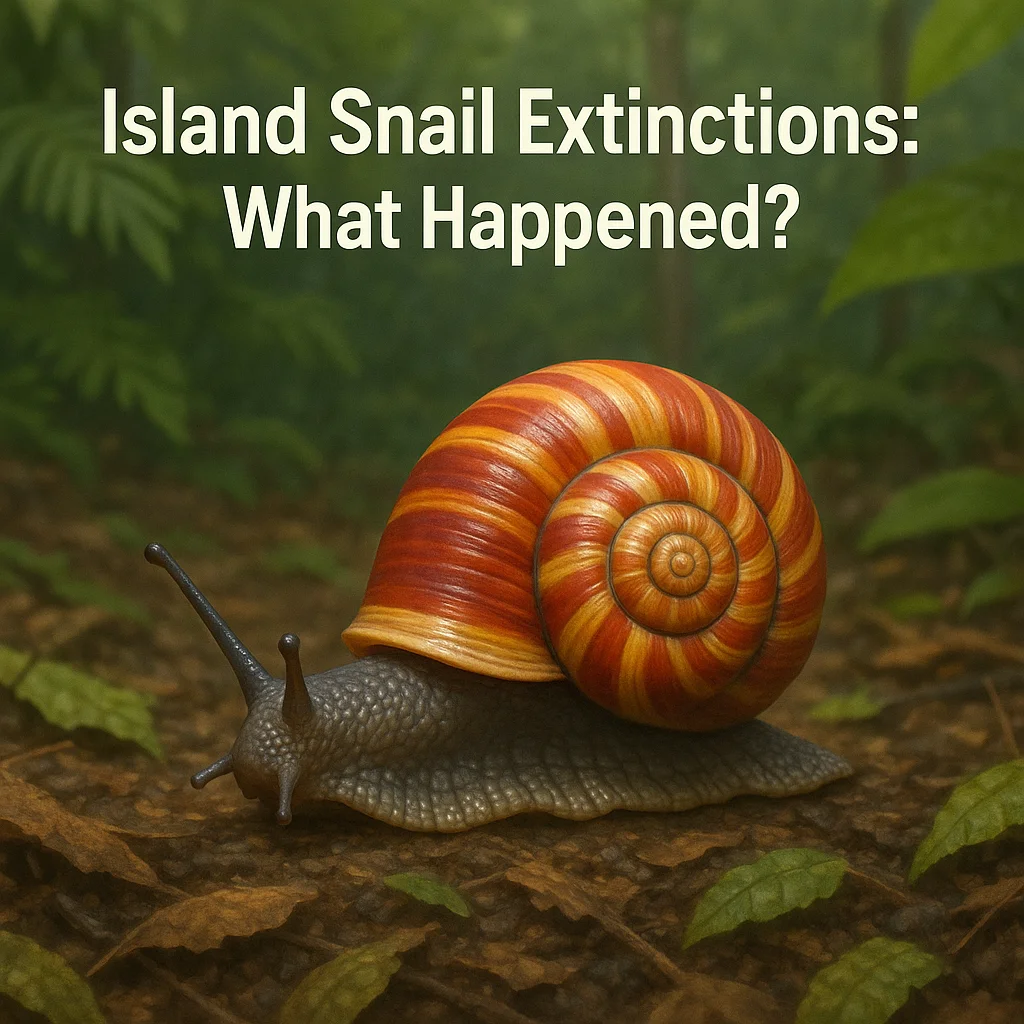
Many of these island snails were unique to their locations, meaning they were not found anywhere else in the world. This made them endemic species. They were closely related to other land and freshwater snails, which are still common in many parts of the world today.
This article will explore where these snails lived, how they survived, when they disappeared, and why they faced extinction. We'll also touch on the lessons we can learn from their story.
🧭 Where It Lived
Island snails primarily inhabited isolated islands in the Pacific and Indian Oceans. Locations like Hawaii, the Galápagos Islands, and the Seychelles were home to a large variety of these snails. These islands provided a unique environment for them to thrive, where they often adapted to very specific niches.
Their habitats included tropical forests and humid areas with lots of leaf litter and fallen logs, which provided both food and shelter. These environments were typically warm and wet, with heavy rainfall throughout the year.
Being confined to islands meant these snails had very limited areas in which they could live and find resources. This confinement increased their risk of extinction because they had nowhere else to go if conditions worsened.
🌿 Habitat and Daily Life
The climates of these islands were generally warm and had consistent rainfall, creating lush environments. Island snails thrived in such conditions, feeding on decaying plant material, fungi, and algae. They played an essential role in nutrient cycling by breaking down dead matter.
These snails had simple but essential daily routines. Most were active during the night to avoid predators and the drying heat of the day. They spent their time foraging and laying eggs, with some species known to produce protective mucus to conserve moisture.
Island snails laid eggs rather than giving live birth. The breeding season often aligned with wet periods, ensuring the young had enough moisture to survive. Many snails cared for their eggs by choosing hidden spots in the leaf litter to keep them safe from predators.
🧬 What Made It Unique
Island snails were physically distinct with their colorful and varied shell patterns. The intricate designs on the shells helped them blend into their environment, serving as a defense mechanism against predators.
Some species were tiny and could be easily overlooked, while others were comparatively large. These adaptations helped them in various ways, such as better water retention capabilities and defense against predators.
Culturally, these snails often held significance for indigenous populations, who sometimes used the shells in jewelry and art. However, this usage was not a primary factor in their extinction.
⏳ When It Disappeared
The decline of island snails began in the 19th century, with many species facing extinction by the late 20th century. As human activity increased, so did the pressures on these snails. The last confirmed records for many species date back to the early 1900s.
The declaration of extinction occurs when exhaustive searches fail to locate any individuals over a prolonged period. In some cases, misidentifications or remote locales may lead to an underestimation of surviving populations, but these cases are exceptions rather than the norm.
When a species is declared "Extinct in the Wild", it indicates that no known individuals exist outside captivity. "Extinct" means the species is no longer found alive anywhere at all.
⚠️ Why It Went Extinct
The extinction of island snails was driven by several factors. Habitat loss was a primary driver, as deforestation and land conversion for agriculture destroyed the snail's native environments.
Introduced species posed a significant threat as well. Animals like rats and snails from other regions preyed upon native snails, whose environments lacked natural defenses against these newcomers.
Climate shifts, especially changes in rainfall patterns and temperatures, altered their habitats quickly, leaving them with little time to adapt or shift their ranges.
Pollution from pesticides and human waste had harmful impacts on the delicate ecosystems, further reducing the snail's chances of survival. These combined factors illustrate how extinction often has multiple causes.
🧩 How We Know (Evidence and Records)
Scientists rely on various forms of evidence to confirm a species' extinction. Fossils and subfossils (preserved remains) provide long-term records, while museum specimens offer direct evidence of what once lived.
Field notes, sketches, and photographs taken by naturalists give further insights into the existence and decline of these snails. Oral histories from indigenous peoples can also provide invaluable context.
In recent years, genetic analysis has allowed scientists to confirm species identities and track genetic diversity, aiding the understanding of how populations dwindled over time.
🛡️ Could It Have Been Saved
Conservation efforts that could have helped include creating protected areas to conserve critical habitats and controlling invasive species populations. Implementation of hunting bans might have also reduced human impacts.
While captive breeding programs have saved other species, island snails generally failed to benefit from such initiatives primarily due to a lack of timely awareness and resources.
Despite some late attempts to conserve their environments, these efforts often came too late, as populations had fallen below viable numbers for recovery.
🔁 Are There Any Survivors or Close Relatives Today
Many island snails have no direct offspring that survive today, but their closest relatives are land snails in similar temperate and tropical environments. These relatives continue to play similar ecological roles.
While some modern conservation efforts focus on related species, few reintroductions have been possible due to the severity of habitat loss. Current efforts are more focused on preserving existing biodiversity.
Ecological replacements, such as other decomposer species, sometimes fill the snails' former ecological niches, albeit never entirely substituting for the extinct species' roles.
❓ Common Questions and Misconceptions
Was it hunted to extinction? No, hunting was not a major factor; habitat loss and invasive species were more detrimental.
Why didn’t it adapt or move? Being endemic and highly specialized made adaptation difficult, and physical relocation was not feasible for these snails.
Could it still be alive somewhere? While unlikely, unfound individuals in remote areas can't be completely ruled out.
What does 'declared extinct' actually mean? It means no individuals have been confirmed alive despite thorough searching.
What is the difference between endangered and extinct? "Endangered" means at high risk of going extinct, while "extinct" means no longer existent.
Why are island species so vulnerable? Their geographic isolation limits ability to migrate or adapt to rapid changes.
📌 Summary
- Island snails were small, unique mollusks.
- They lived on isolated oceanic islands.
- Habitats included tropical forests and leaf litter.
- Snails were decomposers, feeding on plant matter.
- Distinctive shell patterns provided camouflage.
- Many species disappeared by the early 1900s.
- Main drivers were habitat loss and invasive species.
- Records include fossils, specimens, and field notes.
- Closest living relatives are similar land snails.
- Conservation lesson: protect native habitats early.
- A reminder of the complexity and fragility of island ecosystems.