🏞️ Freshwater Mussel Extinctions Explained
🌍 What It Was
Freshwater mussels are bivalve mollusks that were once abundant in streams, rivers, and lakes across the world. Known for their unique way of filtering water, these creatures played a vital role in maintaining aquatic ecosystems. They were known for their two hard shells connected by a flexible hinge.
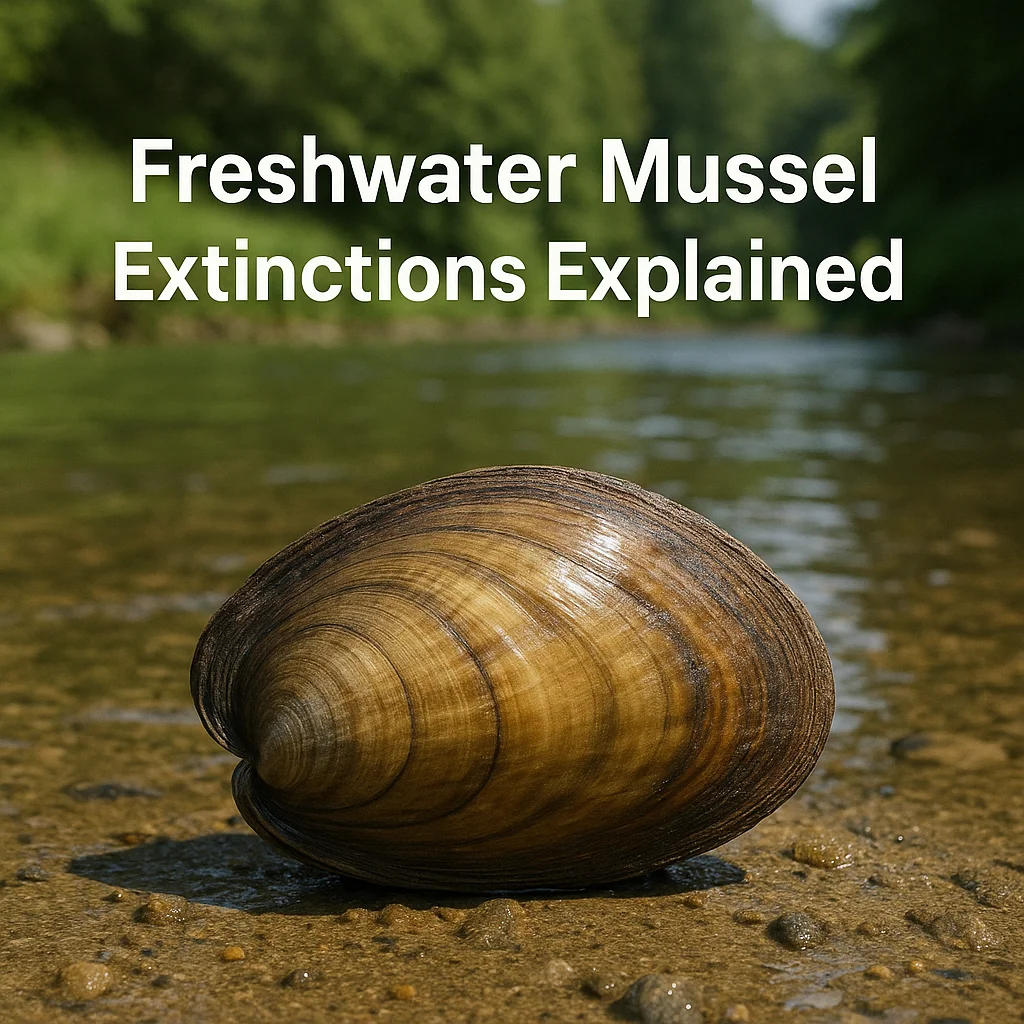
Their closest living relatives include other bivalve species that continue to survive today, such as clams and oysters. In the freshwater realms they inhabited, mussels contributed to their ecosystems by cleaning water and providing food for fish and other wildlife.
This article seeks to explore where freshwater mussels lived, how they lived, when they disappeared, and the factors contributing to their extinction.
🧭 Where It Lived
Freshwater mussels inhabited a wide range of geographic locations, primarily in the rivers and streams in North America, Europe, and parts of Asia. The southeastern United States was particularly rich in mussel diversity.
These mussels required clean, oxygen-rich water to thrive, which limited them to rivers and streams with minimal pollution. Their habitats ranged from small streams to large river systems.
Due to their specific habitat needs, their survival was closely tied to the health of their aquatic environments. Their dependence on particular water conditions meant that even slight changes could have devastating effects on their populations.
🌿 Habitat and Daily Life
The environment of freshwater mussels was typically characterized by moderate temperatures and consistent water flow. Rainfall patterns affecting river levels played a crucial role in their lifecycle.
Freshwater mussels fed by filtering microorganisms and organic particles from the water. They were generally sedentary, often attaching themselves to stable substrates like rocks or logs.
Reproduction involved complex life stages, often beginning with the female mussel releasing larvae that needed to attach to a host fish to complete development. This unique relationship with fish was essential for their survival.
Mussels interacted with their environment by filtering nutrients and serving as prey for birds, mammals, and other aquatic species. They were keystones in their ecosystems, influencing nutrient cycles and water quality.
🧬 What Made It Unique
Freshwater mussels were distinguished by their hard, calcified shells, which came in various sizes and colors based on species. These shells protected them from predators and environmental pressures.
Beyond their shells, mussels were exceptional in their filtering ability, capable of cleaning large volumes of water each day. Their presence indicated healthy water systems.
In many cultures, freshwater mussels held significance for their aesthetic shell patterns and historical use in jewelry and tools. However, this human interest sometimes contributed to their decline through over-collection.
⏳ When It Disappeared
The decline of freshwater mussels began accelerating in the 20th century. Many species faced extinction as early as the mid-1900s, with the last reliable sightings often occurring in isolated or polluted waterways.
Extinction declarations are issued when thorough searches and studies fail to find any remaining individuals. In many cases, remote habitats and the mussels' elusive nature led to uncertainty about their actual extinction dates.
For some species, classification as "Extinct in the Wild" means no populations exist outside of captivity, emphasizing how depleted natural populations have become.
⚠️ Why It Went Extinct
The extinction of freshwater mussels was heavily influenced by habitat loss and fragmentation. Damming and river modification disrupted water flow and sedimentation patterns crucial for mussel survival.
Pollution played a significant role, with chemicals and waste reducing water quality. Introduced and invasive species, often competing for food or preying on mussels, further destabilized populations.
Climate shifts, including changes in rainfall and temperature, affected water ecosystems and increased vulnerability. These extinctions were multi-faceted, with each factor compounding the others.
🧩 How We Know (Evidence and Records)
The evidence of freshwater mussel extinctions comes from a combination of sources. Fossil and subfossil records provide historical context, while museum specimens offer insights into what has been lost.
Field notes, photographs, and oral histories help provide timelines and specific accounts of mussel populations over the years. Researchers often use genetic analysis to confirm species' identities and relationships.
Freshwater mussels’ small size and wide habitat range sometimes make confirmation difficult, especially in areas with dense vegetation or poor visibility.
🛡️ Could It Have Been Saved
Realistic conservation actions for freshwater mussels might have included habitat protection and restoration, strict water pollution controls, and invasive species management.
Unfortunately, many conservation efforts were initiated after significant population declines, and available resources often limited the scope and speed of intervention.
In some regions, captive breeding programs showed promise in preserving genetic lines, but they require substantial effort and coordination.
🔁 Are There Any Survivors or Close Relatives Today
Several species of freshwater mussels still exist today, though they are under threat. These survivors share many characteristics with extinct species, such as their filtering ability and habitat needs.
There are no true "ecological replacements" for these species, as their disappearance leaves gaps in nutrient cycling and water quality functions. However, efforts to protect and restore habitats for existing mussel species continue.
❓ Common Questions and Misconceptions
Was it hunted to extinction? Over-collection for shells and pearls contributed, but habitat loss and pollution were major factors.
Why didn’t it adapt or move? Freshwater mussels are highly specialized and dependent on specific water conditions, limiting their ability to move or adapt quickly.
Could it still be alive somewhere? While remote possibilities exist, extensive searches have not found surviving populations.
What does "declared extinct" actually mean? It indicates that no living individuals have been confirmed after thorough investigations.
What is the difference between endangered and extinct? Endangered species still have surviving members, but extinction means no known individuals are left in the wild.
Why are island species so vulnerable? Island species often have limited ranges and specialized niches, making them more susceptible to changes and threats.
📌 Summary
- Freshwater mussels were bivalve mollusks vital for aquatic ecosystems.
- They lived mainly in rivers and streams across North America, Europe, and parts of Asia.
- Dependent on clean, flowing water, these ecosystems faced various threats.
- Mussels fed on microorganisms, impacting water quality and nutrient cycling.
- Known for filtering capabilities and symbiotic life stage with fish.
- Extinctions accelerated from mid-1900s due to human impacts.
- Primary extinction drivers included habitat loss, pollution, and invasive species.
- Evidence comes from fossils, specimens, and genetic studies.
- Surviving related species continue to face threats.
- Stress on the urgent need for conservation of water habitats and biodiversity.
- Freshwater mussels highlight human impact on ecosystems and the complexity of conservation.