🏞️ Coral Reef Collapse and “Silent” Extinctions
🌍 What It Was
Coral reefs are bustling underwater ecosystems created by colonies of tiny living organisms called coral polyps. These polyps are related to jellyfish and sea anemones and are known for their limestone skeletons, which accumulate over time to form the reef's structure. Coral reefs are renowned for their vibrant colors and serve as a critical habitat for a diverse array of marine life.
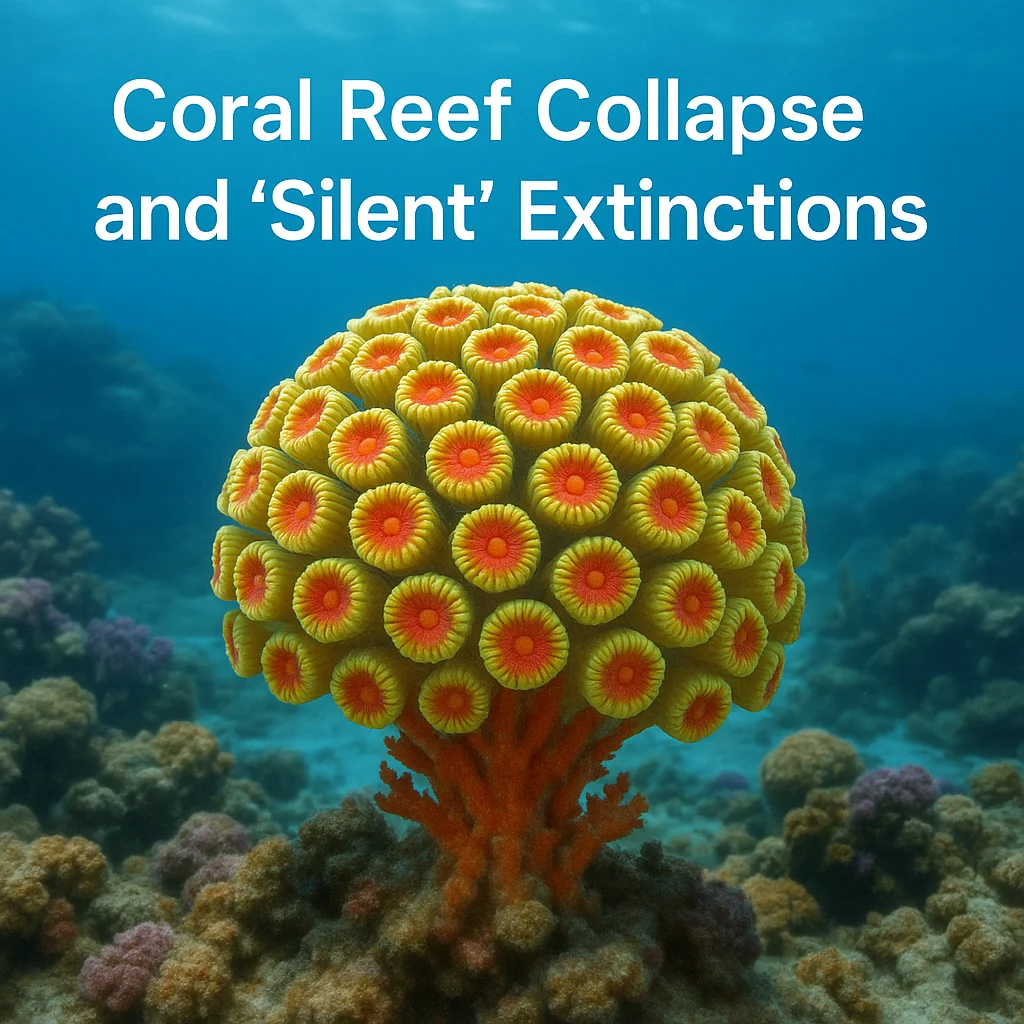
The closest living relatives of corals are sea anemones and certain species of jellyfish. Coral reefs play a crucial role in marine ecosystems by providing shelter and food for various marine species. In this article, we will explore the coral reef's complex world, examining its distribution, lifestyle, unique characteristics, reasons for its collapse, and the concept of "silent" extinctions.
Readers will learn about where coral reefs were once thriving, the factors contributing to their decline, and what lessons we can gather from their current state for future conservation efforts.
🧭 Where It Lived
Coral reefs are primarily found in tropical oceans near the equator, with significant concentrations in regions such as the Caribbean Sea, the Great Barrier Reef off the coast of Australia, and the Coral Triangle in Southeast Asia. These areas provided ideal conditions due to warm water temperatures and abundant sunlight, which are essential for coral survival.
The geographic range of coral reefs includes a wide variety of islands and coastal areas within these regions. Coral reefs thrived in shallow waters, typically less than 150 feet deep, where they could receive ample sunlight necessary for the symbiotic algae living within them. These algae, known as zooxanthellae, are crucial for the coral, providing nutrients through photosynthesis.
While island-limited ecosystems are inherently more vulnerable to extinction, coral reefs faced additional risks due to their dependency on specific environmental conditions. Any deviation from these conditions, whether caused by natural events or human activities, increased the risk of destruction and, subsequently, the extinction of the many species reliant on the reefs for survival.
🌿 Habitat and Daily Life
Tropical coral reefs exist in warm waters, characterized by relatively stable temperatures ranging from 70 to 85 degrees Fahrenheit. These ecosystems depend on clear water with low nutrient levels, which supports a delicate balance. Seasonal variations are minimal in tropical regions, which generally contribute to stable marine conditions.
Corals primarily reap the benefits of a symbiotic relationship with zooxanthellae, which provide them with energy through photosynthesis. This nutrient exchange allows corals to grow and maintain their calcium carbonate structure. In return, corals offer zooxanthellae shelter and access to sunlight, creating a perfect example of mutualistic symbiosis.
Apart from feeding through photosynthesis, corals catch small plankton and detritus using their tentacles. Their reproduction can be both sexual and asexual. Asexual reproduction allows for the growth of new polyps, while sexual reproduction increases genetic diversity and occurs in seasonal spawning events, often synchronized with lunar cycles.
Coral reefs support numerous other species, creating a complex web of interactions. From sheltering fish to being hunting grounds for predators like sharks, these ecosystems provide vital ecological functions.
🧬 What Made It Unique
Corals are fascinating creatures with unique physical traits. Their skeletons are made from calcium carbonate, providing both structural strength and a foundation for other reef inhabitants. The vibrant colors seen in corals mainly come from the pigments within the zooxanthellae algae that inhabit their tissues.
Coral reefs serve essential ecological roles, such as protecting shorelines from erosion, providing nursery grounds for young marine organisms, and supporting high levels of biodiversity. The structural complexity of reefs creates various niches for marine life, supporting fish, mollusks, sea turtles, and many others.
Historically, coral reefs have held cultural significance for many coastal communities who rely on them for food, protection, and income. The beauty and complexity of these underwater landscapes have inspired fascination and respect among countless generations.
⏳ When It Disappeared
The decline of coral reefs became increasingly evident during the late 20th century and continues into the 21st century. Coral bleaching events—when stressed corals expel their symbiotic algae—have led to widespread degradation. These events are primarily driven by rising sea temperatures, putting corals at risk of functional extinction.
Coral reefs are not universally extinct yet; however, many critical reef ecosystems have lost significant biodiversity and resilience. Regions like the Great Barrier Reef and others now face regular monitoring to assess their health, using scientific methods that identify remaining populations and determine ongoing threats.
The functional extinction of coral reefs means that while some species may still exist within these ecosystems, the complex interactions and services previously provided by healthier systems are severely diminished.
⚠️ Why It Went Extinct
The collapse of coral reefs can be attributed to several interlinked factors. Key drivers include habitat loss and fragmentation due to coastal development and destructive fishing practices. Activities like dredging and seabed mining disrupt the seabed, directly damaging fragile coral structures.
Overfishing depletes species that are essential for maintaining ecological balance within the reefs, like herbivorous fish that control algae growth. Invasive species introductions further challenge reef ecosystems, competing with native species for resources.
Climate change is a major contributor to coral decline. Rising sea temperatures stress corals, leading to bleaching, where they lose their vibrant colors and the symbiotic algae they depend on. Extreme weather events, such as hurricanes, also physically damage the reefs.
Pollution from land runoff carries nutrients and toxins into the ocean. High nutrient levels lead to algal blooms that choke reefs, while toxins can be lethal to marine life. These factors combined create a multi-causal puzzle that undermines coral reef resilience and survival.
🧩 How We Know (Evidence and Records)
The evidence for coral reef collapse comes from a combination of scientific methods and historical records. Satellite imagery allows researchers to monitor reef health over large areas, while underwater surveys conducted by divers provide detailed views of specific sites.
Coral skeletons form a natural archive, preserving past environmental conditions, which scientists analyze to understand historical climate patterns and predict future changes. Monitoring technologies and genetic studies further validate the presence and health of remaining coral species.
The difficulty in accessing certain reefs, especially those in remote or deep areas, often delays comprehensive assessments. As such, continued research depends on a mix of field efforts, remote sensing, and local knowledge to piece together the full story.
🛡️ Could It Have Been Saved
Many of the declines in coral reefs might have been mitigated through early conservation interventions. Protecting habitats by limiting damaging activities like trawling and coastal runoff could help reduce stress on these ecosystems.
Establishing marine protected areas could reduce local pressures and give reefs a chance to recover. Controlling fish harvests and efforts to manage invasive species would also lessen competition and predation pressures.
Efforts are underway in some regions to restore coral populations through coral gardening, a method involving the cultivation and transplantation of corals. However, these attempts often face obstacles, including funding limitations and the rapid pace of climate change.
🔁 Are There Any Survivors or Close Relatives Today
While the coral reefs themselves embody complex ecosystems, individual coral species have surviving relatives. The closest relatives, sea anemones and jellyfish, share similar biological structures but do not form reefs.
No true ecological replacements for coral reefs exist, as they are unique in the biodiversity they support and the ecological roles they play. However, some artificial reefs have been constructed in an attempt to mimic their functions, though these lack the biodiversity and complexity of natural reefs.
Captive breeding and reintroduction programs for specific coral species exist, aiming to rebuild reef biodiversity in affected regions. These programs, while promising, require ongoing support and intervention to be viable long-term solutions.
❓ Common Questions and Misconceptions
Was it hunted to extinction? Coral reefs were not hunted in the traditional sense, but they were impacted by over-exploitation for building materials and the aquarium trade.
Why didn’t it adapt or move? Corals are highly specialized organisms linked to specific environmental factors; rapid changes outpaced their ability to adapt or shift locations.
Could it still be alive somewhere? While individual coral species may survive, the ecosystem's complexity is greatly reduced in many areas.
What does 'declared extinct' actually mean? It often refers to the functional extinction of an ecosystem, where key interactions and functions are lost.
What is the difference between endangered and extinct? Endangered species face imminent risk of extinction, whereas extinct species are already gone.
Why are island species so vulnerable? Their isolation and limited range make them more susceptible to disturbances and environmental changes.
📌 Summary
- Coral reefs are ecosystems formed by coral polyps and their limestone skeletons.
- They thrived in warm, shallow tropical waters worldwide.
- Coral reefs depend on symbiosis with zooxanthellae algae.
- They provided shelter and food for many marine species.
- Coral reefs protect shorelines and support high biodiversity.
- Their decline became prominent in the late 20th century.
- Main drivers include climate change and pollution.
- Evidence from surveys and historical records confirms the decline.
- Closest relatives are sea anemones and jellyfish.
- Conservation requires early intervention and habitat protection.
- Silent extinctions highlight interconnected ecosystem losses.