🏞️ Invasive Species(The Island Extinction Machine)
🌍 What It Was
Invasive species are organisms that are introduced, accidentally or deliberately, to regions where they do not naturally exist. These species can be plants, animals, fungi, or microorganisms. They are often characterized by their ability to spread quickly and establish populations in new environments.
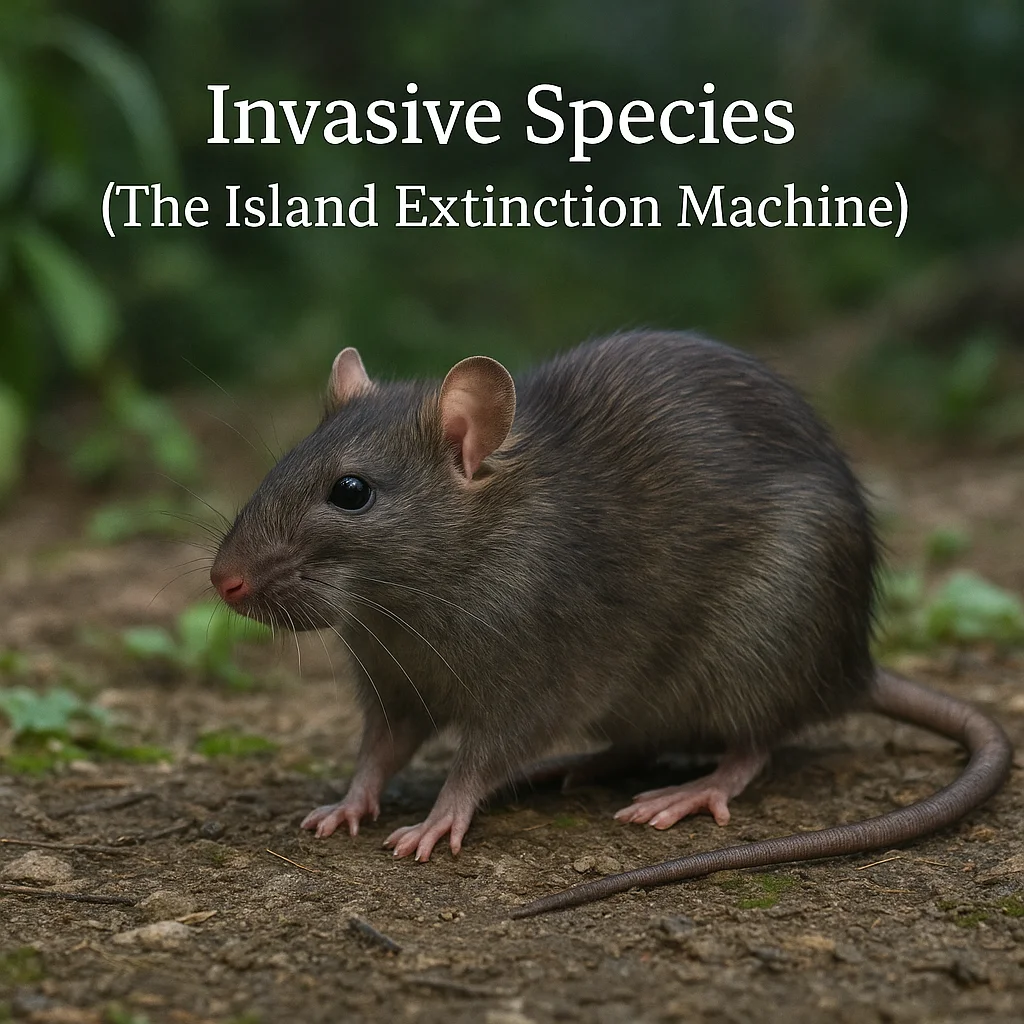
These species frequently have few natural predators in their new environment, allowing them to outcompete native species for resources. This unique capability often disrupts the ecological balance by altering habitats and food webs.
In this article, we'll explore how invasive species impact islands specifically, where their effects can be particularly devastating. We'll examine where they thrive, how they disrupt local ecosystems, and what causes them to become such formidable extinction machines.
🧭 Where It Lived
Invasive species can establish themselves in various regions worldwide, but islands are particularly vulnerable due to their isolated ecosystems. These islands are often home to unique species that evolved without defenses against newcomers.
The introduction of invasive species to islands can occur through various means, including ships, airplanes, and even as pets that later escape or are released. Once on an island, invasive species take advantage of the limited resources and niche habitats.
Many islands, such as those in the Pacific Ocean, the Caribbean, and the Mediterranean, have reported significant biodiversity loss due to the introduction of non-native species. The islands’ confined ecosystems make it challenging for native species to escape or compete effectively against these invaders.
🌿 Habitat and Daily Life
Island environments are often characterized by their specific climates, ranging from tropical and subtropical to temperate conditions. These climates provide distinct ecosystems, including rainforests, grasslands, and coastal areas, each supporting unique flora and fauna.
Invasive species can dramatically alter these habitats. For example, the introduction of predatory mammals like rats and cats can decimate bird populations that nest on the ground. Herbivorous invaders can destroy plant life, which in turn affects species that depend on those plants.
Invasive species can also interrupt the reproduction cycles of native species by preying on eggs and young or by competing for food and space. This disruption often decreases native populations and can lead to their extinction.
🧬 What Made It Unique
Invasive species possess unique traits that allow them to thrive in new environments. They often have high reproductive rates and are adaptable to various conditions. Their success also stems from their ability to exploit resources that native species cannot access.
Some invasive plants can produce rapid growth, overshadowing native flora and monopolizing sunlight and nutrients. Invasive animals can exploit habitats that native animals do not use, effectively broadening their potential range within the ecosystem.
Certain invasive species are known for their robust defense mechanisms, such as toxins in plants and aggressive behavior in animals, which help them fend off predators and competitors.
⏳ When It Disappeared
Invasive species often lead to the disappearance of native species, but their own presence in an ecosystem rarely diminishes without human intervention. Once established, they can persist indefinitely by adapting to local conditions.
The timeline for native species extinction due to invasives can vary significantly. Some species succumb within a few years, while others may linger for decades as their populations decline.
In many cases, local extinction is not officially recognized until a thorough survey is conducted, and no individuals are found over a specified period, often several years. This uncertainty complicates conservation efforts and the accurate assessment of a species' extinction status.
⚠️ Why It Went Extinct
The extinction of native species on islands is typically multi-causal, driven by several factors exacerbated by invasive species. Habitat loss occurs as invasive plants or animals alter landscapes, making them unsuitable for native species.
Overhunting by invasive predators like rats and mongooses drastically reduces populations of native birds and reptiles. In some instances, invasive species introduce new diseases to which native species have no immunity.
Climate change can also play a role by stressing ecosystems and making them more susceptible to invasives. Pollution from human activities further damages habitats, allowing invasives to gain a competitive edge.
🧩 How We Know (Evidence and Records)
Evidence about the impacts of invasive species often comes from ecological studies, field surveys, and historical records. These records help scientists track population changes and ecosystem disruptions over time.
Museum specimens provide physical evidence of former biodiversity before the arrival of invasive species. Genetic studies can reveal how invasive species might have evolved in their new environment, sometimes diverging from their original forms.
Field notes, photographs, and oral histories are invaluable in documenting sightings of native species before and after the arrival of invasives. These records support scientific efforts to verify extinction declarations and understand ecological transformations.
🛡️ Could It Have Been Saved
Conservation efforts to save native species from invasive threats often focus on controlling or eradicating the invaders. Habitat protection and restoration can help recover native populations.
Captive breeding programs and reintroduction projects are sometimes viable options for species on the brink of extinction. These programs aim to boost populations and re-establish them in their natural habitats.
However, conservation actions are often challenged by a lack of resources and the complexity of completely eradicating established invasives. Innovations in conservation biology and public awareness can drive more effective initiatives in the future.
🔁 Are There Any Survivors or Close Relatives Today
Many native species pushed to extinction by invasive species have no close relatives due to their highly specialized adaptations to island life. However, in some cases, distant relatives may still exist on mainland continents.
Ecological replacements sometimes rise to fill the roles vacated by extinct species, although they may not completely restore the original ecosystem balance. Scientists often look to these replacements to understand how ecosystems adapt to significant changes.
Reintroduction efforts, if successful, can reestablish populations of similar species that perform comparable roles in their ecosystem, although the outcome depends on various ecological factors.
❓ Common Questions and Misconceptions
Was it hunted to extinction? Invasive species often lead to extinctions by predation or competition rather than direct hunting by humans.
Why didn’t it adapt or move? Native species, especially island-endemics, often lack the necessary traits to adapt quickly or migrate effectively.
Could it still be alive somewhere? Once extensive surveys fail to find individuals, a species is typically considered extinct, but remote areas add uncertainty.
What does 'declared extinct' actually mean? It indicates that thorough searches have shown no surviving individuals in the wild.
What is the difference between endangered and extinct? Endangered species still have existing populations, while extinct species have none known to survive.
Why are island species so vulnerable? Island species often evolve in isolation without defenses against predators or competitors common in mainland environments.
📌 Summary
- Invasive species are non-native organisms introduced to new environments.
- They can become extinction machines on isolated islands.
- These species often disrupt habitats by outcompeting or preying on native species.
- They exhibit high adaptability and reproductive rates.
- Native extinctions occur due to multi-causal factors, including habitat loss and predation.
- Evidence of their impact comes from field studies, historical data, and museum collections.
- Conservation efforts focus on controlling invasives and restoring habitats.
- Close relatives of extinct island species are often rare.
- Preventative measures are crucial for protecting vulnerable ecosystems.
- Islands' unique biodiversity makes them both rich and fragile ecosystems.