🏞️ Invasive Species and Food Web Collapse
🌍 What It Was
Invasive species are organisms that are introduced to new environments, where they can become a major threat to local ecosystems. They are often plants, animals, or other organisms introduced either accidentally or intentionally by human activity. These species are distinctive because they can outcompete native species for resources, potentially leading to significant disruptions in local ecosystems.
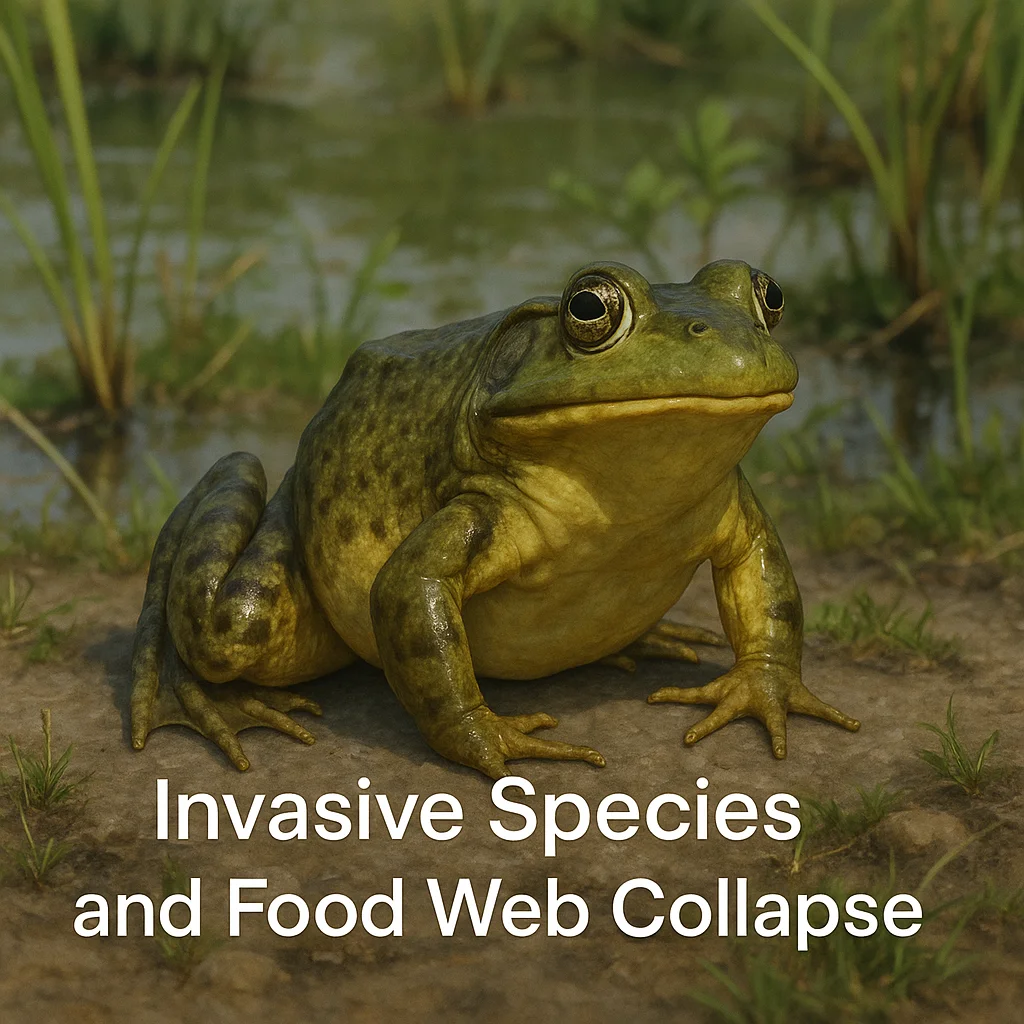
In some cases, invasive species have no natural predators in their new environment, allowing their populations to grow unchecked. This can lead to a destabilization of the local food web, impacting a variety of species within the same habitat. The concept of a food web involves the complex interactions between different species, including predators, prey, and various competitors that form a balanced ecological community.
This article will explore the habitats that are often affected by invasive species, the dynamics of how these species disrupt food webs, and the various factors that can lead to food web collapse. Additionally, readers will learn about the timeline of these processes and relevant factors that contribute to the extinction of native species.
🧭 Where It Lived
Invasive species can be found across the globe, occupying a variety of geographic ranges. They may become established in regions as diverse as North America's forests, the wetlands of Europe, or the grasslands of Africa. Additionally, island ecosystems, such as those in the Pacific or the Caribbean, are particularly vulnerable to invasive species due to their isolated nature and the unique species that have evolved there.
Habitats most often affected by invasive species include crucial ecosystems such as forests, wetlands, and coral reefs. These environments provide rich resources and varied niches that invasive species can exploit. For instance, wetlands, known for their biodiversity, may host invasive plants that can rapidly overgrow and choke local flora, impacting birds, aquatic species, and mammals that depend on indigenous plants for survival.
Island ecosystems are at a heightened risk because they often house species that are endemic, meaning they are found nowhere else in the world. The lack of predators or competitors often allows these native species to thrive, but also makes them highly susceptible to new species that can quickly dominate the landscape.
🌿 Habitat and Daily Life
Invasive species thrive in a range of climates, from tropical to temperate regions. They can adapt to various environmental conditions, whether in regions with heavy rainfall or distinct seasonal changes. Their flexible nature allows them to establish populations in places where native species may struggle.
The diet and lifestyle of invasive species vary widely, depending on their type. Many are generalists, capable of consuming a variety of food sources or altering their behavior to take advantage of available resources. This adaptability can lead to significant competition with native species for food and shelter.
Regarding reproduction, invasive species often have high reproductive rates, allowing them to rapidly increase their population size. This rapid growth can further stress local resources and lead to more pronounced impacts on endemic species, which might have slower reproduction rates and fewer offspring, leading to long-term ecological shifts.
🧬 What Made It Unique
Invasive species exhibit a range of physical traits that enable them to dominate their new environments. These traits might include rapid growth, efficient reproduction, or effective dispersal mechanisms, such as seeds carried by the wind or water.
Some invasive species have special abilities that allow them to alter ecosystems dramatically. For example, certain plant species can change soil chemistry or hydrology, while some animals may become keystone predators, reshaping the food web by reducing native species' populations through predation or competition.
Culturally and historically, invasive species have at times been introduced for specific human purposes, such as ornamental plants or for pest control, without understanding the long-term ecological consequences. This unintended consequence reinforces the importance of understanding ecological roles and interactions.
⏳ When It Disappeared
The appearance and establishment of invasive species often predate careful ecological records, making it challenging to pinpoint exact timelines. However, researchers rely on historical observations, anecdotal evidence, and ecological changes to assess the impact over time.
Instances where invasive species have contributed to the extinction of native species often involve a delayed recognition of ecological impact. This delay means that by the time the threat is fully understood, native species may already be on the verge of extinction.
In many cases, scientists declare a native species "extinct in the wild" when it can no longer sustain viable populations without human intervention. The acknowledgment of extinction often involves a careful cross-examination of ecological data, historical records, and field experiments.
⚠️ Why It Went Extinct
The extinction or drastic reduction of native species due to invasive species is often multi-causal, involving habitat loss, climate shifts, and direct competition. The introduction of invasive species can lead to habitat fragmentation, breaking up the continuous habitats that many native species rely on for food, shelter, and breeding.
Overhunting or overfishing in already stressed ecosystems can compound the issues created by invasive species, further reducing the chances for native populations to recover.
Invasive species often do not introduce disease directly, but their presence can alter habitats in ways that make them more conducive to pathogens that affect native species.
Climate changes or extreme weather events might also favor invasive species that adapt quickly, giving them an advantage over more specialized native organisms that struggle with rapid environmental changes.
🧩 How We Know (Evidence and Records)
Evidence of the impact of invasive species comes from various sources, including ecological studies, fossil records, and ongoing biological surveys. Fossils and subfossils can provide insight into what ecosystems looked like before invasive species were introduced.
Museum specimens and field notes play an essential role in identifying historical distributions and population sizes of native species. Coupled with photographs and oral histories, these records help reconstruct the timeline of ecosystem changes.
Genetic research allows scientists to trace lineage and determine how invasive species differ from or relate to native species, clarifying their impact. The challenge lies in accurately estimating when changes occurred since isolated or rare species might have gone extinct without being definitively documented.
🛡️ Could It Have Been Saved
Effective conservation strategies that might have mitigated the impact of invasive species include habitat protection, regulation of hunting and fishing, and direct management of invasive populations. However, these actions often require timely intervention and sufficient resources to be effective.
Captive breeding and reintroduction programs are options that can help restore populations of affected native species. These programs, however, also come with trade-offs, such as the risk of reduced genetic diversity or the difficulty of re-establishing a species in a significantly altered ecosystem.
In some cases, late conservation efforts can mitigate damage but are unlikely to reverse trends of extinction once they have become established, especially if the ecosystem has undergone considerable change.
🔁 Are There Any Survivors or Close Relatives Today
For many extinct native species, there may be closely related species that continue to survive in other parts of the world. These relatives can offer insights into the ecological roles and value of extinct species.
In some ecosystems, so-called "ecological replacements" may assume the roles vacated by extinct species. For instance, another species might become a new predator or spread seeds in ways similar to the extinct organism.
Reintroduction and captive breeding programs for surviving close relatives aim to stabilize ecosystems. These programs involve careful consideration of genetic diversity and ecological compatibility, ensuring that new introductions do not inadvertently harm the ecosystem further.
❓ Common Questions and Misconceptions
Was it hunted to extinction? While hunting can be a factor, invasive species often cause declines through competition and habitat alteration rather than direct predation.
Why didn’t it adapt or move? Many native species have specific habitat requirements, making adaptation or relocation difficult, especially in altered environments.
Could it still be alive somewhere? Environmental changes and detailed surveys make it improbable for many extinct species to be hiding, but undiscovered populations remain a possibility in remote or insufficiently explored areas.
What does 'declared extinct' actually mean? Declaring a species extinct is a scientifically rigorous process that involves ruling out all possibilities of undiscovered populations through thorough searches and evaluations.
What is the difference between endangered and extinct? Endangered species are at high risk of extinction but still have surviving populations, whereas extinct species no longer exist.
Why are island species so vulnerable? Island ecosystems often house unique species that lack natural defenses against newly introduced predators or competitors.
How do introduced species become invasive? Introduced species become invasive when they disrupt local ecosystems by outcompeting natives, quickly reproducing, or introducing new diseases.
Are all introduced species harmful? Not all introduced species become invasive; some coexist with native species without causing significant harm.
📌 Summary
- Invasive species can threaten local ecosystems by outcompeting native organisms.
- They can be found in diverse habitats, including forests, wetlands, and islands.
- Invasive species thrive in a variety of climates and adapt quickly to environmental changes.
- These species often compete with natives for food and resources, leading to food web disruption.
- They exhibit traits such as rapid reproduction and efficient resource use.
- Invasive species contribute to the extinction of native species through habitat alteration and competition.
- Evidence for impact includes fossil records, field notes, and ongoing surveys.
- Conservation strategies involve habitat protection and regulation of invasive species.
- Close relatives or ecological replacements sometimes fill roles left by extinct species.
- Island ecosystems are particularly vulnerable due to their unique endemic species.
- Effective conservation and management actions can protect native biodiversity.
- Understanding invasive species helps shape strategies for future ecosystem preservation.