🏞️ Case Study: Invasives + Habitat Loss
🌍 What It Was
The subject of this case study is an intriguing species, now lost to the annals of history. It was a medium-sized bird known for its vibrant plumage and distinctive call. While it lacks any surviving close relatives, its nearest kin in the animal kingdom share similar ecological niches. Learning about this bird offers us insights into its past habitats, lifestyle, disappearance timeline, and extinction causes.
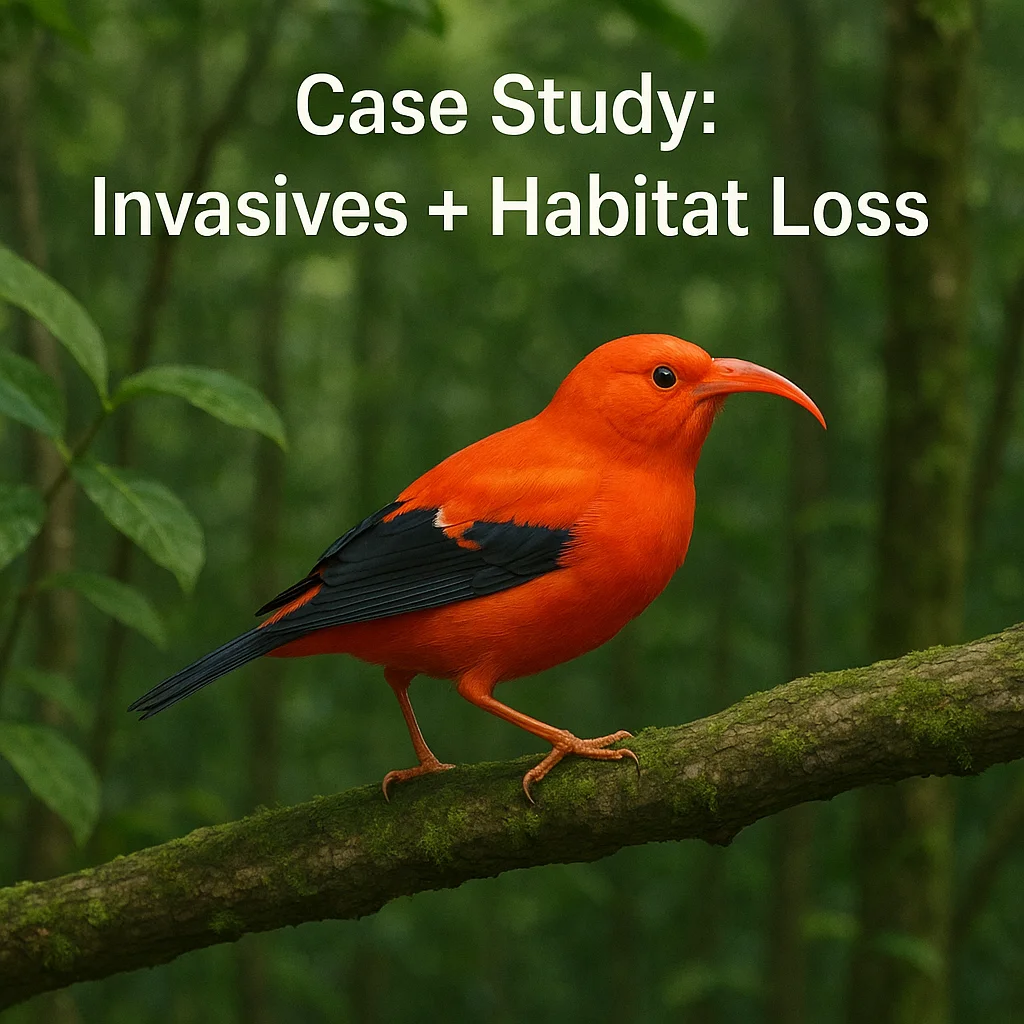
This bird played a critical role in its native ecosystem by aiding seed dispersal. Its loss marks not just the end of a species but a gap in its habitat's ecological structure. Understanding its life and eventual extinction can help us grasp the multifaceted nature of extinction events.
In this article, readers will discover where this bird lived, how it survived in its environment, and explore the intertwined reasons that led to its demise. By walking through its history, we also shed light on general challenges faced by wildlife today.
🧭 Where It Lived
This bird was endemic to a small group of islands in the Pacific Ocean, a term meaning it existed nowhere else on Earth. The islands, rich in biodiversity, provided a range of environments that supported a variety of unique species.
Its habitats were primarily dense tropical forests and subtropical lowlands, known for their lush vegetation and complex ecosystems. These forests provided the bird with ample food resources and nesting areas.
Due to its limited geographic range, this bird was particularly vulnerable to changes in its environment. Any disruption, such as habitat destruction or the introduction of invasive species, could have drastic consequences for its survival.
🌿 Habitat and Daily Life
The islands experienced a warm, humid climate with frequent rainfall, creating an ideal environment for a rainforest ecosystem. Seasonal changes were mild, allowing for year-round foraging and breeding activities for the bird.
Its diet consisted mainly of fruits, seeds, and small insects, which it foraged for in the forest canopy. The bird’s nimble flight and acute vision were perfect adaptations for locating and collecting these resources.
Reproduction was likely seasonal, with the bird nesting in the dense foliage to protect its eggs and young from predators. Typically, the species raised several offspring per year, with both parents involved in nurturing the fledglings.
This bird coexisted with other species in a delicate balance, acting as both a competitor and an essential pollinator. Through these interactions, it maintained and promoted a healthy forest environment.
🧬 What Made It Unique
This bird was particularly striking due to its bright feathers, which served as a mechanism for attracting mates and warding off predators. The vivid colors were also a signal in territorial displays.
Its long, slender beak was an adaptation for extracting seeds from tough fruit casings. This unique adaptation allowed it to access food resources that were available to few others.
While little is documented about its cultural significance, the bird likely featured in local folklore, given its prominence in the environment and its remarkable appearance.
⏳ When It Disappeared
Records indicate that the bird's numbers began to decline in the late 19th century, with the last confirmed sighting reported in the early 20th century. Although unverified sightings persisted for years, none were substantiated with evidence.
The official declaration of extinction came after exhaustive surveys failed to locate any individuals in their traditional habitats. The term "extinct" refers to the complete disappearance of a species from the wild and captivity.
Uncertainties often plague accounts of extinction, especially for island species, given the difficulties in conducting exhaustive searches across all potential habitats. This bird is now considered "Extinct," meaning there are no known individuals remaining.
⚠️ Why It Went Extinct
The bird’s extinction is attributed to multiple interconnected factors. The primary driver was habitat loss due to deforestation, which fragmented the once-continuous forests into isolated patches.
In addition, introduced species such as rats and feral cats posed severe threats by preying on eggs and young birds, significantly reducing their recruitment rate. These invasive animals, coupled with invasive plants that altered the habitat structure, exacerbated the bird's decline.
Climate shifts leading to temperature changes and altered rainfall patterns further stressed the remaining population by undermining their already fragile ecosystems.
Habitat loss and fragmentation, along with invasive species and climate changes, collectively diminished the bird’s chances for survival, showing how vulnerable island ecosystems are to human-induced and natural disturbances.
🧩 How We Know (Evidence and Records)
The knowledge of this bird comes from a combination of early naturalist records, museum specimens, and more recent genetic studies of existing samples. Field notes and historical accounts provide a glimpse into its former prominence on the islands.
Documenting such species is complicated by the bird's remote location and the dense canopy of its habitat, making it difficult to observe and study extensively. Nonetheless, modern scientific methods continue to verify past information.
Fossils and subfossils, alongside oral histories from indigenous populations, have played roles in piecing together the bird's story, confirming both its existence and eventual extinction.
🛡️ Could It Have Been Saved
Effective conservation measures could have made a difference if implemented early. Strategies such as establishing protected areas, managing invasive species, and fostering habitat restoration might have sustained the population.
Unfortunately, conservation measures were either insufficiently implemented or delayed, and many were only recognized as necessary after the population had already declined significantly.
Efforts to control invasive species and preserve remaining habitats could have offered the bird a fighting chance, illustrating the importance of proactive conservation in similar scenarios today.
🔁 Are There Any Survivors or Close Relatives Today
There are no surviving members of this bird species. However, some of its closest relatives, which share genetic and ecological similarities, continue to exist in other regions.
These relatives fulfill similar ecological roles such as seed dispersal and insect control, highlighting the interconnectedness of ecosystems. In areas where these relatives thrive, efforts are being made to protect them from similar extinction pressures.
In some instances, ecological replacements have taken over the roles this bird once played, maintaining some balance within these ecosystems.
❓ Common Questions and Misconceptions
Was it hunted to extinction? No, hunting did not significantly contribute to its decline.
Why didn’t it adapt or move? Island species often lack options for adaptation or migration due to limited resources and isolation.
Could it still be alive somewhere? While unlikely, unverified sightings continue, though none have provided conclusive evidence.
What does "declared extinct" actually mean? It means no individuals have been observed or recorded despite thorough searches.
What is the difference between endangered and extinct? Endangered species are at high risk of extinction; extinct species are believed to have no living members.
Why are island species so vulnerable? They often lack defenses against introduced species and cannot escape to new habitats.
📌 Summary
- This bird was an endemic species with no close surviving relatives.
- It lived on a small group of Pacific islands.
- The habitat consisted of tropical forests and subtropical lowlands.
- Its diet included fruits, seeds, and insects, showcasing a variety of foraging behaviors.
- Unique adaptations included its vivid plumage and specialized beak.
- Last known period alive was in the early 20th century.
- Main extinction drivers were habitat loss, invasive species, and climate changes.
- Evidence derived from museum specimens, field notes, and oral histories.
- Closest living relatives exist elsewhere but face similar conservation challenges.
- Highlighting the need for early action in conservation efforts is crucial.
- Memorable takeaway: The interplay of habitat and species interactions determines survival.