🏞️ Restoration Success Stories (Rare but Real)
🌍 What It Was
The story of the Xerces blue butterfly is a fascinating tale of extinction and restoration in the world of extinct animals and extinction science. This butterfly, known for its striking blue wings, was a small, delicate insect that once captivated those who encountered it.
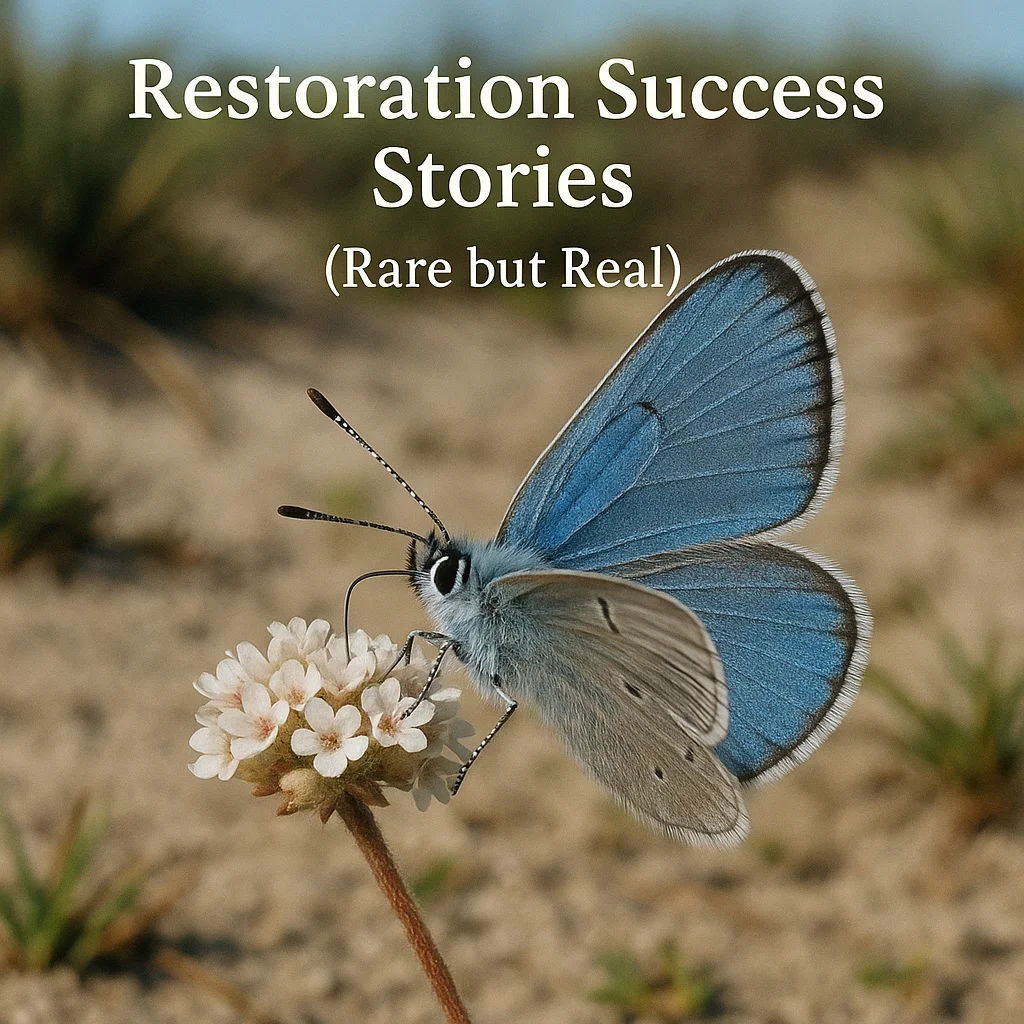
Its closest living relatives are other blue butterfly species that inhabit various regions around the world. These butterflies play crucial roles in their ecosystems, serving as pollinators and as a part of the food web.
In this exploration, we will uncover where the Xerces blue butterfly lived, its distinctive behaviors, how and when it disappeared, and the restoration efforts that reveal a glimmer of hope.
🧭 Where It Lived
The Xerces blue butterfly was native to the coastal sand dunes of the San Francisco Peninsula in California. It roamed these regions, flitting between low-growing shrubs and wildflowers. Its range was relatively limited, making it particularly vulnerable to environmental changes.
The habitat it relied on consisted of sandy dunes, which offered a unique assemblage of plant species adapted to thrive in this soil. These plants, in turn, provided essential nectar and a place to lay eggs, making the dunes a perfect home for the Xerces blue.
Due to its confined range and specialized habitat, any disruption in this environment posed significant risks to the butterfly's survival. The destruction of these dunes due to urban development was a key factor in its decline.
🌿 Habitat and Daily Life
The climate of the coastal dunes was characterized by mild temperatures and seasonal variations in rainfall. These conditions influenced the availability of nectar sources throughout the year, impacting the feeding habits of the Xerces blue butterfly.
The Xerces blue primarily fed on the nectar of native plants and was an active participant in pollination. This activity was crucial for plant reproduction and contributed to the overall health of the ecosystem.
The butterfly's life cycle included mating in the spring, followed by the laying of eggs on host plants. The caterpillars would then rely on these plants for nourishment before metamorphosing into adult butterflies. In its interactions with other species, it served as both prey and pollinator.
🧬 What Made It Unique
The Xerces blue butterfly was notable for its vivid blue wings, which set it apart from other butterflies. This coloring likely played a role in mate attraction and deterrence of predators. Its small size made it agile, allowing it to quickly move between flowers.
The butterfly's role as a pollinator was vital for sustaining the flora of the dunes. Its activities helped spread pollen, facilitating plant reproduction and maintaining ecological balance.
To the local communities, the Xerces blue held cultural significance as a symbol of the region's natural beauty, highlighting the importance of conservation efforts to preserve such wonders.
⏳ When It Disappeared
The Xerces blue butterfly was last reliably observed in the early 1940s. Over time, its sightings became increasingly scarce until it was declared extinct. The declaration was based on consistent absence in its known habitats over extended surveys.
The extinction process is complex, often requiring thorough searches and confirmation from experts. In this case, it involved multiple failed attempts to locate surviving populations despite dedicated efforts.
The loss of the Xerces blue was a poignant reminder of how delicate ecosystems can be and how quickly they can change.
⚠️ Why It Went Extinct
One of the primary causes of the Xerces blue's extinction was habitat loss due to urban development in the San Francisco area. The sand dunes that were vital to its survival were gradually destroyed to make way for residential and commercial spaces.
Other contributing factors included habitat fragmentation, which isolated populations and hindered genetic diversity, making recovery difficult. The introduction of non-native plant species also disrupted the availability of appropriate host plants required for egg-laying and caterpillar nourishment.
It is clear that multiple interacting pressures led to the demise of the Xerces blue butterfly, underlining the need for comprehensive conservation strategies.
🧩 How We Know (Evidence and Records)
The primary evidence for the Xerces blue’s existence and extinction comes from historical records, including field notes from entomologists and collected specimens preserved in museums. These offer insights into its habitat, behavior, and appearance.
The identification of this butterfly was confirmed through careful study of morphological features documented in photographs and sketches from the early 20th century.
Verification of its extinction involved exhaustive surveys of its former range without any re-sighting of viable populations, a process critical to species extinction confirmation.
🛡️ Could It Have Been Saved
Conservation actions that could have potentially saved the Xerces blue butterfly include preserving its natural dune habitats and managing urban expansion to minimize ecological impact. Limiting the introduction of invasive plants would also have been beneficial.
Efforts to control urban sprawl at an earlier stage could have mitigated some of the habitat loss and fragmentation. However, awareness and action often came too late for this butterfly.
In retrospect, a coordinated approach targeting habitat preservation alongside community engagement may have turned the tide for the Xerces blue.
🔁 Are There Any Survivors or Close Relatives Today
The closest living relatives of the Xerces blue butterfly are other gossamer-winged butterflies, which share similar ecological roles and habitats. They continue to pollinate plants and contribute to the natural cycles within their ecosystems.
While no direct reintroduction programs exist for the Xerces blue, restoration of its habitat could benefit related species and prepare the terrain for future conservation opportunities.
Programs aimed at protecting butterfly-rich habitats are crucial for maintaining biodiversity and could indirectly help related species thrive.
❓ Common Questions and Misconceptions
Was it hunted to extinction? No, the Xerces blue was not hunted; habitat destruction was the main cause.
Why didn’t it adapt or move? Its specialized habitat preferences limited its ability to adapt or relocate.
Could it still be alive somewhere? Extensive surveys have not found evidence of surviving populations.
What does 'declared extinct' actually mean? It means thorough searches failed to locate any individuals, confirming extinction.
What is the difference between endangered and extinct? Endangered species are at risk of extinction, whereas extinct species no longer exist.
Why are island species so vulnerable? Island species are often more vulnerable due to their isolation and smaller population sizes.
📌 Summary
- A small, vivid blue butterfly from California.
- Inhabited coastal sand dunes of San Francisco.
- Relied on specific dune plant ecosystems.
- Fed on nectar, a vital pollinator.
- Bright blue wings were a unique trait.
- Last seen reliably in the early 1940s.
- Main extinction drivers: habitat loss, fragmentation.
- Evidence from field notes, museum specimens.
- Closest relatives are other blue butterfly species.
- Conservation needs to address habitat preservation early.
- Key takeaway: proactive conservation can make a difference.