🏞️ Protected Areas: Why They Sometimes Fail
🌍 What It Was
Protected areas, often heralded as havens for wildlife, are designated regions where natural habitats and their inhabitants are preserved from human disturbance. These zones are instrumental in conservation efforts, providing vital spaces for endangered species to thrive without the pressures of habitat destruction and hunting.
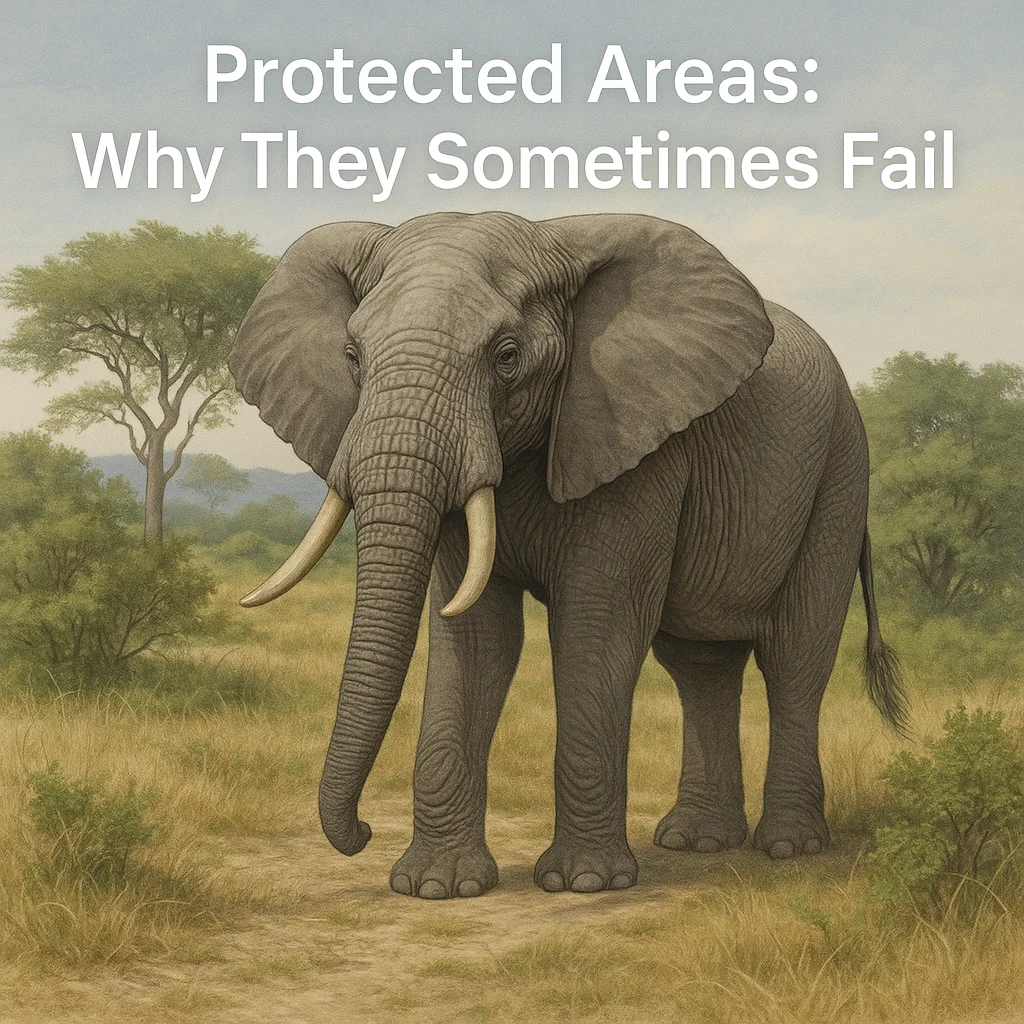
However, despite the best intentions, protected areas sometimes fall short of their goals. In this article, we will explore why these areas sometimes fail to prevent extinction, examining the various factors that influence their effectiveness.
This exploration will cover the intended purpose of protected areas, the challenges they face in implementation, and what can be learned from their successes and failures.
🧭 Where It Lived
Protected areas are established all around the world, ranging from vast national parks in Africa to small bird sanctuaries on isolated islands. These regions were created to safeguard diverse ecosystems like forests, wetlands, grasslands, and coral reefs, each hosting a unique array of wildlife.
Each protected area aims to shelter specific species and habitat types. For instance, the tropical rainforests of South America provide refuge for countless plant and animal species found nowhere else on Earth. In contrast, the Arctic wildlife refuges are designed to support species adapted to cold climates, such as polar bears and arctic foxes.
Unfortunately, the mere establishment of a protected area does not guarantee the safety of its inhabitants. Factors such as insufficient size, inadequate enforcement, and lack of connectivity with other natural areas often lead to ineffective conservation outcomes.
🌿 Habitat and Daily Life
The habitats within protected areas often feature a complex interplay of environmental factors, such as temperature, rainfall, and seasonal changes. This complexity supports a diversity of life, with species evolving specialized strategies for survival.
Species in these areas must navigate various ecological niches. Herbivores graze, pollinators like bees and butterflies assist in plant reproduction, and predators maintain population balances by hunting prey.
Reproduction and life cycles are intricately linked to these habitats. Animals may time their breeding to coincide with seasonal food availability or migrate to favorable breeding grounds within the protected boundaries.
Protection alone does not ensure these processes continue undisturbed. External pressures can disrupt these delicate balances, impacting species survival.
🧬 What Made It Unique
The unique traits and behaviors of species within protected areas contribute significantly to the ecosystem's health. Some species, like keystone species, play a crucial ecological role, disproportionately affecting their environment relative to their abundance.
Physical adaptations, such as the thick fur of mammals in colder regions or the specialized beaks of birds for specific feeding strategies, illustrate the myriad ways life has diversified to occupy its ecological niche.
Cultural significance can also play a role, with specific species holding historical or symbolic importance to local communities or global awareness, influencing conservation priorities.
⏳ When It Disappeared
The effectiveness of protected areas is often evaluated by the persistence of the species they host. Various records, scientific surveys, and local observations contribute to our understanding of when certain species last thrived within these regions.
Sometimes, only scant records are available, leading to uncertainty about the exact timing of a species' disappearance. Official declarations of extinction typically follow exhaustive investigations to ensure no remaining individuals exist in the wild.
This process can be lengthy, particularly for species spread over vast or remote areas, complicating timely conservation responses.
⚠️ Why It Went Extinct
Several factors can contribute to the failure of protected areas in preventing extinction. One major cause is habitat loss or fragmentation, where essential habitats are reduced or divided by human activities, isolating populations and reducing their chances of survival.
Overhunting, fishing, and collection continue to pose significant threats, even in protected areas, due to poaching and insufficient enforcement of anti-poaching regulations. These activities can greatly diminish populations, especially of slow-breeding species.
Introduced or invasive species can wreak havoc on native ecosystems, outcompeting or preying upon native species. Diseases transmitted through these encounters can also become a significant threat to the native wildlife.
Climate shifts and extreme events, such as droughts or hurricanes, may fall outside the mandate of human-controlled protection but have profound impacts on the habitats and the species they shelter.
Pollution, whether through chemical runoff or plastic waste, degrades natural habitats and can lead to declines in species reliant on clean environments, like aquatic life in marine protected areas.
🧩 How We Know (Evidence and Records)
The evidence supporting conservation outcomes in protected areas is collected from a variety of sources. Fossils, subfossils, and museum specimens provide historical baselines for species populations and distributions.
Modern methods include field notes, photographs, and genetic studies, which offer insights into species health and connectivity between fragmented populations. Verification of species identity and dates relies on these combined approaches.
Studies often grapple with challenges such as the rarity and nocturnal habits of certain species, or their residence in deep-sea or remote island habitats, which complicate accurate assessments.
🛡️ Could It Have Been Saved
Conservation actions can be pivotal in improving the efficacy of protected areas. Strategies such as enhancing habitat connectivity, restricting hunting, controlling invasive species, and establishing captive breeding programs can help bolster species populations.
Unfortunately, many of these actions often arrive too late to save highly endangered species. Trade-offs, such as balancing human needs with conservation, impede timely implementation of effective measures.
Documented late attempts at conservation have provided valuable lessons for future strategies, highlighting the importance of proactive rather than reactive measures.
🔁 Are There Any Survivors or Close Relatives Today
While some species may have close living relatives, often filling similar ecological roles, they do not always serve as perfect substitutes. In cases where reintroduction or captive programs exist, they aim to reestablish populations in their native habitats.
The concept of "ecological replacements" involves identifying a species that can operate within the same ecological niche, supporting the continuation of key ecosystem functions.
❓ Common Questions and Misconceptions
Was it hunted to extinction? Although hunting has driven some species to extinction, it's generally a combination of factors that contributes to a species’ decline.
Why didn’t it adapt or move? Rapid environmental changes and habitat fragmentation can outpace a species' ability to adapt or migrate to safer areas.
Could it still be alive somewhere? While possible, it's unlikely without definitive sightings or evidence due to thorough surveys and monitoring.
What does 'declared extinct' actually mean? It indicates that exhaustive exploration has found no living individuals remaining in the wild.
What is the difference between endangered and extinct? Endangered species face a high risk of extinction, whereas extinct species no longer exist anywhere.
Why are island species so vulnerable? Island species often evolved without natural predators and face high risks from invasive species and habitat loss.
📌 Summary
- Protected areas are intended to shield endangered species from human impact.
- Ineffectiveness can occur due to insufficient size and poor enforcement.
- Habitats range from forests and wetlands to coral reefs.
- Species rely on these habitats for food, breeding, and protection.
- Adaptations reflect niche specialization, maintaining ecosystem health.
- Human activities can disrupt these delicate systems.
- Climate shifts, habitat loss, and pollution contribute to failures.
- Scientific evidence validates conservation outcomes and challenges.
- Conservation actions need timely, proactive implementation.
- Close relatives and ecological replacements offer some hope for lost roles.
- Balancing human needs with conservation remains complex but crucial.
- A key takeaway is the importance of understanding and mitigating multi-causal extinction factors.