🏞️ How Roads and Cities Accelerate Extinction
🌍 What It Was
Extinction, the permanent loss of a species, is a natural part of life on Earth. However, human activities have accelerated this process, leading to the disappearance of countless animal species worldwide. Roads and cities play a significant role in this alarming trend.
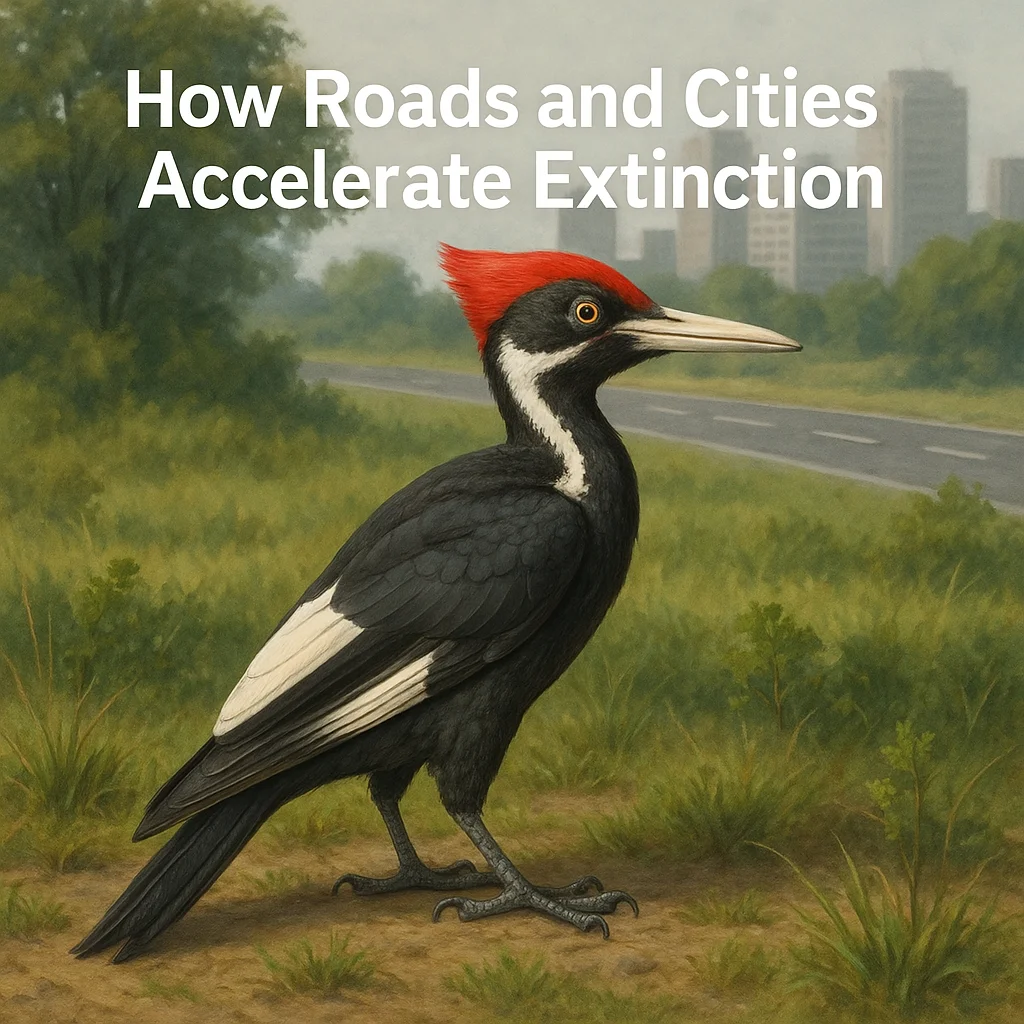
Understanding how these human-made structures contribute to extinction is essential for conserving biodiversity. In this article, readers will learn about various factors related to urban development and road building and their impact on animal populations.
The focus is on broadly explaining the interaction between urban development and extinction, making complex ideas accessible to beginners. We'll cover the reasons, evidence, and impact of human expansion on the natural world.
🧭 Where It Lived
Many species affected by roads and cities once inhabited vast geographic regions. The spread of urban areas often overlaps with the natural habitats of diverse species, from dense forests to open plains and wetlands.
Urban development tends to be concentrated along coastlines, river valleys, and fertile lands. These areas are also biologically rich, providing homes for many endemic species—those found nowhere else on Earth.
Species with restricted ranges are particularly vulnerable. If a city grows within their habitat, these animals and plants face numerous challenges to survive. Habitat fragmentation, where large habitats become divided into smaller patches, increases the risk of extinction.
🌿 Habitat and Daily Life
Animal habitats provide food, shelter, and the right conditions for breeding. These environments vary widely, from temperate forests with their distinct seasons to tropical rainforests that offer a consistently warm and wet climate.
For instance, species might depend on specific plants or prey available only within their habitat. Roads and cities alter these dynamics, often cutting animals off from their primary food sources.
Social structures within animal communities can also suffer. For animals that migrate or move widely to forage, urban development poses a tremendous survival challenge, affecting everything from daily life to reproduction.
🧬 What Made It Unique
Each species evolved distinct physical traits and behaviors that helped it thrive in its environment. Some animals possess specialized adaptations, like camouflaged coloring for avoiding predators, or specific dietary needs that align with available vegetation.
Species play unique roles in their ecosystems, such as being top predators maintaining prey population balance or pollinators crucial for plant reproduction. Their extinction may lead to significant imbalances and further loss of biodiversity.
These ecological roles highlight the importance of every species within an ecosystem, forming complex interdependencies that roads and cities can disrupt.
⏳ When It Disappeared
Extinction can unfold gradually or occur rapidly. Before declaring a species extinct, researchers review historical sightings, field notes, and ecological studies to ensure accurate assessments. This thorough process acknowledges uncertainty and aims to avoid premature conclusions.
In some cases, species become “extinct in the wild” but survive in captivity or through conservation programs, offering a glimmer of hope for eventual reintroduction.
However, the timeline toward declared extinction often reveals the complex interplay of multiple threats, emphasizing the urgent need for timely conservation actions.
⚠️ Why It Went Extinct
Habitat loss and fragmentation are primary causes, often resulting from road networks bisecting landscapes and urban expansion consuming natural areas. This leads to isolated animal populations with reduced genetic diversity.
Overexploitation, including hunting and collection, can decimate populations, especially when roads provide access to previously remote regions. Newly accessible habitats become prime targets for resource extraction and poaching.
Invasive species flourish with urban expansion, competing for resources or introducing diseases to native populations. This additional stress can tip vulnerable species toward extinction.
Climate shifts further exacerbate these issues, as changing temperatures, altered rainfall patterns, and extreme weather events can render traditional habitats uninhabitable for some species.
🧩 How We Know (Evidence and Records)
To understand extinction, scientists rely on various evidence types such as fossils, subfossils, and museum specimens. These provide physical proof of past existence and can help pinpoint extinction events.
Field notes and photographs document sightings, while genetics offers insights into population declines and relationships between species. Accurate records are crucial for reconstructing species’ life histories and assessing their current status.
Confirming extinction is challenging, especially for elusive, nocturnal, or deep-sea species that naturally evade human detection. This uncertainty underscores the complexity of studying extinction.
🛡️ Could It Have Been Saved
Prevention through habitat protection and legal frameworks could have shielded many species from extinction. Establishing protected areas can safeguard essential habitats, maintaining ecological processes.
Limiting hunting and resource extraction might have reduced pressure on vulnerable populations. However, in many cases, awareness and action came too late, highlighting the need for proactive conservation strategies.
Captive breeding and reintroduction programs offer last-resort options for saving species on the brink, though these initiatives come with significant challenges and require careful planning.
🔁 Are There Any Survivors or Close Relatives Today
When species go extinct, their closest living relatives remain, carrying shared genetic and ecological traits. These relatives can offer insights into past ecosystems and the roles extinct species played.
In some cases, "ecological replacements" fill similar roles, though they might not replicate the exact function of the extinct species. Understanding these relationships helps guide current conservation efforts.
If efforts exist for reintroduction or in situ preservation of relatives, they emphasize the importance of maintaining biodiversity and the delicacy of ecosystem balance.
❓ Common Questions and Misconceptions
Was it hunted to extinction? While hunting contributes to some extinctions, habitat loss and fragmentation are often primary drivers.
Why didn’t it adapt or move? Adaptation takes generations, and rapid changes from urbanization outpace evolutionary processes.
Could it still be alive somewhere? While sightings may occur, confirmed evidence is necessary for validation.
What does 'declared extinct' actually mean? This status is given when thorough searches fail to locate the species in its natural or expected habitat.
What is the difference between endangered and extinct? Endangered species face imminent risk of extinction, while extinct species have no surviving individuals.
Why are island species so vulnerable? Geographic isolation limits mobility and genetic diversity, making island species less resilient to external threats.
📌 Summary
- Streets and cities contribute significantly to accelerating extinction rates.
- Urban expansion overlaps with rich natural habitats.
- Habitats fragmented by development disrupt animal living spaces.
- Species face hunting and competition from invasive species.
- Specialized adaptations are compromised by ecological changes.
- Extinction often results from multiple interacting causal factors.
- Evidence types help reconstruct extinction timelines.
- Increased accessibility raises risks of overexploitation.
- Conservation strategies require timely implementation.
- Trade-offs exist between urban growth and biodiversity conservation.
- The close observation of relatives helps inform ecological shifts.
- Understanding these complexities forms the basis for effective conservation action.