🏞️ Habitat Loss (The #1 Driver of Extinction)
🌍 What It Was
Habitat loss is widely recognized as the leading cause of extinction for countless animal species across the globe. This process can completely alter or destroy the environments that creatures rely on for survival. Animals that once thrived in lush forests, diverse wetlands, or vibrant coral reefs have seen their homes disappear due to various human activities.
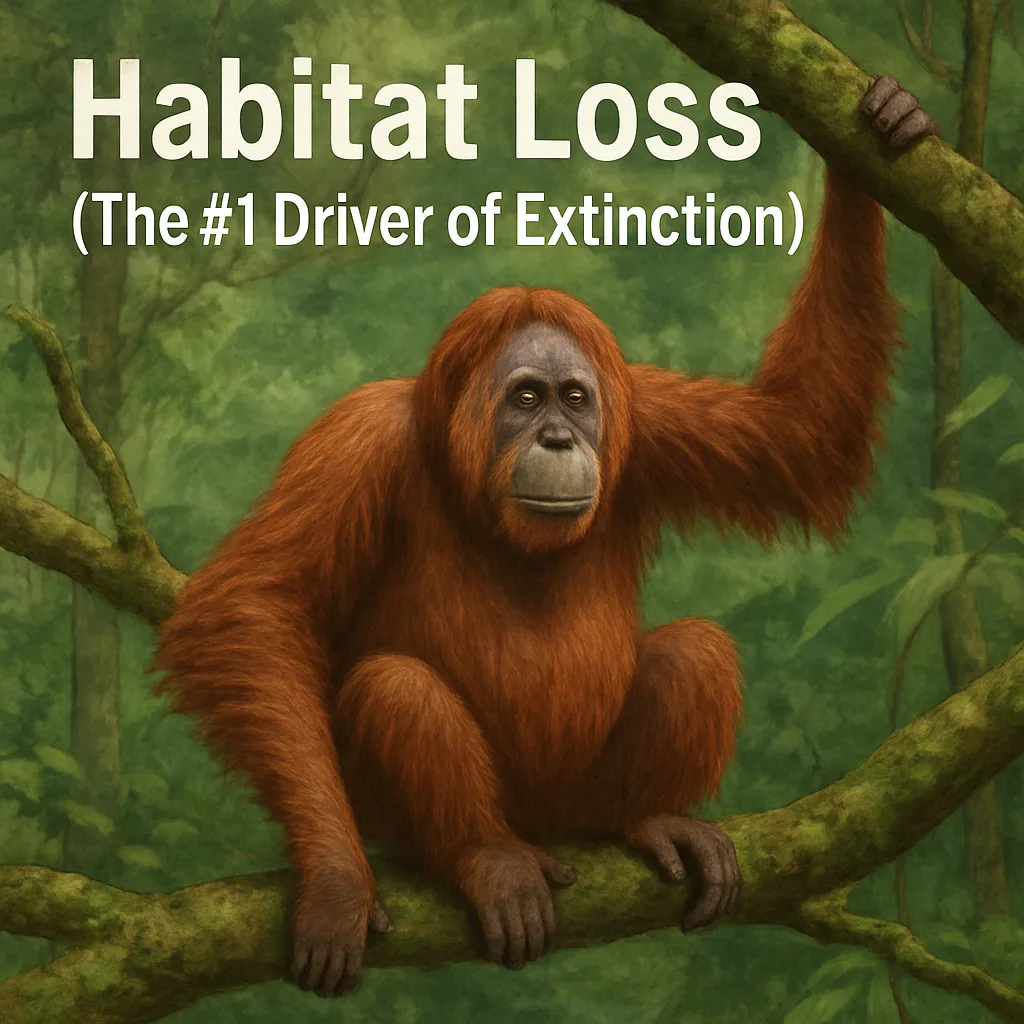
When animals lose their habitats, they often face challenges that can lead to extinction. Many animals have specific ecological roles and relationships with other species, which become disrupted when habitats are fragmented or destroyed. Understanding habitat loss is key to exploring why so many species have vanished and what can be done to prevent further losses.
This article will guide you through the essential aspects of habitat loss, from where affected species lived and how they lived, to when they disappeared and the factors driving these losses. We will also look into current efforts and hopes for conservation.
🧭 Where It Lived
Many extinct animals once inhabited expansive geographical ranges, like the Dodo, which was limited to the island of Mauritius in the Indian Ocean. The limited range of island species often means any change to their habitat can have a drastic impact on their survival.
On the other hand, animals like the Passenger Pigeon thrived across the vast forests of North America. These birds relied on extensive forested areas for roosting and nesting. Their dependency on a particular type of habitat made them vulnerable when those forests began to disappear due to logging and agricultural expansion.
Some animals were highly specialized and could only thrive in very specific habitats. These specialized environments—like coral reefs, wetlands, or alpine meadows—face unique threats, making their inhabitants particularly susceptible to extinction.
🌿 Habitat and Daily Life
Many extinct animals lived in diverse environments, ranging from tropical rainforests with heavy rainfall and rich biodiversity to arid deserts with extreme temperatures and scarce resources. These climates shaped their behaviors and survival strategies.
Their diets varied widely; some fed on abundant plant life, while others preyed on various smaller animals, insects, or fish. For example, the Great Auk, a flightless bird, foraged in cold ocean waters, hunting for fish to sustain its colonies.
Reproduction often followed seasonal patterns with breeding seasons timed to ensure an abundance of food for offspring. Social structures and interactions with other species also played a crucial role, from predator-prey dynamics to symbiotic relationships providing mutual benefits.
🧬 What Made It Unique
Extinct animals possessed unique physical traits that fulfilled specific roles within their environments. Some were remarkably large, like the mammoth, adapted with insulating fur and massive tusks suited for the icy expanses of the ancient tundra.
Other animals, like the Tasmanian Tiger, had distinctive striped patterns that provided camouflage and aided their role as top predators in the Australian ecosystem. Such adaptations made them key players in ecological balances.
Many species also held cultural significance for indigenous peoples, featuring prominently in folklore and tradition, often symbolizing traits admired in nature, such as strength or cunning.
⏳ When It Disappeared
The timeline for extinction varies widely among species. For some, like the Passenger Pigeon, rapid population declines were recorded, with the last confirmed sighting in the early 20th century. For others, the process of declaring extinction is more gradual, requiring thorough investigation of historical records and sightings.
Last reliable sightings and the collection of definitive evidence are crucial for declaring extinction. For instance, the Ivory-billed Woodpecker's status remains uncertain due to occasional unverified reports and its elusive behavior.
Once declared extinct, it means no individuals have been confirmed alive despite exhaustive searches, with "Extinct in the Wild" indicating a species survives only in captivity.
⚠️ Why It Went Extinct
Habitat loss and fragmentation are among the primary drivers of extinction, as natural landscapes are altered or destroyed for agriculture, urban development, and resource extraction. This leads to smaller, isolated populations, disrupting breeding and increasing vulnerability.
Overhunting and overfishing also contributed, as humans exploited certain species for food, sport, or trade, sometimes to the point of no return. The once vast herds of American Bison dwindled due to extensive hunting.
Introduced species can dramatically alter ecosystems by competing for resources, preying on native species, or spreading diseases, as seen with the introduction of rats on islands impacting ground-nesting birds.
Climate shifts and extreme weather events further aggravate habitat conditions, with temperature changes affecting food availability and breeding patterns. Pollution also wreaks havoc on fragile ecosystems, contaminating water and soil, impacting the health of countless species.
🧩 How We Know (Evidence and Records)
The evidence for habitat loss-driven extinction includes a mix of scientific data and historical records. Fossils and subfossils provide past snapshots, while museum specimens and detailed field notes offer insight into species' status over time.
Using advanced genetics, scientists can study DNA remains to verify species identity and understand their evolutionary history. Oral histories from local inhabitants also contribute valuable information in species tracking.
Despite efforts, some species remain challenging to confirm due to their elusive behaviors or remote habitats, requiring careful investigation of potential sightings or leads.
🛡️ Could It Have Been Saved
Conservation efforts may have offered a chance for saving some species. Creating protected areas or reserves could have preserved critical habitats. Imposing limits on hunting and fishing would have mitigated human impacts.
Controlling invasive species presents another strategy, though challenging, to restore ecosystem balance. Captive breeding programs can help maintain genetic diversity and offer possibilities for future reintroductions.
Unfortunately, conservation action often came too late, as awareness of the crisis grew only after populations had severely declined beyond the point of recovery.
🔁 Are There Any Survivors or Close Relatives Today
Many extinct species have close living relatives that share common characteristics. The closely related Asian Elephant is considered the nearest living relative of the Woolly Mammoth, sharing similar traits despite the harsh conditions each lived in.
Ecological replacements sometimes emerge, stepping into roles left vacant by extinct creatures. For example, the role of seed dispersal can be picked up by other frugivores if the original species disappears.
In some cases, reintroduction programs aim to re-establish populations in their native habitats. These efforts require careful planning and consideration of the ecosystems' current state and challenges.
❓ Common Questions and Misconceptions
Q: Was it hunted to extinction? A: While hunting contributed to some extinctions, habitat loss often played a larger role.
Q: Why didn’t it adapt or move? A: Many species are highly adapted to specific environments; sudden habitat destruction leaves them with few options.
Q: Could it still be alive somewhere? A: Chances are slim if exhaustive searches reveal no evidence of existence, but some species might still exist in undetected pockets.
Q: What does 'declared extinct' actually mean? A: It means no surviving individuals have been confirmed despite extensive searching.
Q: What is the difference between endangered and extinct? A: Endangered means a species is at high risk of extinction, while extinct means there are no surviving individuals.
Q: Why are island species so vulnerable? A: Island species often have limited ranges and unique environments, making them more susceptible to changes like habitat loss.
📌 Summary
- Habitat loss is the leading driver of extinction for many species.
- Extinct animals lived in diverse habitats—forests, wetlands, islands.
- These habitats face threats from human activity, climate change, and invasives.
- Species had varied diets and ecological roles in their ecosystems.
- Unique adaptations made them necessary players in biodiversity.
- The extinction timeline varies from rapid to gradual recognition.
- Main drivers include habitat loss, overexploitation, and invasive species.
- Evidence comes from fossils, specimens, historical records, and genetics.
- Conservation efforts often begin late, but success is possible.
- Living relatives and ecological replacements continue the roles of extinct species.
- Conservation lesson: protect habitats to preserve biodiversity.
- Awareness and proactive conservation are crucial to preventing future extinctions.