🏞️ Fragmentation: When Habitats Split Apart
🌍 What It Was
Habitat fragmentation refers to the process where large habitats are broken into smaller, isolated patches. This phenomenon can affect various types of landscapes, from forests to aquatic environments, and poses serious challenges to biodiversity.
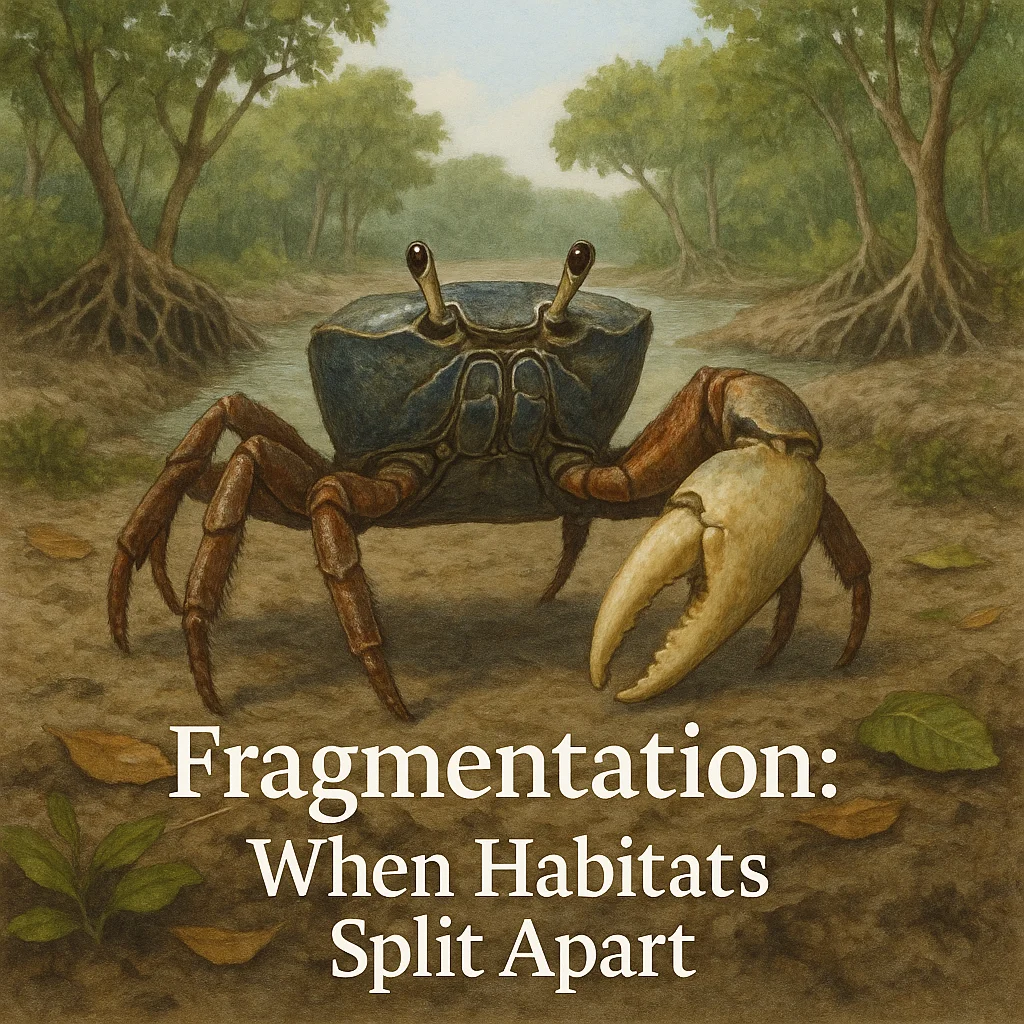
As habitats become fragmented, populations of animals that once thrived in extensive and uninterrupted environments face new challenges. This can lead to populations becoming isolated from one another, a situation that can result in decreased genetic diversity and increased vulnerability to extinction.
In this article, we explore the impacts of habitat fragmentation, understand why it occurs, and examine some of the animal species affected by this process. We will also consider what can be done to mitigate fragmentation and conserve vulnerable species.
🧭 Where It Lived
The regions most affected by habitat fragmentation are often areas experiencing rapid development or forest logging. This includes tropical rainforests in the Amazon, Southeast Asia, and Central Africa, as well as specific areas in North America and Europe.
Tropical rainforests, known for their rich biodiversity, rely heavily on large, connected habitats to sustain the complex web of species that reside within them. When these forests are cut down to create roads, agriculture, or urban areas, the once contiguous forest gets divided, severely impacting its natural inhabitants.
Forest fragmentation doesn’t confine itself to tropical areas. Temperate regions with extensive agriculture and urban sprawl also experience significant habitat fragmentation. For species endemic to specific isolated regions or islands, such as Madagascar or the Galápagos Islands, fragmentation can lead to even greater risks of extinction.
🌿 Habitat and Daily Life
The climate in fragmented regions can vary widely. Tropical areas generally experience high rainfall and warm temperatures year-round, providing the necessary environment for diverse animal and plant species. In contrast, temperate regions may have more defined seasons, influencing animal behavior and reproductive cycles.
Animals in fragmented habitats often suffer from altered or restricted food resources. Some animals, such as large predators, require large territories for hunting. When these are fragmented, predators may struggle to find enough prey, leading to population decline.
Reproduction can also be affected when habitats are fragmented. Many animal species depend on specific habitats for breeding and raising their young. When these areas are fragmented or lost, species may struggle to reproduce successfully, putting future generations at risk.
🧬 What Made It Unique
Each fragmented habitat hosts unique adaptations among the species that live there. For instance, in dense rainforests, animals might develop exceptional climbing abilities or camouflage to navigate and survive in their environment.
Some species play crucial roles in their ecosystems, such as seed dispersers in forests or pollinators in various plant communities. The loss or reduction of these key species due to fragmentation can have ripple effects throughout the ecosystem.
The cultural significance of specific species can also be noteworthy, as they may play roles in local traditions or ecotourism, vital for local economies but precarious if their habitats are endangered.
⏳ When It Disappeared
Many species affected by habitat fragmentation experience what's known as "functional extinction" long before being declared fully extinct. This means that while some individuals may still exist, their numbers are too few to maintain viable, self-sustaining populations.
The timeline of extinction varies with different species. In many instances, fragmentation begins affecting populations almost immediately, but the complete extinction event might not be recognized for decades.
Species that are heavily monitored or endemic to smaller regions are often the earliest indicators of fragmentation impact. The last recorded sightings of some species may offer insights into the fragmentation process, but these records can sometimes be outdated or inaccurate.
⚠️ Why It Went Extinct
Habitat loss and fragmentation are primary drivers of extinction. As human activities raze large swaths of habitat, the resulting isolation reduces genetic interchange, lowers resilience, and diminishes ecosystem services.
Other contributing factors to extinction due to fragmentation include overhunting and overfishing. Animals in fragmented habitats may be more accessible to hunters or fishers, leading to heightened pressure.
The introduction of invasive species in fragmented areas can also spell doom for native species. Without natural defenses against these invaders, native populations may plummet.
🧩 How We Know (Evidence and Records)
The study of fragmentation and its effects involves collecting diverse sources of evidence: ecological surveys, satellite imagery, historical land use data, and even genetic analysis. Each provides different insights into the impact of fragmentation over time.
Museum specimens and oral histories from indigenous communities offer historical baselines for biodiversity before significant fragmentation occurred, providing context for current changes.
Determining exact timelines or extinctions is challenging, however, as data can vary greatly depending on the species and how recent research has been conducted.
🛡️ Could It Have Been Saved
Conservation strategies that could mitigate habitat fragmentation include creating wildlife corridors to connect fragmented habitats, establishing protected areas, and enforcing land-use restrictions.
In some cases, efforts to save species came too late or lacked the necessary resources and political will. Moreover, balancing economic growth with conservation can often create conflicts of interest.
Where efforts were applied in time, such as in captive breeding programs or protected reserves, the outcomes have been positive for several species. However, these strategies require significant resources and long-term commitment.
🔁 Are There Any Survivors or Close Relatives Today
In some cases, species affected by fragmentation have close living relatives that continue to thrive in less disturbed environments. These relatives can offer insights into the biology and needs of their more vulnerable kin.
"Ecological replacements" are species that may take on similar roles in an ecosystem to those lost, though they might not fully compensate for the gone species' specific ecological functions.
Occasionally, efforts to reintroduce species to areas where they were once extirpated have succeeded, representing hope for recovery through conservation actions.
❓ Common Questions and Misconceptions
Was it hunted to extinction? Often, it was a mix of factors, including hunting.
Why didn’t it adapt or move? Some species can't quickly adapt to habitat changes or move due to geographic barriers.
Could it still be alive somewhere? In some remote locations, unrecorded individuals might exist, but this is unlikely for most declared extinctions.
What does 'declared extinct' actually mean? It means that despite extensive searches, no living individuals have been found.
What is the difference between endangered and extinct? Endangered species are at high risk of extinction but still have some surviving individuals.
Why are island species so vulnerable? Island species often evolved without significant predators and have limited ranges, making them highly susceptible to change.
📌 Summary
- Habitat fragmentation occurs when large habitats split into smaller patches.
- Impacted regions include tropical rainforests in the Amazon and temperate zones.
- Habitat types affected include forests, wetlands, and others.
- Fragmentation affects species' food sources and reproductive success.
- Species play key roles as seed dispersers and pollinators.
- Functional extinction can occur before declared extinction.
- Main drivers include habitat loss, invasive species, and overhunting.
- Evidence includes ecological surveys and satellite imagery.
- Some close relatives thrive in less disturbed habitats.
- Conservation lessons center on protecting habitats and creating corridors.
- Fragmentation highlights the complexity and interconnectivity of ecosystems.