🏞️ Silver Trout
🌍 What It Was
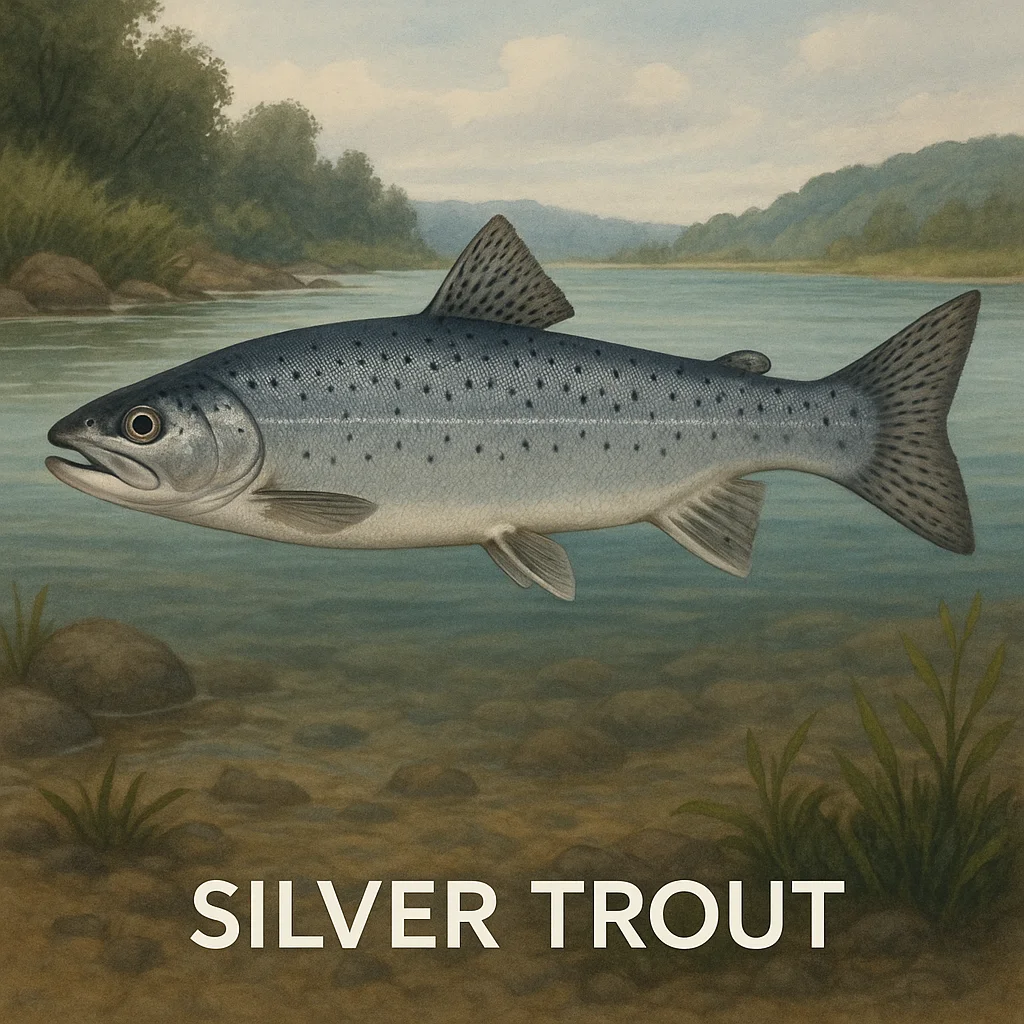
The Silver Trout was a type of freshwater fish that belonged to the Salmonidae family. It was known for its shimmering, silver-colored body, which helped it blend into its aquatic environment. This fish was once found in certain parts of North America and exhibited characteristics typical of other trout species, such as a streamlined body for efficient swimming.
The closest living relatives of the Silver Trout include the Brook Trout and the Lake Trout, both of which are still present in various freshwater systems today. These relatives share similar habitats and dietary preferences. The Silver Trout played a role in its ecosystem by serving as both a predator and prey, maintaining the balance of aquatic life.
In this article, you will learn about where the Silver Trout lived, its lifestyle, the factors that led to its extinction, and the evidence scientists have gathered to confirm its disappearance. We will also explore lessons for conservation efforts regarding this fascinating fish.
🧭 Where It Lived
The Silver Trout was native to northeastern parts of North America. Historical records indicate that it inhabited waters within what is now known as New Hampshire and Vermont. Its range was fairly localized, focusing on specific river systems and inland lakes.
This fish relied on clear, cold-water habitats, which are characterized by their abundant oxygen levels and relatively stable temperatures. Such environments are essential for sustaining the life cycle of trout species. The Silver Trout's preference for these waters often made it more susceptible to changes in its environment.
Being highly localized meant that the Silver Trout was particularly vulnerable to habitat changes. When ecosystems are limited to small geographic areas, any disruptions or modifications, whether natural or human-induced, can have significant impacts on survival and reproduction rates.
🌿 Habitat and Daily Life
The climate in the Silver Trout's habitat featured cold winters and moderate summers, with adequate rainfall to support freshwater environments. The fish thrived in these conditions, benefiting from seasonal flows that brought nutrients and supported diverse aquatic life.
Silver Trout primarily fed on small aquatic invertebrates and other fish, employing an opportunistic foraging strategy. The fish's keen eyesight and quick movements enabled it to capture prey with efficiency, while its streamlined body facilitated swift swims against the current.
The life cycle of the Silver Trout involved spawning in gravel beds of streams during the spring. Females would lay eggs in nests known as redds, which were then fertilized by males. The eggs would hatch into fry, eventually maturing into adult fish, contributing to the population dynamics.
The presence of predators such as larger fish and birds added a layer of complexity to its existence, while competition with other fish for food resources played a role in its survival strategy. These interactions defined much of the Silver Trout’s daily life in its freshwater home.
🧬 What Made It Unique
The distinctive silver coloration of the Silver Trout was more than aesthetic; it served as camouflage in the reflective waters, aiding in its survival by making it less visible to predators. The fish's elongated, streamlined form was an adaptation for navigating fast-flowing waters.
Silver Trout also had a strong sense of smell, which was crucial for locating food and navigating back to spawning grounds. Historically, this species held some significance for local fishing communities, contributing to regional fisheries before its numbers declined.
⏳ When It Disappeared
The Silver Trout was last reliably documented in the early 1900s. With sightings and population numbers dwindling, it was eventually declared extinct. The process of declaring a species extinct involves assessing all available data, including field surveys and historical records.
Uncertainty often exists over the exact timing of extinction, especially in remote or hard-to-access areas. Lack of recent sightings, despite focused scientific efforts, leads to such conclusions. As with many extinct species, the Silver Trout’s disappearance was gradual, with acute factors accelerating decline.
⚠️ Why It Went Extinct
The extinction of the Silver Trout was primarily driven by habitat loss and fragmentation, as human development and land-use changes altered its freshwater environments. Water pollution and habitat disruption from industrial activities further reduced suitable habitats.
Introduced species also played a role. Non-native fish species often outcompeted the Silver Trout for food and resources, while some preyed directly on them or their young. This competition was exacerbated by the fish's already limited geographic range.
Climate shifts affected water temperatures and flow patterns, adding stress to their population. Cooler, stable temperatures essential for breeding became altered, impacting reproductive success. Collectively, these factors led to a reduction in numbers and genetic diversity, sealing the fate of this trout.
🧩 How We Know (Evidence and Records)
Evidence of the Silver Trout's existence includes museum specimens, which provide physical proof of the species, along with field notes and photographs from early naturalists. These records offer insights into its former distribution and morphological characteristics.
Scientists use genetic analyses to corroborate identification and lineage, while examining ecological data to understand its role and eventual disappearance. However, because the Silver Trout was relatively rare, comprehensive records are somewhat limited, necessitating reliance on multiple evidence forms for conclusive findings.
🛡️ Could It Have Been Saved
Potential conservation actions for the Silver Trout could have included setting aside protected habitats and implementing stricter regulations on fishing to prevent overexploitation. Control measures for invasive species might have reduced competitive pressures.
Awareness of its declining numbers came too late for effective interventions. Early recognition and action are crucial to conserving species at risk, highlighting the need for continuous monitoring and adaptive management of fragile ecosystems.
🔁 Are There Any Survivors or Close Relatives Today
Today, the closest relatives of the Silver Trout, such as the Brook Trout and the Lake Trout, survive and share several ecological and morphological traits. These remaining species act as ecological replacements, occupying similar niches in freshwater environments.
While no direct reintroduction or captive breeding efforts exist for the Silver Trout, the presence of its relatives underscores conservation strategies that can help protect these surviving fish populations.
❓ Common Questions and Misconceptions
Was it hunted to extinction? While fishing contributed, habitat loss and competition with invasive species were major factors.
Why didn’t it adapt or move? The Silver Trout was highly specialized to its local ecosystem, limiting its ability to adapt quickly to changes or relocate.
Could it still be alive somewhere? It's unlikely, as extensive surveys have not found evidence of surviving populations.
What does 'declared extinct' actually mean? It means that after comprehensive research and surveys, no members of the species have been found alive.
What is the difference between endangered and extinct? Endangered species are at high risk of extinction, but still exist; extinct species have no surviving individuals.
Why are island species so vulnerable? Island species often have limited ranges and specialized habitats, making them sensitive to environmental changes and human impacts.
📌 Summary
- A type of freshwater fish known for its silver coloring
- Native to northeastern North America
- Relied on cold-water habitats like clear streams
- Diet included aquatic invertebrates and smaller fish
- Streamlined body and silver color for camouflage
- Last documented in the early 1900s; declared extinct
- Main drivers: habitat disruption, competition with non-natives
- Evidence includes museum specimens and field notes
- Closest relatives are Brook and Lake Trout
- Importance of early detection and proactive conservation
- The limited range made it vulnerable to environmental changes