🏞️ Chinese Paddlefish
🌍 What It Was
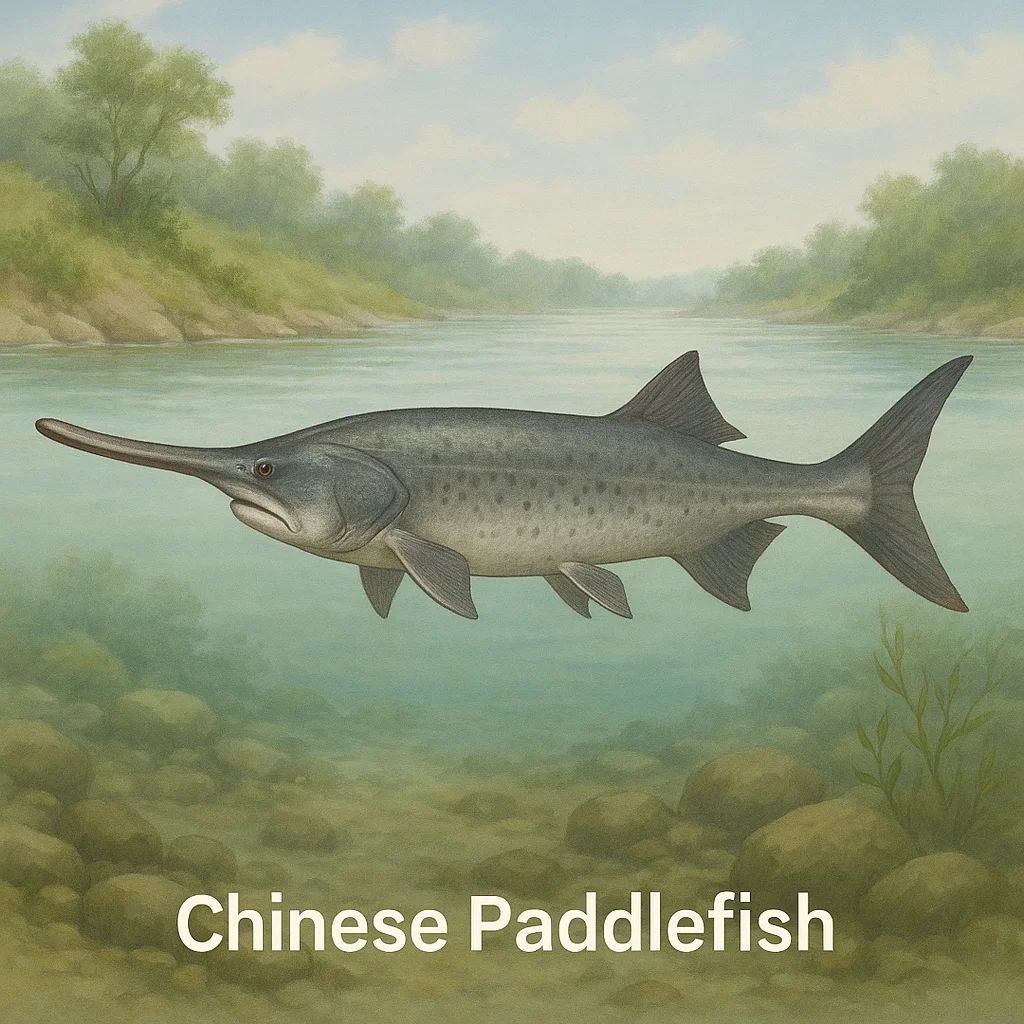
The Chinese paddlefish, scientifically known as Psephurus gladius, was a large freshwater fish endemic to the Yangtze River in China. It was known for its distinctively long, paddle-shaped snout, which separated it from other fish species. A prehistoric species, it is often referred to as a "living fossil" due to its ancient lineage.
Closely related to the American paddlefish, both species were part of the paddlefish family. The Chinese paddlefish played a significant role in its ecosystem as a top predator, influencing the population dynamics of various smaller fish species within its habitat.
In this article, you will explore where the Chinese paddlefish lived, its lifestyle and unique characteristics, the timeline and reasons for its extinction, and whether there are any surviving relatives today.
🧭 Where It Lived
The Chinese paddlefish was native to the Yangtze River Basin, one of the largest river systems in Asia. This river, stretching over 6,300 kilometers, provided the paddlefish with a diverse range of habitats, from large river channels to smaller tributaries and floodplains.
The species thrived in the freshwater ecosystems of the Yangtze, relying on the complex river and estuarine environments that offered ample food resources. During different life stages, the paddlefish would inhabit different areas, making the health of the entire river system critical for its survival.
Due to their specific habitat requirements and limited geographic range, these fish were particularly susceptible to environmental changes. Isolated to this single river system, any significant alteration to the Yangtze could have immediate repercussions for their population dynamics and survival.
🌿 Habitat and Daily Life
The climate of the Yangtze River Basin varied, with warm summers and temperate winters. Seasonal changes were crucial to the lifecycle of the Chinese paddlefish, influencing patterns such as migration and breeding.
The paddlefish primarily fed on other fish and aquatic organisms, using its long snout to detect prey in turbid waters. Its feeding behavior was integral to regulating the fish populations within its habitat, indirectly supporting the river's ecological balance.
Reproduction involved migrating upstream to spawn. Female paddlefish would lay eggs in the gravel beds of fast-flowing waters, where they would hatch and the young fish would eventually make their way downstream to grow and mature. This reproductive strategy underscored the interconnectedness of different river habitats for sustaining paddlefish populations.
🧬 What Made It Unique
The Chinese paddlefish was characterized by its exceptional size, with some individuals reaching over 7 meters in length. Its elongated snout was equipped with electrosensory pores, which allowed it to detect the movements of prey in murky waters.
This species was one of the largest freshwater fish, and it fulfilled a unique ecological niche as an apex predator. Its size and predatory role made it an important part of the aquatic food web, controlling the populations of smaller fish species that were its prey.
The paddlefish also held cultural significance. In certain regions, it was a symbol of the Yangtze and regarded as a natural emblem of the river's biodiversity. Over time, however, human impacts on the river system would lead to its decline.
⏳ When It Disappeared
The Chinese paddlefish was last reliably sighted in the early 21st century, with the last confirmed capture reported in 2003. Since then, several surveys have failed to locate any individuals, leading scientists to declare the species functionally extinct, meaning it no longer fulfilled its ecological role in the river.
The International Union for Conservation of Nature (IUCN) marked the species as "Critically Endangered" before ultimately declaring it extinct after extensive searches yielded no evidence of its existence. As with many riverine species, the final extinction may have occurred years before being officially recognized.
Extinction declarations are somber milestones, confirming the complete loss of a species with no known individuals left, even in captivity. The paddlefish's extinction highlights the importance of timely conservation interventions.
⚠️ Why It Went Extinct
Several factors contributed to the extinction of the Chinese paddlefish. One of the main drivers was habitat loss and fragmentation due to dam construction, which disrupted migration routes and limited access to spawning grounds.
Overfishing also played a significant role, as the paddlefish was caught both intentionally and as bycatch in fisheries throughout its range. This relentless exploitation depleted populations faster than they could reproduce.
Pollution and industrial runoff into the Yangtze polluted the paddlefish's habitat, further degrading the water quality necessary for its survival. Ecosystem health suffered as a result, impacting the species' ability to find food and reproduce.
Climate shifts, leading to extreme events such as floods, altered the natural flow patterns of the river. This disturbance further reduced the suitable areas necessary for breeding and young fish development.
🧩 How We Know (Evidence and Records)
Evidence of the Chinese paddlefish comes from various sources including historical literature, museum specimens, and field observations recorded throughout the 20th century. Fossils and subfossils provide insight into its ancient lineage, confirming its status as a "living fossil."
Field studies conducted in the late 20th century documented living specimens, corroborating historical accounts of the species' once-thriving population. Advanced technologies such as environmental DNA (eDNA) sampling have failed to detect its presence, further supporting its extinction status.
The process of declaring a species extinct relies on an overwhelming absence of evidence despite exhaustive searches, combined with an understanding of the threats and conditions leading to its decline.
🛡️ Could It Have Been Saved
Conservation efforts for the Chinese paddlefish were limited and came too late to prevent its extinction. Protecting critical habitats and implementing fishing restrictions could have significantly slowed its decline and allowed populations to stabilize.
Efforts to establish fish passages around dams might have supported migratory patterns essential for its reproduction. Unfortunately, such measures were not widely implemented during the periods crucial for intervention.
The Chinese paddlefish's story underscores the importance of proactive conservation strategies and habitat protection to ensure species do not reach the brink of extinction.
🔁 Are There Any Survivors or Close Relatives Today
The closest living relative of the Chinese paddlefish is the American paddlefish, native to the Mississippi River Basin in North America. While sharing a similar body shape and ecological role, the American paddlefish is less threatened and benefits from conservation efforts in the United States.
No direct ecological replacements exist for the Chinese paddlefish in the Yangtze River, altering the river's natural balance and possibly impacting fish population dynamics.
There are no known captive breeding programs or reintroduction efforts for the Chinese paddlefish, as the species was not placed in conservation programs before its extinction was confirmed.
❓ Common Questions and Misconceptions
Was it hunted to extinction? Overfishing contributed significantly, but not exclusively, to its decline.
Why didn’t it adapt or move? The paddlefish's specialized habitat and disrupted migration routes limited its ability to adjust.
Could it still be alive somewhere? While unlikely, absence of sightings doesn't rule it out entirely. Scientists have surveyed extensively with no success.
What does 'declared extinct' mean? It indicates extensive searches have found no evidence of living individuals.
What is the difference between endangered and extinct? Endangered species are at risk of extinction, while extinct species no longer exist.
Why are island species so vulnerable? Their limited geographic ranges and specialized habitats increase risk from environmental changes.
📌 Summary
- The Chinese paddlefish was a large freshwater fish native to the Yangtze River.
- Its geographic range was limited strictly to the Yangtze River Basin.
- The species inhabited a variety of river environments, including channels and tributaries.
- As an apex predator, it fed mainly on smaller fish.
- The paddlefish had a distinctive long, paddle-shaped snout adapted for detecting prey.
- It was last confirmed seen in the early 2000s before being declared extinct.
- Main extinction drivers included habitat loss, overfishing, and pollution.
- Evidence comes from historical observations, museum specimens, and modern DNA analysis.
- The American paddlefish is its closest living relative.
- Conservation efforts highlight the need for early intervention and habitat protection.
- The extinction of the Chinese paddlefish serves as a poignant lesson for conservation work worldwide.