🏞️ Paradise Parrot
The Paradise Parrot was a vibrant and colorful bird species that once inhabited the grasslands of Australia. Known for its vivid plumage, it was easily distinguishable from other parrots by its unique coloration and size. As members of the parrot family, they were closely related to other Australian parrots, yet they stood out due to their specific adaptations to life in their habitat.
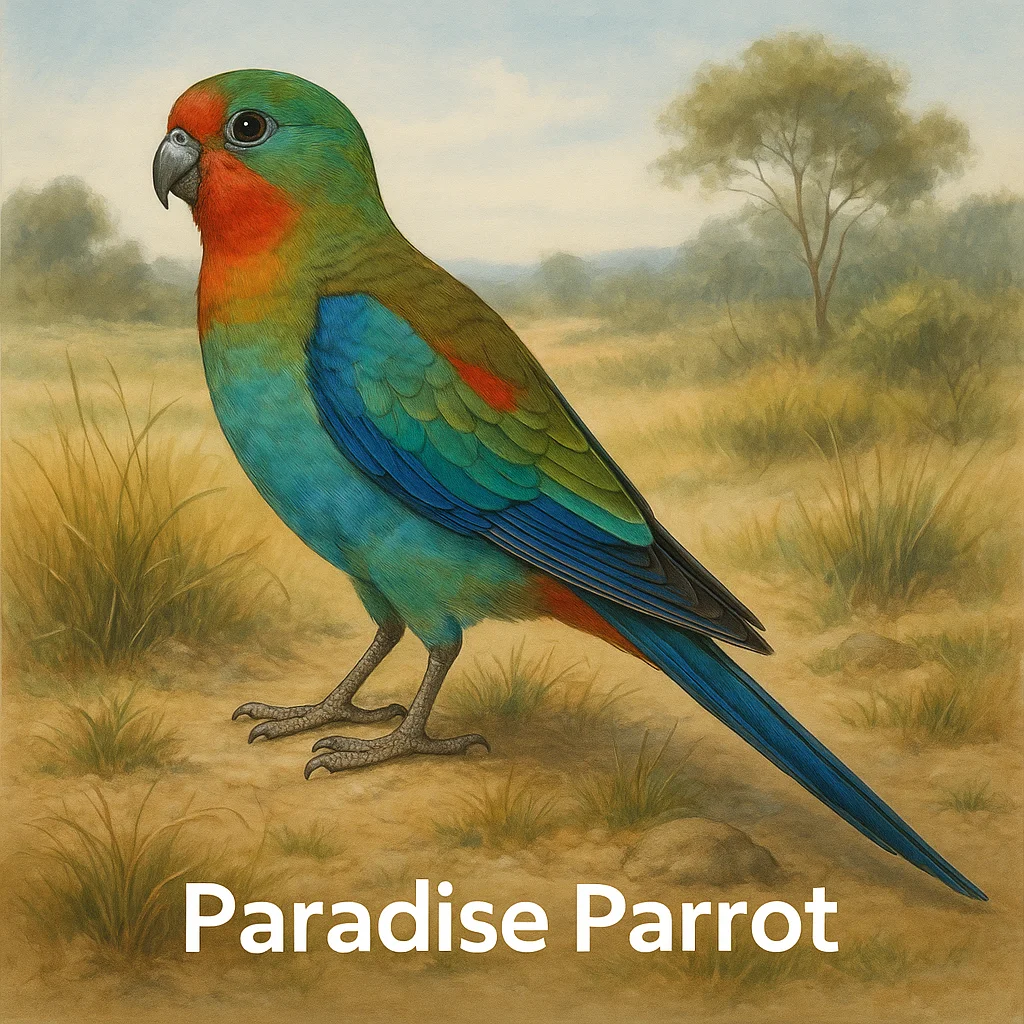
In this article, readers will explore the life and times of the Paradise Parrot, including where it lived, how it lived, the factors leading to its extinction, and what this story tells us about conservation today. Understanding the extinction of the Paradise Parrot provides insights into the broader patterns and causes of wildlife loss worldwide. Through this exploration, we also learn about the relative fragility of specialized species in the face of changing environments.
Though now extinct, the Paradise Parrot serves as a poignant example of the challenges faced by many unique and localized species. Its story is an important lesson in the delicate balance required for biodiversity to thrive and the devastating impact of human activity on vulnerable species.
🌍 What It Was
The Paradise Parrot was a medium-sized bird with a distinctive, vibrant appearance. Its plumage was a brilliant mix of colors, including reds, blues, and greens, making it one of the most eye-catching parrots in Australia. This colorful appearance not only aided in mate attraction but also in camouflaging among the flora of its environment.
While not much is widely known about their closest living relatives, the Paradise Parrot was part of the Australian parrot group, sharing some similarities with other grassland species. These birds played an integral role in their ecosystem, particularly in seed dispersal, which helped maintain the health of grassland habitats.
Other than its striking appearance, the Paradise Parrot is remembered for its specialized adaptations to its environment, which ultimately contributed to its vulnerability. Readers will learn about the unique features and functions of this bird and how it was ideally equipped for life in a specific niche.
🧭 Where It Lived
The Paradise Parrot was endemic to Australia, meaning it was only found in this particular part of the world. Specifically, its range was concentrated in the grasslands of Queensland and New South Wales. These regions provided the specific environmental conditions that the Paradise Parrot required for survival, including particular grass and herb species it relied upon for food and shelter.
Grassland habitats are defined by their open spaces and availability of vegetation suited to grazing. These conditions directly influenced the lifestyle and diet of the Paradise Parrot, which foraged on seeds. Because the parrot lived in a highly specific habitat, any alterations to this environment posed significant risks.
The localization of its range made the Paradise Parrot particularly vulnerable to habitat changes. As human activities expanded, these grasslands experienced fragmentation, leading to a reduction in available resources for the parrots. This heightened their risk of extinction, as there were few alternative habitats where they could thrive.
🌿 Habitat and Daily Life
The climate in the grasslands inhabited by the Paradise Parrot experienced warm temperatures and moderate rainfall. Seasonal changes influenced the availability of food resources, which in turn affected the parrot's foraging behavior and reproductive cycles. These patterns necessitated adaptability in their daily life, allowing them to exploit resources as they became available.
The diet of the Paradise Parrot consisted mainly of seeds, which they foraged from the ground. This behavior not only fulfilled their nutritional needs but also played an ecological role in seed dispersal, aiding in the maintenance of grassland biodiversity. Foraging required them to spend significant time exploring their habitat to locate the needed food resources.
Reproduction in the Paradise Parrot involved specific breeding seasons aligned with the availability of optimal conditions. Nesting generally occurred in hollows of trees or other safe structures, where they would rear their offspring until they were capable of independent life.
Socially, the Paradise Parrot was likely similar to other parrots, forming bonds with mates and showing social behavior necessary for breeding and survival. However, specific details about their social structure remain less documented due to the timing of their extinction.
🧬 What Made It Unique
Among the standout features of the Paradise Parrot was its dazzling plumage, which served not just for attraction, but also for camouflage amidst colorful vegetation and shadows. The interplay of reds, greens, and blues helped them blend into the grassland background, providing some level of protection from predators like birds of prey.
Notably, its unique adaptations to its grassland environment made it an ecological specialist. This specialization was a double-edged sword as it supported survival in a stable environment but offered limited resilience to change.
The Paradise Parrot held cultural significance for local indigenous communities, who recognized it as a distinctive presence in their natural landscape. However, much of this cultural heritage was lost with the bird's extinction.
⏳ When It Disappeared
The last confirmed record of the Paradise Parrot dates back to the early 20th century, with the last verified sighting being around the 1920s. This timeframe marks its journey from rarity to presumed extinction. Declaring a species extinct involves rigorous verification, often delayed by the hopes of rediscovery, but ultimately based on a lack of sightings over extensive periods.
Uncertainty often surrounds the last known existence of many species. In the case of the Paradise Parrot, sporadic unconfirmed reports persisted for some time, fueled by the remote and challenging terrain of their habitat. Yet, no substantial evidence has supported these claims, leaving the Paradise Parrot in the official status of extinct.
Understanding the declaration process highlights how extinction is not always an immediate declaration but arrives after exhaustive searches and studies, when a consensus confirms a species no longer exists in the wild.
⚠️ Why It Went Extinct
The extinction of the Paradise Parrot was driven by a combination of factors, illustrating how multiple pressures can lead to the demise of a species. Habitat loss and fragmentation played a critical role, as agricultural expansion led to the destruction of their grassland habitats. This reduced their living and foraging spaces, directly impacting their capacity to thrive.
Overexploitation of natural resources, including the collection of birds for the pet trade, further strained their population. Invasive species, such as grazing cattle and introduced predators, disrupted their natural ecosystems, altering food availability and increasing predation risks.
Climate shifts, such as changes in rainfall patterns, intensified the effects of habitat changes, reducing food availability and breeding success. While no single factor sealed the parrot's fate, the interplay of these driving forces created an unsustainable environment.
These causes highlight the need to manage ecological impacts holistically, recognizing how intertwined factors contribute to conservation challenges.
🧩 How We Know (Evidence and Records)
Evidence of the Paradise Parrot's existence and eventual extinction relies heavily on historical records, museum specimens, field observations, and some photographic evidence. Ornithologists of the time documented their sightings, which served as the primary means of verifying the species before its disappearance.
Determining the identity and timeline of extinct species often involves piecing together scattered data, such as field notes and photographs, to form a coherent historical narrative. In the case of the Paradise Parrot, these documented observations provide critical insights into its life history and extinction.
For some species, oral histories play a role in verifying past existence, although this was less influential for the Paradise Parrot. Modern methods, like genetics, can sometimes play a role in confirming relatedness among species, but for the Paradise Parrot, the lack of genetic samples limits this possibility.
🛡️ Could It Have Been Saved
Conservation actions like habitat protection and restoration might have offered hope for the Paradise Parrot had they been implemented in time. By recognizing the critical importance of grassland environments, strategies could have focused on preserving the essential habitats this bird depended on.
Efforts such as legal protections for habitats, controlling invasive species, and creating breeding programs could have mitigated some threats. However, such measures were either delayed or insufficient to counter the rapid environmental changes and human pressures affecting the parrot's habitat.
Unfortunately, like many conservation efforts throughout history, recognition of the need for action came too late. The potential for breeding programs or other recovery efforts was left unrealized due to the parrot's rapid decline.
🔁 Are There Any Survivors or Close Relatives Today
No direct survivors of the Paradise Parrot remain, but several of its close relatives still inhabit Australia, sharing similar ecological niches. These include other species of parakeets and parrots that continue to thrive in parts of the Australian landscape.
Some species play similar ecological roles as seed dispersers and contributors to the health of grassland ecosystems. Efforts to maintain the habitat for current species may help prevent similar fates for these remaining birds.
In terms of reintroduction programs, the Paradise Parrot's extinction predated modern conservation approaches. While there is no possibility of reintroducing this species, understanding and protecting the habitats shared by related species helps nurture ecological replacements.
❓ Common Questions and Misconceptions
Was it hunted to extinction? While overcollection played a role, habitat loss was the primary driver of its extinction.
Why didn’t it adapt or move? Its specialized adaptations to specific grasslands made relocation and adaptation challenging.
Could it still be alive somewhere? Although some unconfirmed reports exist, there has been no verified evidence of its survival.
What does 'declared extinct' actually mean? It means exhaustive searches have found no surviving individuals and the species is believed to no longer exist.
What is the difference between endangered and extinct? Endangered species are at serious risk of extinction, while extinct species have no known living individuals.
Why are island species so vulnerable? Limited geographic range and specialized adaptations often leave island species more susceptible to extinction drivers like habitat loss and invasive species.
📌 Summary
- The Paradise Parrot was a colorful parrot native to Australia's grasslands.
- Its geographic range was limited to regions in Queensland and New South Wales.
- The parrot's habitat comprised grasslands with specific vegetation needs.
- It consumed seeds and contributed to seed dispersal in its ecosystem.
- Notable for its vibrant plumage, providing camouflage and mate attraction.
- Last confirmed sightings date back to the early 20th century.
- Major extinction drivers included habitat loss and invasive species.
- Evidence comes from recorded sightings, museum specimens, and photographs.
- Its closest living relatives still inhabit parts of Australia.
- Lessons from its extinction stress the importance of early conservation action.
- The Paradise Parrot's narrative underscores the fragility of specialized species.