🏞️ Las Vegas Valley Leopard Frog
🌍 What It Was
The Las Vegas Valley leopard frog was a type of amphibian known as a frog. It was an aquatic species that was part of the leopard frog group, known for their distinctive spotted skin patterns.
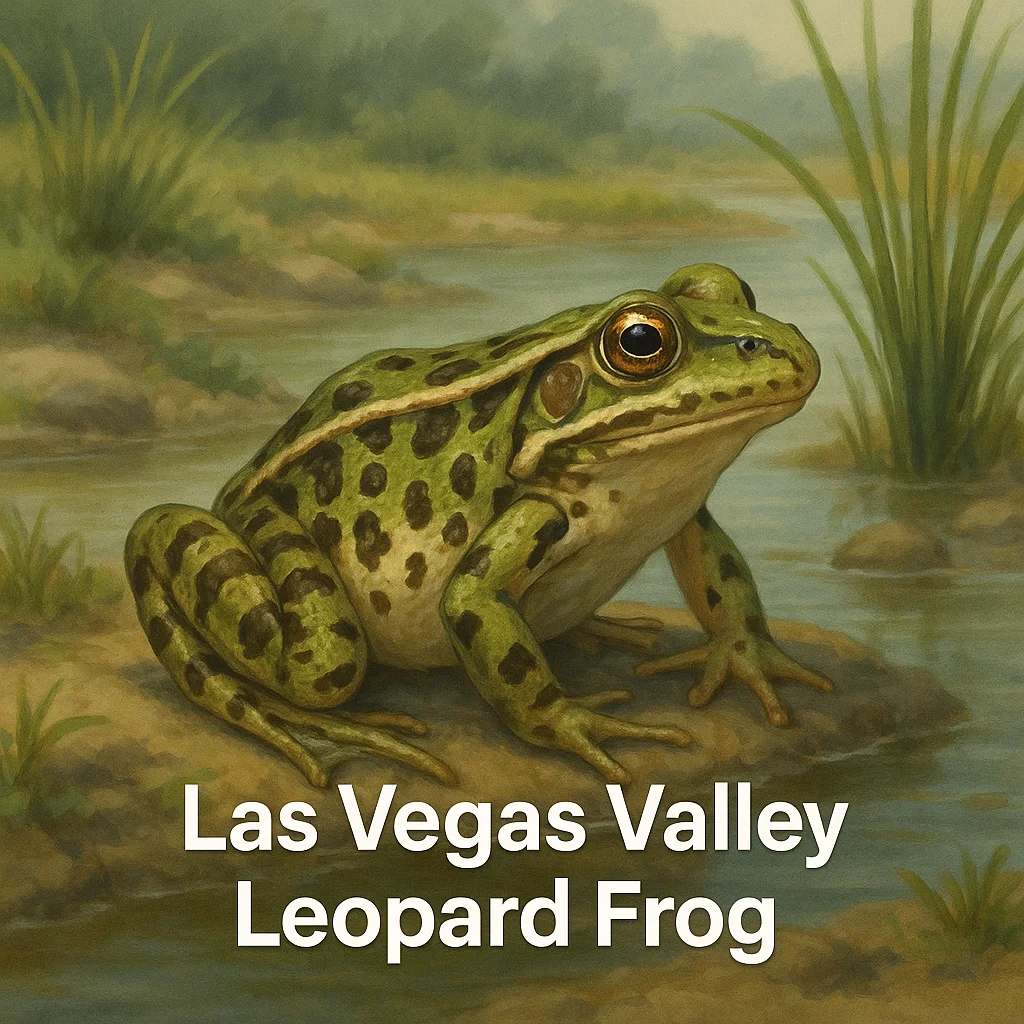
This frog was closely related to living species like the lowland leopard frog and the northern leopard frog. These relatives provide clues about its behavior and ecology, as well as its appearance.
In this article, you will learn about the habitat where the Las Vegas Valley leopard frog once thrived, its daily life and unique traits, the timeline of its disappearance, and the reasons behind its extinction.
🧭 Where It Lived
The Las Vegas Valley leopard frog was endemic to the southwestern United States, primarily found in the Las Vegas Valley in Nevada. The term "endemic" means that it was native to this specific region and was not naturally found elsewhere.
The frog lived in wetland environments, relying on springs, streams, and marshes for survival. These habitats provided the water necessary for breeding and offered shelter from predators. Wetlands play a vital role in the ecosystem by supporting a rich diversity of plants and animals.
Being limited to such a specific area increased the frog's vulnerability to extinction. If anything disturbed its small range, the entire population was at risk. This localization of habitat is a common reason why many species face heightened extinction risks.
🌿 Habitat and Daily Life
The Las Vegas Valley leopard frog lived in a region characterized by a desert climate with hot summers and mild winters. Despite the arid conditions, the wetlands offered a respite and served as a crucial resource for water and food.
In terms of diet, these frogs primarily consumed insects and other small invertebrates. They employed a sit-and-wait strategy, remaining still until prey ventured close enough to catch with their sticky tongues.
Reproduction for the Las Vegas Valley leopard frog involved laying eggs in water. During the breeding season, males would call to attract females, a pattern seen in many frog species. The tadpoles developed in the water before undergoing metamorphosis into adult frogs.
These frogs interacted with a variety of species within their wetland environment, both as predators and as prey. Birds, snakes, and other larger animals often preyed on them, while they helped control insect populations.
🧬 What Made It Unique
The Las Vegas Valley leopard frog had distinctive physical characteristics, most notably its spotted green and brown skin, which provided camouflage among the reeds and leafy waters of its habitat.
One unique adaptation was its ability to stay submerged in water for extended periods, avoiding predators. This helped it survive in a challenging ecological niche dominated by both aquatic and terrestrial predators.
While there is no substantial evidence that the Las Vegas Valley leopard frog held cultural or historical significance, its existence contributed to the biodiversity of the region, aiding ecosystem balance by controlling insect populations.
⏳ When It Disappeared
The last confirmed records of the Las Vegas Valley leopard frog date back to the mid-20th century. Exact last sightings are unclear, contributing to uncertainty about the timeline of its extinction.
Declaring a species extinct involves careful verification of reports and evidence until researchers can no longer confirm the presence of the species. In the case of this frog, repeated surveys in its known habitats failed to locate any individuals.
Like many species, the frog's extinction was not declared lightly. Scientists rely on exhaustive field surveys and examinations of historical data to reach these conclusions.
⚠️ Why It Went Extinct
The extinction of the Las Vegas Valley leopard frog was likely caused by multiple factors, often working in combination rather than a single issue. One major driver was habitat loss and fragmentation due to urban development and water diversion in the Las Vegas Valley.
Another contributing factor could have been the introduction of invasive species, such as non-native fish and bullfrogs, which preyed on or competed with the leopard frog for resources.
Pollution, from agricultural runoff and urban waste, may have also played a role, contaminating water sources essential for the frog's survival and reproduction.
Finally, diseases such as chytridiomycosis, a fungal infection affecting amphibians worldwide, could have impacted their populations by reducing survival rates.
🧩 How We Know (Evidence and Records)
Scientists have gathered evidence of the Las Vegas Valley leopard frog through museum specimens, field notes, and historical records, which provide insights into its former presence and lifestyle.
Verification of species identity and extinction status involves examining preserved specimens and confirming the lack of recent, credible sightings through extensive fieldwork.
Despite these efforts, some challenges remain, particularly when dealing with species that were once common but became elusive, making confirmation difficult without tangible and direct evidence.
🛡️ Could It Have Been Saved
Realistic conservation actions that might have helped include securing and protecting the frog's wetland habitats and controlling invasive species that threatened their survival.
Captive breeding programs could have been an option to increase their population, but this requires timely recognition of decline and sufficient resources, which were not available at the time.
The challenges of rapid urban expansion and limited awareness meant that conservation action, if attempted, often came too late to be effective.
🔁 Are There Any Survivors or Close Relatives Today
The closest living relatives of the Las Vegas Valley leopard frog include the lowland leopard frog and the northern leopard frog, which share similar habitats and ecological roles, albeit in different regions.
These relatives offer some hope by continuing similar ecological functions as the Las Vegas Valley leopard frog once did, helping to maintain ecosystem balance by preying on insects.
There are no known reintroduction or captive programs for the Las Vegas Valley leopard frog, emphasizing the importance of early intervention in conservation efforts for other at-risk species.
❓ Common Questions and Misconceptions
Was it hunted to extinction? The Las Vegas Valley leopard frog was not directly hunted. Its decline was primarily due to habitat loss and competition with invasive species.
Why didn’t it adapt or move? The frog's limited range and specific habitat needs made adaptation or migration difficult, especially with rapid environmental changes.
Could it still be alive somewhere? With no confirmed sightings and extensive surveys, it is unlikely but not impossible. Extinction declaration reflects lack of evidence for continued existence.
What does "declared extinct" actually mean? It indicates that no individuals have been observed despite comprehensive searches and that recovery is exceedingly improbable.
What is the difference between endangered and extinct? Endangered species are at risk of extinction, while extinct species have no surviving individuals confirmed.
Why are island species so vulnerable? Island species often have smaller populations and limited habitats, making them more susceptible to changes and external threats.
📌 Summary
- The Las Vegas Valley leopard frog was a unique amphibian native to Nevada's wetlands.
- It lived in the Las Vegas Valley, specifically in wetland habitats such as springs and streams.
- The frog relied on aquatic environments for breeding and feeding.
- Its diet consisted mainly of insects, using a sit-and-wait strategy for hunting.
- Key adaptations included camouflaged skin and the ability to stay submerged for safety.
- The last known period of existence was in the mid-20th century, with records ceasing afterward.
- Main extinction drivers were habitat loss, invasive species, pollution, and disease.
- Evidence includes museum specimens and historical records confirming past presence.
- Closest relatives include the lowland and northern leopard frogs.
- The key lesson is the importance of timely human intervention to protect vulnerable species.
- The Las Vegas Valley leopard frog's extinction highlights the fragility of localized species.