🏞️ Golden Coqui
🌍 What It Was
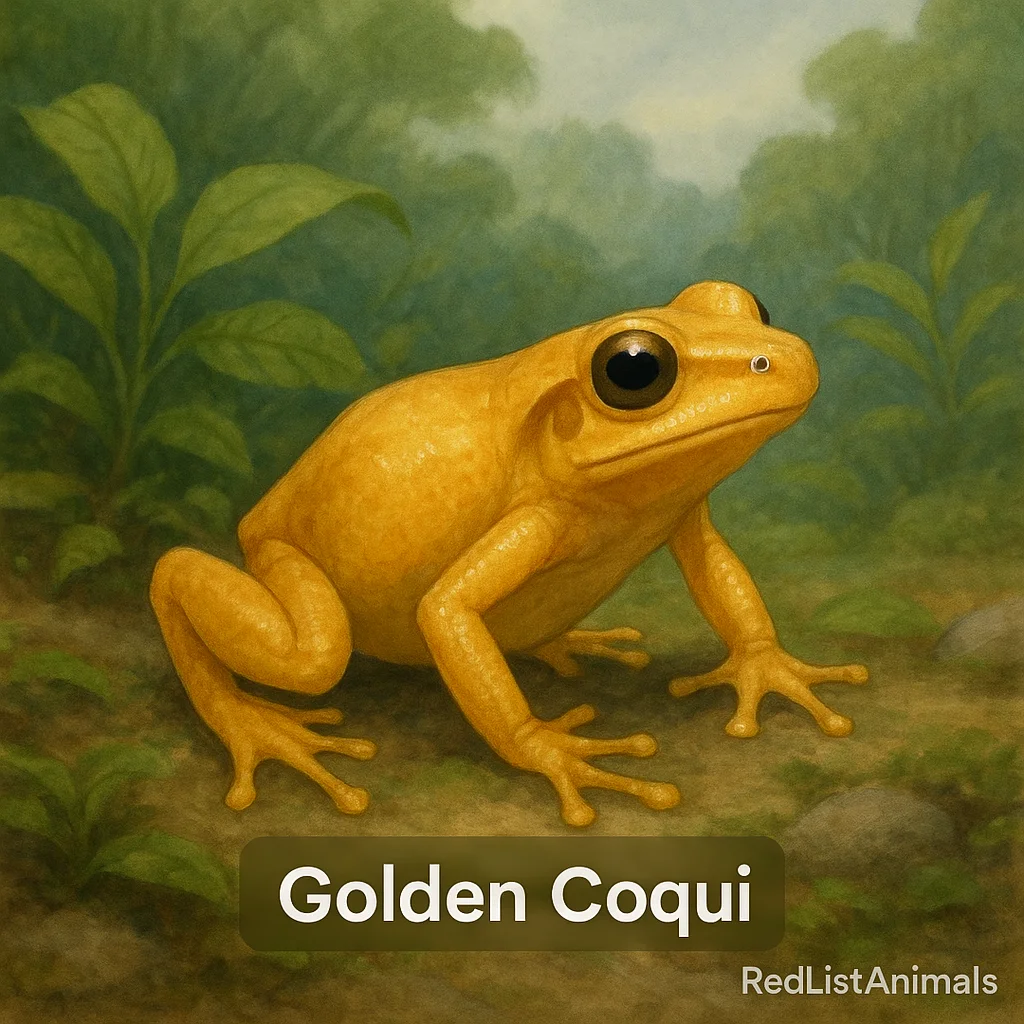
The Golden Coqui was a small frog species known for its distinctive golden hue. As an amphibian, it was part of the family Eleutherodactylidae, which includes various other coqui species commonly found in Puerto Rico. The Golden Coqui stood out for its unique coloration and small size, making it a notable member of its ecosystem.
Its closest living relatives include other coqui species, such as the Puerto Rican coqui, which are still found in various parts of the island. The Golden Coqui played a crucial role in its ecosystem, primarily through insect control, as it preyed on small insects and other invertebrates.
This article will explore the Golden Coqui's natural habitat, behavior, unique characteristics, and the factors that contributed to its extinction. We will also discuss how scientists confirmed its extinction and what lessons can be drawn for future conservation efforts.
🧭 Where It Lived
The Golden Coqui was native to the Caribbean island of Puerto Rico. Historically, it inhabited the high-elevation cloud forests in the western part of the island. These forested areas are characterized by a persistent cloud cover, providing a moist environment essential for the survival of various amphibian species.
Cloud forests, like those in Puerto Rico, are specialized ecosystems found in mountainous regions with high humidity, cool temperatures, and consistent cloud cover. These habitats support a rich diversity of flora and fauna, many of which are specially adapted to the unique climate conditions.
The restricted geographic range of the Golden Coqui made it particularly vulnerable to environmental changes and habitat loss. Island species often face higher risks of extinction due to their confined habitats and limited ability to migrate elsewhere when their environment is threatened.
🌿 Habitat and Daily Life
The climate within the Golden Coqui's habitat was characterized by high humidity and moderate temperatures, typical of a cloud forest environment. These conditions supported the growth of lush vegetation, providing both shelter and food sources for the Golden Coqui and other inhabitants of the ecosystem.
The Golden Coqui was a nocturnal species, active primarily at night when it would hunt for food. Its diet consisted mainly of small insects and other invertebrates, which it caught with its quick tongue and adept hunting skills. This predatory role helped maintain a balance in the ecosystem by controlling insect populations.
Breeding in the Golden Coqui took place in the protected environment of bromeliads, plants that collect water in their leaves, which served as nurseries for their young. Females laid eggs in these water-filled plant spaces, where the tadpoles would develop without a separate aquatic larval stage, a trait known as direct development.
The presence of natural predators such as birds and mammals, as well as competition for resources, shaped the behaviors and strategies of the Golden Coqui. Its nocturnal habits and use of bromeliads for reproduction are examples of adaptations to mitigate environmental pressures.
🧬 What Made It Unique
One of the most notable physical traits of the Golden Coqui was its striking golden coloration, from which it derived its common name. This vibrant color served as both a visual deterrent to predators and a means of camouflage among the similarly colored substrates of its arboreal environment.
The Golden Coqui was also remarkable for its small size, which enabled it to exploit niche habitats within the dense forest canopy. This size, combined with its ability to produce non-aquatic offspring, highlights its special adaptations for survival in a cloud forest.
Culturally, the coqui is an important symbol in Puerto Rican folklore and identity, although the Golden Coqui itself may not have been as widely recognized as its vocal relatives. Its existence contributed to the overall biodiversity of the island, enriching both natural and cultural landscapes.
⏳ When It Disappeared
The last confirmed sighting of the Golden Coqui dates back to the late 1980s. Despite extensive surveys and research efforts, no specimens have been observed since, leading to its classification as extinct. The process of declaring a species extinct involves thorough investigation and confirmation that no individuals remain in the wild.
Uncertainty remains regarding the exact timeline of extinction due to potential misidentifications and gaps in historical records. Challenges in observing this species in its remote and dense habitat have contributed to the difficulty in pinning down an exact date of disappearance.
The Golden Coqui is listed as "Extinct" rather than "Extinct in the Wild" because there are no known captive populations or individuals surviving outside their natural environment, reinforcing the conclusion of its complete loss.
⚠️ Why It Went Extinct
Several factors contributed to the extinction of the Golden Coqui. Habitat loss and fragmentation played a significant role, as the development and deforestation of cloud forests reduced their available habitat. These changes disrupted their environment and limited resources necessary for survival.
Invasive species have also been considered a potential threat, as introduced predators and competitors can critically impact native species by altering food webs and introducing new diseases. Amphibians, including the Golden Coqui, are particularly vulnerable to diseases such as chytridiomycosis, which has devastated amphibian populations worldwide.
Climate changes, including increased temperatures and changing rainfall patterns, may have further stressed the Golden Coqui's habitat, reducing its suitability. Cloud forests are especially sensitive to climate shifts, as their unique microclimate depends on persistent moisture.
The extinction of the Golden Coqui was likely a result of multiple, interacting factors rather than a single cause, illustrating the complexity of extinction dynamics and the challenges faced by conservationists in mitigating these threats.
🧩 How We Know (Evidence and Records)
Scientific evidence for the Golden Coqui's existence relies on historical field notes, photographs, and preserved museum specimens. These records help verify the species' identity and contribute to understanding its natural history.
Researchers use various techniques to confirm extinction, blending field surveys with genetic analyses where applicable. This approach helps ensure accuracy in identifying species and assessing their conservation status.
Certain characteristics of the Golden Coqui, such as its small size and remote habitat, have made it more challenging to study and confirm sightings, further complicating conservation efforts and our understanding of its ecology.
🛡️ Could It Have Been Saved
Conservation actions that might have aided the Golden Coqui include protecting its habitat, controlling invasive species, and establishing captive breeding programs to support population recovery. Unfortunately, such efforts were either implemented too late or not at all.
The complexity of island ecosystems and the challenges of addressing multiple threats simultaneously have historically limited the effectiveness of conservation actions. The Golden Coqui's case highlights the importance of proactive measures to protect biodiversity.
Although there were no known significant conservation attempts specifically for the Golden Coqui prior to its extinction, lessons from its loss underscore the need for integrated conservation strategies that address habitat protection and species management.
🔁 Are There Any Survivors or Close Relatives Today
While the Golden Coqui itself is extinct, its closest living relatives are other species within the coqui group. The Puerto Rican coqui, for instance, shares a similar habitat and ecological role, although it exhibits distinct behaviors and vocalizations.
These surviving coqui species continue to perform vital functions in their ecosystems, such as insect control and serving as prey for larger animals. They illustrate the resilience of some species amidst environmental challenges and the ongoing importance of conservation efforts.
Currently, there are no reintroduction or captive breeding programs for the Golden Coqui, primarily due to its complete extinction and the lack of surviving genetic material. Efforts continue to focus on conserving remaining coqui species and their habitats.
❓ Common Questions and Misconceptions
Was it hunted to extinction?
No, the Golden Coqui was not hunted to extinction. Its decline was primarily due to habitat loss and disease.
Why didn’t it adapt or move?
The Golden Coqui was highly adapted to its specific cloud forest environment, making it difficult to survive elsewhere. Rapid habitat changes left it little time to adapt.
Could it still be alive somewhere?
While possible, it is unlikely given the extensive surveys conducted without sightings since the late 1980s.
What does 'declared extinct' actually mean?
It means researchers are confident no individuals survive in the wild or captivity based on comprehensive investigations.
What is the difference between endangered and extinct?
Endangered species face a high risk of extinction but still have surviving individuals, whereas extinct species have no known living individuals.
Why are island species so vulnerable?
Island species often have small, isolated populations and limited habitats, making them particularly susceptible to environmental disturbances and introduced species.
📌 Summary
- The Golden Coqui was a small, golden-colored frog native to Puerto Rico.
- It lived in high-elevation cloud forests on the island.
- Its habitat was a moist, forested environment requiring specific climate conditions.
- The Golden Coqui's diet primarily consisted of insects.
- Notable for its vibrant color and direct development reproductive strategy.
- Last confirmed sightings were in the late 1980s, now classified as extinct.
- Main drivers of extinction included habitat loss, disease, and climate changes.
- Evidence of extinction comes from field studies and museum records.
- Closest living relatives include other coqui species in Puerto Rico.
- The extinction emphasizes the need for proactive conservation plans.
- Despite its extinction, the Golden Coqui remains a symbol of biodiversity losses and conservation challenges.