🏞️ Atelopus ignescens (Jambato Toad)
🌍 What It Was
The Jambato toad, known scientifically as Atelopus ignescens, was a small amphibian species endemic to Ecuador. It belonged to the family Bufonidae, commonly known as "true toads." What made the Jambato toad distinctive was its striking black dorsal coloration contrasted by a bright orange or red ventral side.
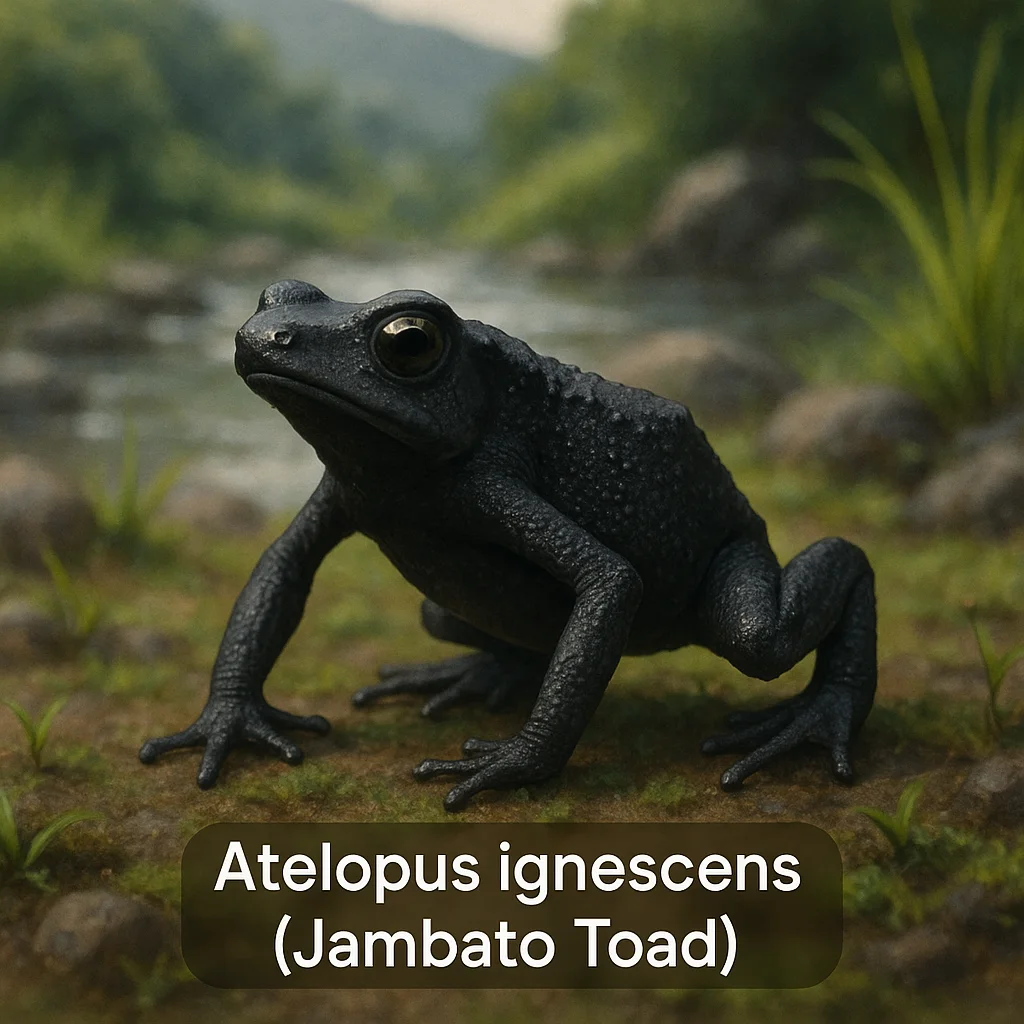
This toad was closely related to other species in the Atelopus genus, which comprises several colorful and similarly endangered species. In its ecosystem, the Jambato toad occupied a crucial role as both predator and prey, contributing to the ecological balance by controlling insect populations and serving as a food source for larger animals.
In this article, we'll explore where the Jambato toad lived, how it conducted its daily life, the reasons behind its extinction, and what modern science can tell us about this lost species. From its distinctive habitat requirements to the timing and causes of its disappearance, we'll cover the full story of this extinct amphibian.
🧭 Where It Lived
The Jambato toad was native to the Andes of Ecuador, a region characterized by its mountainous terrain and diverse climate zones. This species mainly inhabited the páramo ecosystem, a unique high-altitude area that supported a wide array of plant and animal life adapted to cold temperatures and wet conditions.
The páramo is renowned for its distinct environmental conditions, including regular rainfall and fog that create a damp and cool habitat year-round. The Jambato toad thrived in this moist environment, which provided ample opportunities for hunting prey and breeding. Its preference for such specific conditions meant it was highly localized, increasing its risk of extinction due to habitat disruptions.
Because the toad's range was so geographically limited to the high Andes, any changes to this delicate ecosystem could have significant impacts. Such specialization in habitat makes species like the Jambato toad particularly vulnerable to environmental disturbances, both natural and human-induced.
🌿 Habitat and Daily Life
Living in the high Andes, the Jambato toad experienced a climate with significant variability. Although the temperatures were relatively cool year-round, fluctuating weather conditions like shifts in temperature were common. These variations were integral to the species' way of life, influencing breeding seasons and activity patterns.
The Jambato toad primarily fed on invertebrates, such as ants and small insects, which it captured using its sticky tongue and keen senses. As a sit-and-wait predator, it would remain still, relying on camouflage to avoid detection by both prey and predators.
Reproduction for the Jambato toad was tightly linked to seasonal rainfall, which provided the necessary aquatic environments for tadpoles to develop. During breeding seasons, males could be found calling to attract females, signaling the start of a new life cycle. Once eggs were laid and subsequently hatched, parental care was minimal, with larvae developing in water bodies until they metamorphosed into juvenile toads.
Interactions with other species included competition with similar amphibians for resources, and serving as prey for birds and small mammals. Such ecological relationships underlined the toad's role in its mountainous environment and the broader ecological tapestry.
🧬 What Made It Unique
The Jambato toad had several physical traits that made it stand out among amphibians. Its striking coloration served multiple purposes: deterrence against predators and thermoregulation in its cool habitat. The dark dorsal surface could absorb heat, while the bright belly could signal toxicity to potential predators.
The toad's ecological function in the páramo ecosystem was significant. As an insectivore, it helped maintain the balance of insect populations, thus indirectly supporting plant life by reducing herbivorous insect numbers.
While there is limited information on any specific cultural or historical significance to human populations, the striking appearance of the Jambato toad, as well as its endangerment, heightened awareness about amphibian conservation issues in the region.
⏳ When It Disappeared
The Jambato toad's decline began to be noted in the late 20th century, with confirmed records becoming increasingly sparse. The last reliable sightings occurred in the 1980s, and the species was declared extinct in the wild by the early 2000s due to the lack of confirmed observations despite extensive surveys.
The process of declaring a species extinct requires rigorous investigations, often supported by field studies and surveys. For the Jambato toad, despite concerted efforts to locate remaining populations, no verifiable evidence was found, leading to its official extinction status.
The determination of extinction is made with caution and is based on thorough reviews of scientific data and historical records. This ensures that declarations are well-founded, accounting for the possibility of undiscovered surviving individuals.
⚠️ Why It Went Extinct
The decline of the Jambato toad was driven by multiple contributing factors. One major cause was habitat loss and fragmentation due to agricultural expansion and urbanization of the Andean region. Such land-use changes disrupted the delicate balance of the páramo ecosystem.
Another significant factor was disease, particularly chytridiomycosis, a fungal infection that has devastated amphibian populations worldwide. The disease compromised the immune systems of infected toads, leading to high mortality rates and diminished reproductive success.
Climate change played a role as well, altering rainfall patterns and temperatures, thus impacting breeding cycles and habitat suitability. These shifts made the environment less hospitable to the Jambato toad, contributing to its rapid decline.
It’s vital to recognize that the extinction of species like the Jambato toad is rarely attributed to a single cause. Instead, the intersection of various pressures rendered survival and reproduction increasingly challenging, culminating in the toad’s tragic disappearance.
🧩 How We Know (Evidence and Records)
Evidence for the Jambato toad's existence and subsequent extinction comes from a variety of sources. Museum specimens collected during expeditions remain vital in understanding its morphology and ecology. These preserved samples help confirm past distribution and provide genetic material for study.
Field notes and photographs from earlier research contribute valuable anecdotal evidence, painting a picture of the species' abundant presence in its native habitat. Such records are cross-referenced with oral histories from local communities who historically encountered the toad.
Scientific verification often involves comparing historical data with modern findings, ensuring that identifications are accurate and extinction declarations are grounded in robust scientific inquiry. The remote and variable nature of its habitat posed challenges at times, but the collective weight of available evidence supports the extinction conclusion.
🛡️ Could It Have Been Saved
Conservation measures could potentially have aided the Jambato toad. Protected areas safeguarding its natural habitat might have reduced habitat degradation, while disease management strategies could have mitigated the impacts of chytridiomycosis.
Unfortunately, these actions often came too late, as declining populations went unnoticed until numbers were already critically low. Trade-offs in land use and economic development also posed barriers to timely conservation efforts.
In some cases, captive breeding programs and habitat restoration have been successful for other species, but these require early intervention and sustained effort. The lack of immediate action when the population started to decline restricted the possibilities for such conservation endeavors for the Jambato toad.
🔁 Are There Any Survivors or Close Relatives Today
The closest living relatives to the Jambato toad are other species within the Atelopus genus. These relatives share similar bright coloration and ecological niches, residing in comparable environments across Central and South America.
However, many Atelopus species are themselves endangered or at risk due to similar threats, including habitat loss and disease. This makes them subjects of conservation concern, emphasizing the need to learn from past extinctions to protect vulnerable populations today.
Efforts to identify ecological replacements—species filling similar roles—focus on preserving remaining amphibian diversity to maintain ecosystem functions. No known reintroduction programs for the Jambato toad exist, emphasizing the finality of its extinction.
❓ Common Questions and Misconceptions
Was it hunted to extinction? No, there is no evidence of hunting. The Jambato toad's extinction was primarily due to environmental and disease factors.
Why didn’t it adapt or move? The specialized habitat requirements of the Jambato toad made it difficult to adapt to rapid changes or relocate to new areas.
Could it still be alive somewhere? While unlikely, undiscovered populations are always a remote possibility, but targeted surveys have not confirmed any surviving individuals.
What does 'declared extinct' actually mean? A species is declared extinct after thorough surveys fail to locate any surviving individuals in the wild.
What is the difference between endangered and extinct? Endangered species are at high risk of extinction, while extinct species have no surviving members.
Why are island species so vulnerable? Island species often have limited ranges and specialized niches, making them particularly susceptible to environmental changes and introduced threats.
📌 Summary
- The Jambato toad was a small amphibian endemic to the Andes of Ecuador.
- Its natural habitat was the high-altitude páramo ecosystem.
- The toad depended on cool, moist conditions provided by its mountainous home.
- It primarily fed on invertebrates, contributing to insect population control.
- Distinctive black and orange coloration characterized its appearance, deterring predators.
- Last reliable sightings occurred in the 1980s; declared extinct by early 2000s.
- Main extinction drivers: habitat loss, disease, climate change.
- Evidence includes museum specimens and historical records.
- Closest living relatives are other species within the Atelopus genus.
- Different conservation strategies could have been implemented sooner.
- Learn from its extinction to better manage current endangered species.
- The Jambato toad's story highlights the complexity of extinction causes and the importance of proactive conservation.