🏞️ What the 20th Century Taught Conservation
🌍 What It Was
The 20th century saw the extinction of numerous species, offering valuable lessons for conservation efforts today. One of the most iconic examples is the passenger pigeon, a bird that once thrived in North America. Known for its massive flocks, this pigeon was a sight to behold, with its remarkable speed and agility in the air.
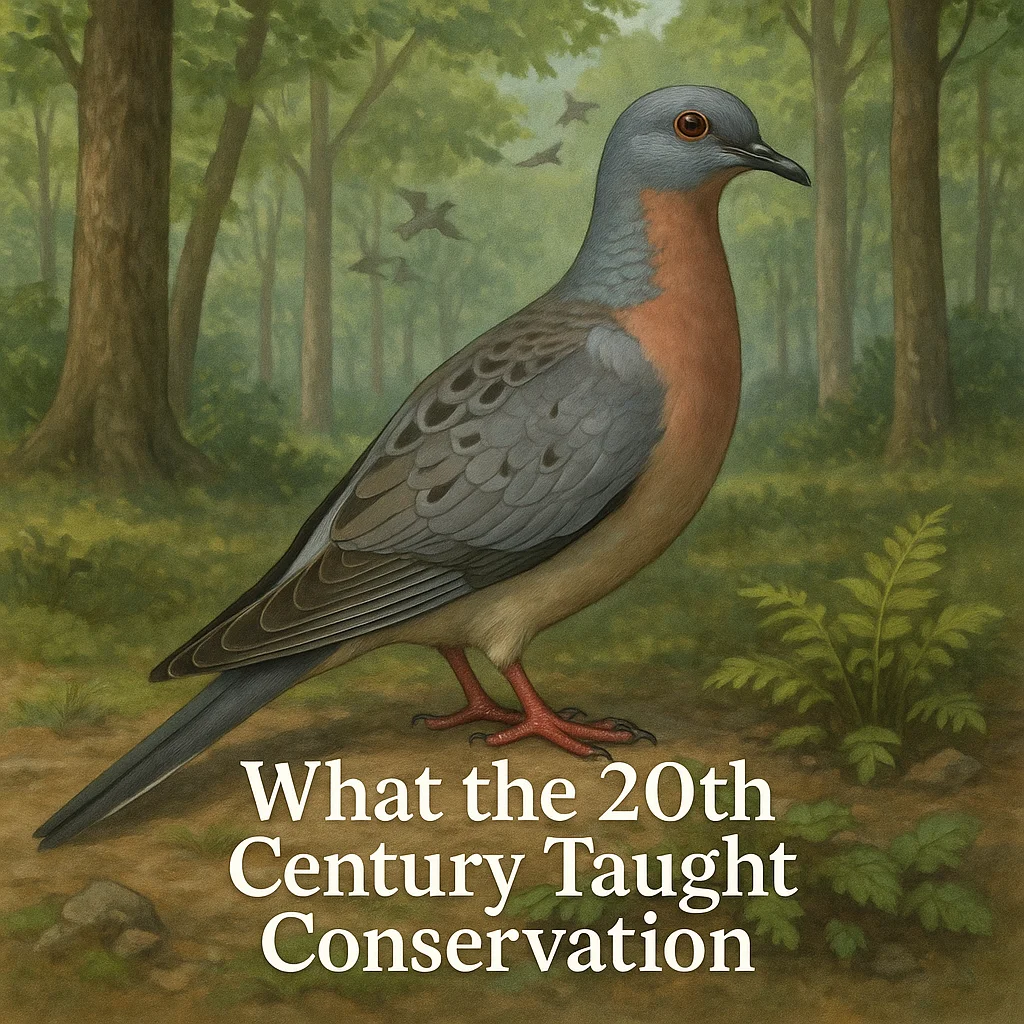
Closely related to other pigeons and doves, the passenger pigeon roamed the forests consuming vast quantities of seeds and nuts. Its presence played a vital role in its ecosystem, influencing the dynamics of plant reproduction and growth patterns.
In this article, you'll learn about where the passenger pigeon lived, its lifestyle, the circumstances surrounding its extinction, and the lessons conservationists have drawn from its disappearance.
🧭 Where It Lived
The passenger pigeon primarily inhabited the deciduous forests of North America. Its range extended from eastern and central Canada through the United States down to parts of northern Mexico. This wide geographical distribution provided it with abundant food sources and nesting sites.
Within these vast forests, passenger pigeons relied on a range of habitats. These included old-growth forests rich in mast-producing trees like oak and beech. The abundance of acorns, nuts, and seeds made these areas prime foraging grounds.
Because the passenger pigeon was so abundant and widespread, it was assumed to be immune to environmental threats. However, its reliance on these specific forest ecosystems made it vulnerable when significant changes began to occur, especially as human activities encroached on its habitat.
🌿 Habitat and Daily Life
The climate in the range of the passenger pigeon varied, with cold winters and warm, humid summers. These seasonal changes dictated the birds' migratory and feeding behaviors, driving them to seek optimal areas throughout the year.
Passenger pigeons were herbivorous, primarily feeding on fruits and seeds. They were known for their communal roosting and nesting habits, often forming colonies spanning several miles. Such large colonies facilitated social interactions and ensured the survival of the group.
Breeding typically occurred annually, with females laying one or two eggs. Both parents shared responsibilities in incubating the eggs and feeding hatchlings. The species was highly gregarious, with extended family groups often staying together, which enhanced their survival chances in the wild.
🧬 What Made It Unique
The passenger pigeon was distinguished by its long tail and colorful plumage—blue-grey with iridescent hues on the neck and a pinkish tint on the chest. This adaptation was not just for show; it contributed to their excellent navigation skills in flight.
Pigeons played a significant ecological role in seed dispersal, helping to regenerate forests and maintain biodiversity. With their extraordinary flight speed, they could evade predators but not the mammoth threat posed once humans began hunting them extensively.
Culturally, the bird was significant to indigenous tribes who admired its abundance and used it as a food resource. However, this relationship was sustainable until the advent of commercial exploitation in the 19th century.
⏳ When It Disappeared
The decline of the passenger pigeon population became noticeable in the late 1800s. By the turn of the century, sightings had become rare. The last confirmed wild individual was observed in 1901. Martha, the last captive passenger pigeon, died in 1914 in a Cincinnati zoo, marking the species' official extinction declaration.
Recovery efforts were hindered by the belief that the vast flocks could not ever vanish completely. This misconception was proven wrong as the sightings dwindled, reflecting how population assessments can often be flawed.
Extinctions are typically declared after exhaustive surveys fail to turn up any confirmed individual. In the case of the passenger pigeon, despite its numbers once running into billions, data over the years confirmed its tragic demise.
⚠️ Why It Went Extinct
Conservationists identify several factors contributing to the passenger pigeon's extinction. Habitat loss due to deforestation critically impacted their breeding sites and food supplies. Moreover, habitat fragmentation made it difficult for the species to maintain the massive colonies necessary for their survival.
Overhunting was perhaps the most direct cause, with the advent of railways enabling hunters to transport pigeon meat to burgeoning urban markets rapidly. Ease of access and the sheer voracity of hunters quickly decimated their numbers.
Invasive species and disease, though not directly responsible, emerged as contributing factors that further compromised their already dwindling populations. Combined, these factors illustrate the multifaceted nature of extinction events.
🧩 How We Know (Evidence and Records)
Our understanding comes from various sources, including museum specimens, field notes from ornithologists of the time, and photographic evidence. These records helped track the dramatic decline of the passenger pigeon population.
Verifying identities and dates requires careful examination of these records and ongoing research into genetic material. Though genetic studies come with limitations, they offer insights into population sizes and diversity before the species dwindled.
Passenger pigeons, given their social behavior and vast numbers, were somewhat easier to study than elusive species. However, their social dependence on large flocks contributed to their rapid decline once these numbers were reduced.
🛡️ Could It Have Been Saved
In hindsight, several conservation actions might have prolonged the existence of the passenger pigeon. Establishing protected areas could have safeguarded critical habitats, while imposing hunting limits might have allowed populations to rebound.
Unfortunately, efforts to control invasive species and permit captive breeding programs were almost non-existent until it was too late. The idea of active conservation was not as prevalent in the late 19th century as it is today.
Although some late attempts at protecting the species occurred, they were largely ineffective due to poorly coordinated efforts and a fundamental misunderstanding of ecological and social needs of the species.
🔁 Are There Any Survivors or Close Relatives Today
Today, the passenger pigeon's closest living relatives are other members of the pigeon and dove family. These species share behavioral aspects and ecological roles, though none fill the same niche precisely.
Some ecologists discuss "ecological replacements" like the band-tailed pigeon which shares similar feeding habits, dispersal roles, and a preference for forest habitats. This kind of replacement, however, does not replicate the exact ecological impact of its extinct cousin.
No active reintroduction programs exist for passenger pigeons, though de-extinction projects are debated, involving the use of modern genetic technology to potentially recreate similar species.
❓ Common Questions and Misconceptions
Was it hunted to extinction? Hunting played a critical role but was not the sole factor.
Why didn’t it adapt or move? Its ecological needs and social structure limited its responses to changes.
Could it still be alive somewhere? Not likely; there has been no credible evidence or reported sighting for over a century.
What does 'declared extinct' actually mean? It means extensive surveys have failed to locate any surviving members of the species.
What is the difference between endangered and extinct? Endangered species are at risk of extinction, while extinct species no longer exist.
Why are island species so vulnerable? Small ranges and specialized adaptations make them less resilient to changes.
How did the decline become so rapid? Combination of mass hunting, habitat destruction, and lack of early intervention.
What does functional extinction mean? It refers to a situation where species exist in such small numbers that they no longer play a significant role in the ecosystem.
📌 Summary
- The passenger pigeon was a bird once prevalent across North America.
- It primarily inhabited deciduous forests.
- The habitat consisted of old-growth forests abundant in mast-producing trees.
- Fed mainly on nuts and seeds from these forests.
- Had adaptations like speed and flock social structure.
- Last known alive in the early 1900s; declared extinct in 1914.
- Main extinction drivers included overhunting and habitat destruction.
- Evidence comes from field notes, specimens, and photographic records.
- Closely related to other pigeons and doves today.
- Conservation lesson highlighting multi-factor extinction risks.
- A remarkable takeaway: even abundant species can vanish swiftly without intervention.