🏞️ The 1900s: Modern Extinction Wave
🌍 What It Was
In the 1900s, our planet experienced a significant loss of biodiversity through a wave of extinctions that shaped the modern conservation landscape. During this era, several unique species disappeared forever, leaving behind only memories and scientific records. These animals were often unique to the ecosystems they inhabited, playing crucial roles in maintaining ecological balance.
Many of these extinct species were closely related to other living animals, providing insight into their ecological roles and evolutionary pathways. For instance, the passenger pigeon once shared habitats with other pigeon species, thriving in North American forests where they participated in seed dispersal.
This article unravels the lives and eventual disappearance of these vanished animals, exploring their habitats, daily lives, and the factors that contributed to their decline. We'll also explore what we can learn from them to prevent future extinctions.
🧭 Where It Lived
The species that went extinct during the 1900s were spread across a wide range of geographic locations, from remote islands to vast continents. Their habitats varied significantly, reflecting the diversity of life on Earth. These animals were adapted to specific environments, and their survival was intricately linked to the health of their ecosystems.
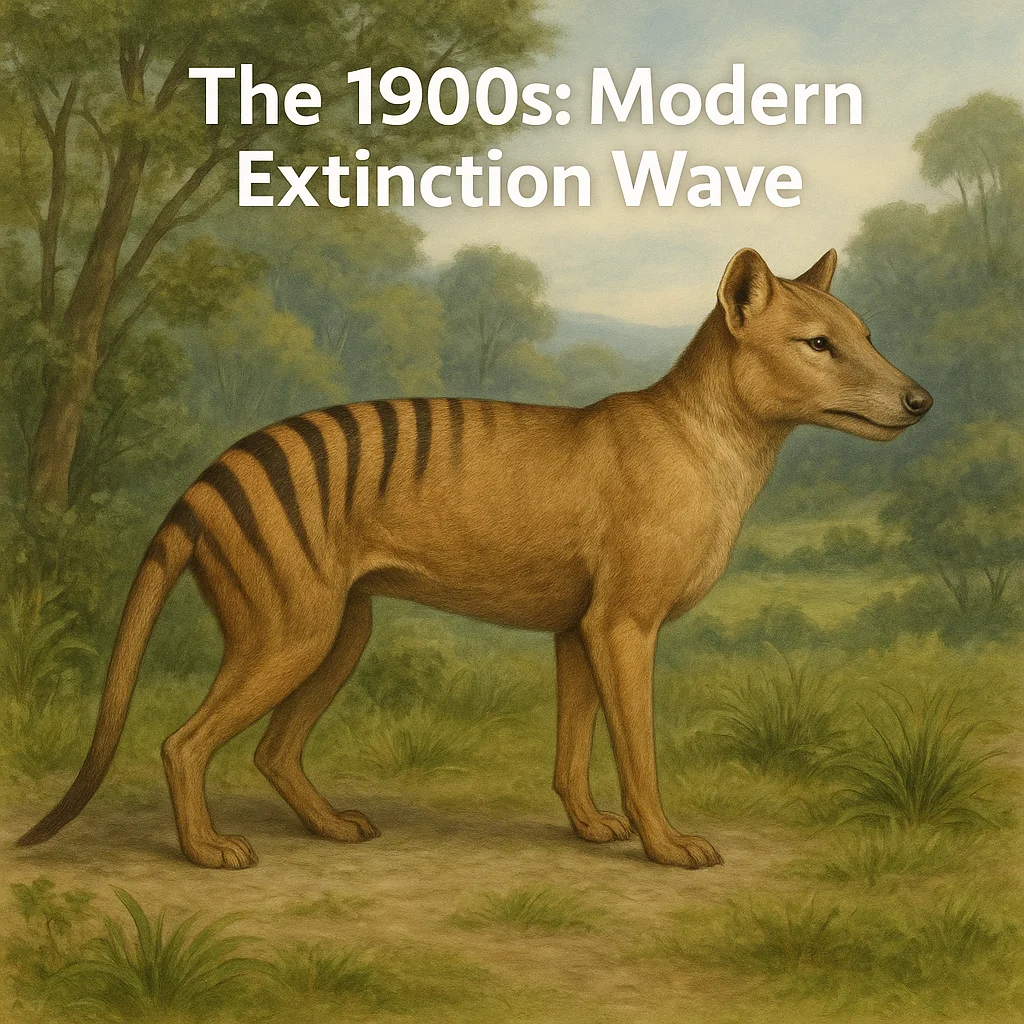
For example, the thylacine, often known as the Tasmanian tiger, was native to Tasmania. This island habitat was a blend of forests and grasslands, providing ample space for this carnivorous marsupial to hunt and roam. As Tasmania is isolated, the thylacine was especially vulnerable to changes within its environment.
Similarly, the passenger pigeon was once abundant across North American woodlands, relying on large swaths of deciduous forests to sustain its massive flocks. The bird's dependency on these specific habitats made it especially susceptible to changes like deforestation and widespread habitat fragmentation.
🌿 Habitat and Daily Life
The environments these animals called home were as varied as their lifestyles. From temperate forests to tropical islands, each species had adapted to the climate and seasonal rhythms of its environment. These settings influenced their diets, behaviors, and reproductive strategies.
Thylacines were adapted to a range of climatic conditions in Tasmania, with their behavior reflecting their status as top predators. They primarily hunted at night, feeding on smaller animals, and bred in secluded dens. On the other hand, passenger pigeons were highly social birds, forming flocks that darkened the skies as part of their migratory patterns. Their diet consisted of seeds, fruits, and nuts, all integral to their forest habitats.
Some species had intricate social structures, while others led solitary lives. Their reproductive cycles were often tied to environmental cues, such as food availability and seasonal changes. Offspring care varied, with some species providing extensive parental support to increase the chances of survival for their young.
🧬 What Made It Unique
Each extinct species from the 1900s possessed distinct physical and behavioral traits that made them remarkable. For example, the thylacine had a dog-like appearance with stripes across its back, an adaptation thought to aid in camouflage. Meanwhile, the passenger pigeon was characterized by its striking iridescent plumage and immense population size, which offered protection against predators.
Special behaviors, like the passenger pigeon's rapid seed dispersal during migrations, contributed ecologically to forest regeneration. The thylacine, as a top predator, played a role in controlling prey populations, maintaining a balance within its ecosystem.
Historically, these animals also held significance for native cultures, representing various symbolic and practical values. Such cultural linkages further underscore the importance of biodiversity and its integration into human societies.
⏳ When It Disappeared
The extinction timelines for species lost in the 1900s vary, with last sightings scattered throughout the early to mid-1900s. The passenger pigeon, for example, saw its last confirmed individual die in captivity in 1914. Similarly, the last known thylacine died in a zoo in 1936, although unconfirmed sightings persisted for decades.
Declaring a species extinct involves extensive surveys and ecological evaluations. In some cases, poor record-keeping or the remoteness of the species' habitat leads to uncertainties about their exact extinction date. Often, extinction is only declared after exhaustive searches fail to yield new evidence of the species' existence.
It's critical to recognize the distinction between "Extinct in the Wild" and full extinction. "Extinct in the Wild" means a species exists only in captivity, which can offer a glimmer of hope for future reintroduction efforts, though the challenges remain substantial.
⚠️ Why It Went Extinct
The extinction wave of the 1900s resulted from various interrelated factors. Habitat loss was a major driver, with deforestation, agriculture, and urban development destroying the natural areas these species depended on. Such habitat fragmentation isolated populations, reducing their survival odds.
Overhunting played a significant role, particularly for the passenger pigeon, hunted en masse for food and sport. The mass hunting, coupled with habitat loss, decimated its populations at a pace too rapid for recovery.
Introduced species, like dogs for thylacines, often became fierce competitors or predators, upsetting ecological balances. Diseases introduced by humans or new animals also contributed to population declines. Climate changes and extreme weather events further stressed already vulnerable species, diminishing their ability to cope with additional pressures.
🧩 How We Know (Evidence and Records)
Our understanding of these extinctions comes from diverse evidence sources. Fossils and subfossils provide direct physical evidence of past existence, while museum specimens offer insights into their biology and ecology. Field notes, photographs, and oral histories capture ecological interactions and societal connections.
Genetic analysis has become a powerful tool for confirming species identity and understanding evolutionary relationships. For some species, nocturnal or remote habitats made observations difficult, necessitating innovative research methods for confirmation.
Scientists rely on a combination of these records to establish reliable timelines and determine extinction status. Rigorous verification processes are essential, especially for elusive or historically understudied species.
🛡️ Could It Have Been Saved
Conservation actions, such as habitat protection and hunting regulations, could potentially have mitigated some extinction events in the 1900s. Establishing protected areas and implementing sustainable resource management might have given vulnerable species the ecological stability needed to survive.
Captive breeding programs, although challenging, offer another strategy to bolster populations of critically endangered species. However, for many, the realization of the crisis came too late for effective intervention.
Despite some late conservation attempts, these efforts often lacked the necessary scope or urgency to counteract the rapid changes wrought by human activity. The lessons learned from these efforts emphasize the need for timely and holistic conservation strategies today.
🔁 Are There Any Survivors or Close Relatives Today
Although the 1900s claimed many unique species, several of their close relatives continue to thrive. For example, other pigeon species persist, sharing some ecological roles once filled by the passenger pigeon. These relatives continue to disperse seeds and serve as prey, maintaining some aspects of ecological function.
In some cases, "ecological replacements" have emerged, occupying the niches left vacant by extinct species. Such natural shifts illustrate the dynamic nature of ecosystems, but they can't replace the full ecological roles of lost species.
Reintroduction and captive breeding efforts continue for some animals, attempting to restore populations within their historic ranges. Such initiatives offer hope for reversing extinction trends, provided they receive adequate resources and support.
❓ Common Questions and Misconceptions
Was it hunted to extinction? While hunting was a significant factor for some species like the passenger pigeon, it was often coupled with habitat destruction and other pressures.
Why didn’t it adapt or move? Many extinctions occurred too quickly for species to adapt or relocate, especially those confined to isolated environments or specific habitats.
Could it still be alive somewhere? Some species are declared extinct after extensive search efforts fail to find evidence of their survival; however, the possibility of unrecorded individuals is always considered.
What does 'declared extinct' actually mean? It indicates no known individuals exist in the wild or captivity despite exhaustive searches and evidence analysis.
What is the difference between endangered and extinct? Endangered species are still extant but face a high risk of extinction, while extinct species have no surviving members.
Why are island species so vulnerable? Isolation, small populations, and specialized adaptations make island species particularly susceptible to environmental changes and human impacts.
📌 Summary
- Many unique species disappeared in the 1900s
- They inhabited diverse regions, including islands and continents
- Relied on specific habitats like forests and grasslands
- Diet and behavior varied widely, from predators to seed dispersers
- Unique adaptations helped them survive in particular ecosystems
- Last known periods spanned the early to mid-1900s
- Main extinction drivers included habitat loss and overhunting
- Evidence from fossils, specimens, and historical records
- Close relatives exist, maintaining some ecological roles
- Conservation lessons emphasize timely and comprehensive strategies
- One memorable takeaway: Extinction is often a multifaceted process, necessitating holistic conservation efforts to protect remaining biodiversity