🏞️ Rise of Conservation (and Its Limits)
🌍 What It Was
Our journey into the rise of conservation begins with understanding the majestic creatures of the past that paved the way for today's efforts. These animals, now extinct, captured the imagination and fascination of many due to their unique traits and ecological roles.
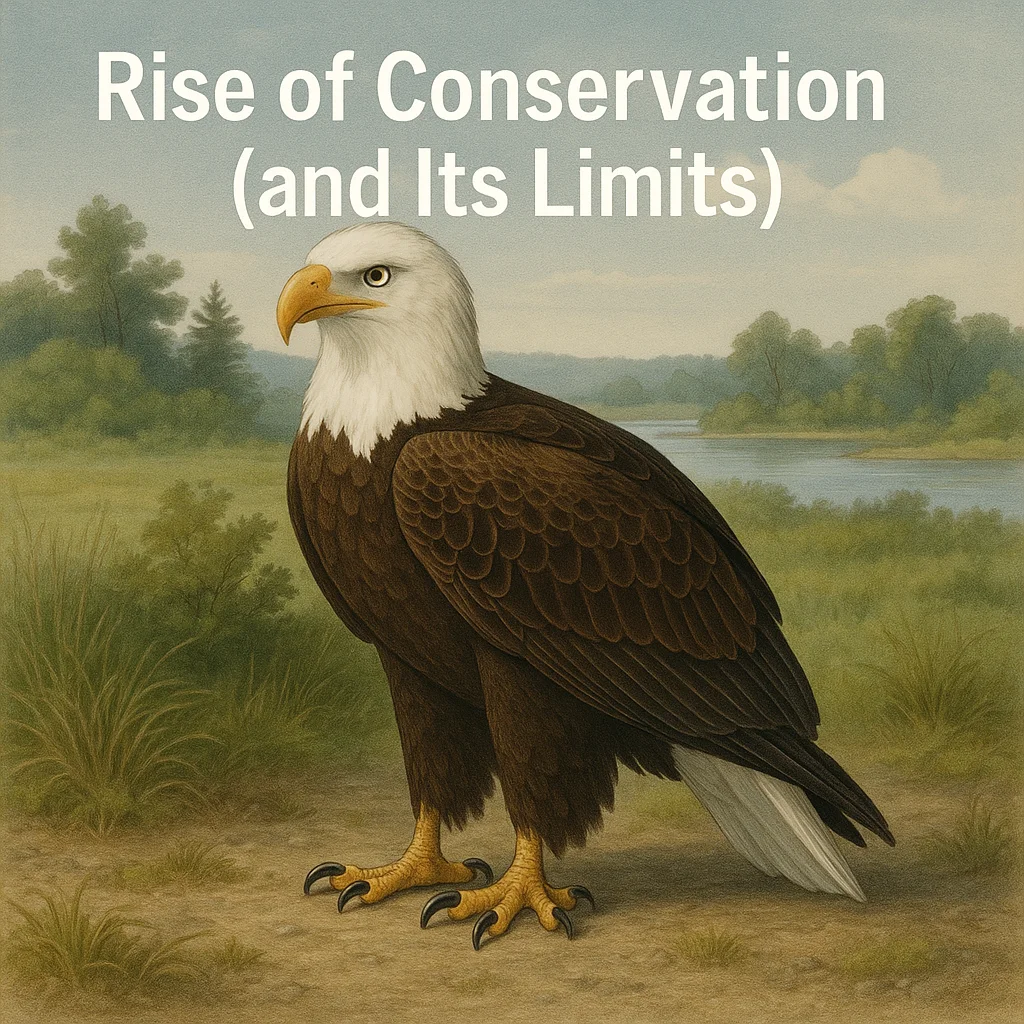
These creatures differed from the ones we know today and often had no direct equivalent. Many were part of intricate ecosystems, contributing significantly to their environments, shaping landscapes, and affecting biodiversity. Their closest living relatives often harbor traces of their extinct ancestors' behaviors and adaptations.
As we explore these enigmatic animals, we uncover their geography, lifestyle, timelines of existence, and the reasons for their ultimate disappearance from the world stage. Through this lens, we can better appreciate the efforts needed for protecting existing wildlife and understand the limitations of conservation efforts.
🧭 Where It Lived
The geographic ranges of these extinct animals varied greatly, from lush rainforests and arid deserts to isolated islands and expansive prairies. These areas were once teeming with life that carried its unique ecological stories.
Many lived in habitats that required specific conditions, such as dense forests, vast grasslands, wet marshes, intricate coral reefs, or the serene waters of flowing rivers. Each environment provided the essential resources for their survival, influencing their diet, behavior, and adaptations.
Species limited to specific islands or localized regions faced added vulnerabilities. Limited range made them more susceptible to changes in their environment, leading to increased risk of extinction due to habitat destruction or climate variability.
🌿 Habitat and Daily Life
The climate and environment were crucial to the daily lives of these animals. Regions with stable climates supported diverse life forms, while areas with drastic seasonal changes imposed challenges for survival and breeding.
Diet varied from species to species, ranging from herbivorous grazers to carnivorous predators. Their foraging practices, hunting strategies, and social behaviors were all interlinked with the environment and available resources.
Reproduction cycles were often synchronized with environmental cues, ensuring optimal conditions for the survival of offspring. The interaction with other species—whether as predators, prey or potential competitors—influenced their survival strategies.
🧬 What Made It Unique
The physical traits of these creatures often stood out in evolutionary history. Unique adaptations like specialized limbs for climbing, vivid coloring for mating displays, or pack hunting strategies highlighted their distinct niches.
The roles they played in ecosystems could be significant. Some were seed dispersers, others reef architects or grazers shaping the landscape. These roles are often irreplaceable in maintaining biological diversity.
Beyond their ecological functions, many animals held cultural significance for humans. They were depicted in art, folklore, and modern media, reflecting their enduring impact on human culture and history.
⏳ When It Disappeared
The disappearance of these animals from the earth often followed a timeline marked by the last confirmed records and sightings. The process of declaring a species extinct involves careful verification through the examination of evidence.
Uncertainty often surrounds the extinction timelines due to missing records, undetected populations in remote habitats, or misidentifications in the field. Terms like "Extinct in the Wild" indicate a species can only be found in captivity.
This declaration is the result of multiple efforts and studies, marking the end of an era and emphasizing the fragile balance of life on earth.
⚠️ Why It Went Extinct
The extinction of species often results from a complex interplay of factors. Habitat loss and fragmentation—where large continuous habitats are broken into smaller, isolated patches—pose significant threats to wildlife.
Overhunting, overfishing, or collection for trade and traditional medicine have historically reduced populations to unsustainable levels. Introduced or invasive species can outcompete, prey on, or bring diseases to native species.
Climate shifts bring about changes in temperature, precipitation, and extreme weather events, which can affect survival and reproduction. Pollution, including chemical wastes and plastic, contaminates habitats and food sources.
Understanding these drivers helps reveal how human actions and natural changes often interact to push species towards extinction.
🧩 How We Know (Evidence and Records)
Understanding extinct species relies heavily on evidence from various sources—fossils, subfossils, museum specimens, field notes, photographs, and sometimes oral histories.
Genetic analysis allows scientists to piece together species' identities and relationships. Verification involves rigorous methods to ensure accuracy, especially with rare or elusive species.
Challenges arise with nocturnal, deep-sea, or island species whose habits make sightings rare. These factors complicate our efforts to study them and understand their historical importance fully.
🛡️ Could It Have Been Saved
Conservation actions such as habitat protection, establishing hunting limits, controlling invasive species, and developing captive-breeding programs might have mitigated the challenges facing these species.
However, often these measures came too late or faced trade-offs between economic development and conservation priorities. In some instances, late attempts were made but lacked the momentum needed for impactful change.
The legacy of these species emphasizes the need for timely and well-coordinated conservation efforts to prevent future losses.
🔁 Are There Any Survivors or Close Relatives Today
Nearby relatives of extinct animals hold the secrets their ancestors took with them. Although changes continue, these relatives carry forward roles and adaptations that once belonged to their extinct kin.
In some cases, "ecological replacements" fulfill similar ecosystem roles, helping maintain ecological balance. When relevant, reintroduction programs work to reestablish populations in their native habitats, though such efforts are complex and ongoing.
Understanding these relationships helps highlight the robustness yet sensitivity of ecological networks.
❓ Common Questions and Misconceptions
Was it hunted to extinction? While hunting contributed to some extinctions, usually more than one factor is involved.
Why didn’t it adapt or move? Many species lack the rapid adaptability or mobility to survive swift environmental changes.
Could it still be alive somewhere? Unlikely, but new discoveries sometimes occur; however, they do not change extinction status without evidence.
What does 'declared extinct' actually mean? It signifies that extensive searches have failed to find any individuals in the wild.
What is the difference between endangered and extinct? Endangered species still exist in smaller numbers and face a high risk of extinction.
Why are island species so vulnerable? Isolated development reduces genetic diversity and adaptive potential, making them vulnerable to change.
How accurate are fossil records? They provide significant insights but have gaps, making some extinction details unclear.
Can museums help save species? They hold invaluable genetic and biological records essential for conservation and study.
Is climate change the only threat? It's significant but acts alongside other factors like habitat loss and human activities.
Did humans cause all extinctions? While humans have played a role, natural factors also contribute significantly.
📌 Summary
- Study the rich history of once-majestic animals now extinct.
- Explore their diverse geographic ranges around the world.
- Understand their reliance on specific habitats.
- Discover unique diets and behavioral patterns.
- Learn about the distinctive adaptations that set them apart.
- Examine timelines marking their disappearance.
- Identify multi-causal drivers leading to their extinction.
- Explore evidence types used to study extinct species.
- Meet their closest living relatives and ecological replacements.
- Understand conservation limitations and possibilities.
- Gain insight into lessons learned for future conservation.
- Recognize the complexity and necessity of conservation efforts.