🏞️ The 1700s: Global Expansion Era
🌍 What It Was
The 1700s marked an era of significant global exploration and expansion, leading to the discovery and eventual disappearance of various unique species. This period, driven by colonial and commercial interests, saw humans reaching new lands and bringing profound changes to ecosystems.
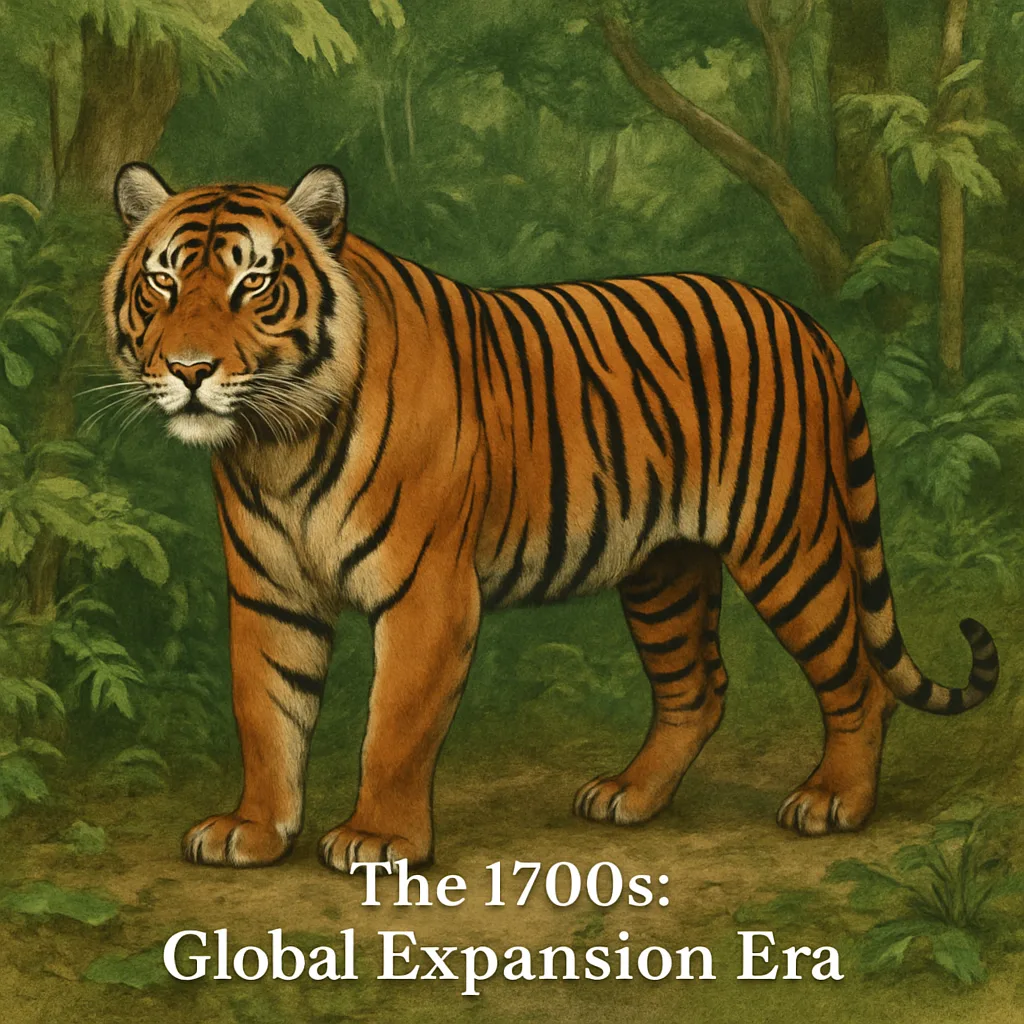
Many of these animals were highly distinctive and had adapted perfectly to their environments. Unfortunately, the arrival of humans and introduced species, alongside other factors, led to their extinction. Throughout this article, you will learn where these animals lived, how they lived, when they disappeared, and why.
The effects of global expansion during this era provide a crucial lens through which to understand the challenges of conservation today. Studying extinct species from this time helps illuminate the complex interplay of ecological, social, and economic factors that fuel extinction events.
🧭 Where It Lived
During the 1700s, many extinct animals were discovered on islands and specific regions that were newly accessed by European explorers. These include the Dodo, found only on the island of Mauritius, and the Tasmanian Tiger, native to Tasmania and other parts of Australia.
These areas often consisted of diverse habitat types such as dense forests, coastal ecosystems, and grasslands. The isolation of islands like Mauritius and Madagascar meant that the species found there had evolved in limited environments, making them more vulnerable to changes.
Island-limited species were especially at risk due to their restricted range and lack of experience with outside predators. When humans settled in these areas, they brought along invasive species that competed for resources and disrupted the balance of the ecosystems.
🌿 Habitat and Daily Life
The climates of these regions varied widely, ranging from the warm, tropical conditions of the Indian Ocean islands to the temperate environments of Tasmania. Such diverse environments supported rich biodiverse ecosystems, home to numerous unique organisms.
The diet of these animals often consisted of native flora and fauna. For example, the Dodo primarily fed on fruits and nuts, while the Tasmanian Tiger, a carnivore, hunted small mammals and birds. Their behaviors included specific patterns of foraging, hunting in packs, or solitary life depending on the species.
Reproduction rates and cycles were varied; some species had breeding seasons dictated by climate and food availability. Offspring care was often crucial, with some species exhibiting nurturing behaviors to ensure the survival of their young, vital in harsh environments.
🧬 What Made It Unique
The animals that disappeared during the 1700s were often defined by unique physical traits and roles within their ecosystems. The Dodo, for example, was a flightless bird with a large body and a disproportionate beak—a result of evolution in a predator-free environment.
Many of these species had developed special senses or abilities, such as acute hearing or distinct vocalizations, to communicate or hunt effectively. They sometimes held ecological roles that supported other parts of their ecosystem, like pollination or seed dispersal.
Culturally, these animals sometimes held significance for indigenous peoples or were mentioned in the journals of explorers and settlers, increasing their prominence in historical records and sparking curiosity about their fate.
⏳ When It Disappeared
The timeline of extinction during the 1700s varied between species. Last confirmed records and sightings often came from the explorers and settlers who documented these creatures. For instance, the Dodo was last reputedly seen in the late 17th century, with extinction declared early in the 18th century.
Extinction declarations rely on thorough searches and failed attempts to find surviving individuals over time. For many species, uncertainty in the dates comes from the lack of consistent records or misidentifications, which were common in newly explored areas.
The concept of "Extinct in the Wild" applies if species remain only in captivity, highlighting the importance of preserving genetic material and sustaining captive populations as we understand more about conservation biology.
⚠️ Why It Went Extinct
Several key drivers led to extinctions during the 1700s. Habitat loss and fragmentation occurred as new lands were cleared for agriculture and settlements, reducing available shelter and food sources for native species.
Overhunting and collection became major issues as European markets and scientific curiosity drove the demand for exotic specimens. Many animals, like the Tasmanian Tiger, were hunted as threats to livestock, leading to rapid population declines.
Introduced species such as rats, cats, and dogs unleashed upon newly explored lands became invasive, preying upon indigenous species or outcompeting them for resources. Disease brought by these newcomers also played a part in diminishing native populations.
Additionally, climate shifts and extreme events, such as cyclones or droughts, stressed already vulnerable species, while pollution from human activities further degraded habitats, making survival difficult for many species.
🧩 How We Know (Evidence and Records)
Our understanding of extinct species from the 1700s comes from a combination of fossil findings, subfossils, museum specimens, explorers’ field notes, and oral histories passed down through generations.
Identifying the bones or remnants of extinct species is an exacting scientific process involving genetics and morphological analysis to verify identity and ascertain timelines. This process helps establish the historical range and lifestyle of these species.
Some species remain elusive due to their habits or habitats, such as being nocturnal, inhabiting deep sea regions, or living on remote islands, where both visibility and accessibility are challenging for researchers.
🛡️ Could It Have Been Saved
Realistic conservation actions that might have prevented extinctions at the time include establishing protected habitats to prevent habitat destruction and enforcing hunting limits to curb overexploitation.
Controlling introduced species would have been a crucial step in easing competitive pressures on native species. Captive breeding programs, although less understood then, might have helped sustain genetic diversity and preserved species until reintroduction became possible.
Unfortunately, awareness and understanding of ecological consequences often came too late, and lack of coordinated conservation efforts resulted in missed opportunities to save these unique species for the future.
🔁 Are There Any Survivors or Close Relatives Today
The closest living relatives of these extinct species provide insight into their lost counterparts. Pigeons are considered the closest relatives to the Dodo, sharing similar feeding and nesting habits despite their evolutionary differences.
In some ecosystems, other species have stepped into roles once held by now-extinct animals, acting as ecological replacements. This highlights the resilience and adaptability of nature in maintaining balance.
Reintroduction efforts for similar species today focus on genetic diversity and habitat restoration, underscoring the importance of preserving environments to support future biodiversity and ecological stability.
❓ Common Questions and Misconceptions
Was it hunted to extinction? Some species were directly hunted to extinction, while others suffered more from habitat destruction and invasive species.
Why didn’t it adapt or move? Rapid environmental changes and their specific adaptations often prevented effective migration or adaptation.
Could it still be alive somewhere? While possible in remote locations, systematic searches and evidence usually lead to confident extinction declarations.
What does "declared extinct" actually mean? It means that exhaustive searches have failed to find any individuals in the wild for a significant time.
What is the difference between endangered and extinct? Endangered species still exist but are at high risk of extinction without intervention.
Why are island species so vulnerable? Their limited ranges and isolated evolution leave them ill-prepared for external threats.
📌 Summary
- The 1700s was a time of discovery and extinction.
- Extinct animals lived on newly explored islands and regions.
- Habitats included forests, grasslands, and coastal ecosystems.
- Diet and behavior varied; some hunted actively, others foraged.
- Unique adaptations included flightlessness and specific dietary needs.
- Many species were last seen in the late 1600s to early 1700s.
- Main extinction drivers were habitat loss, hunting, and invasive species.
- Evidence includes fossils, field notes, and genetic analysis.
- Closest living relatives aid understanding of extinct species.
- Conservation lessons emphasize early intervention and habitat protection.
- A key takeaway: prevention is crucial as reintroduction is rare.