🏞️ Early Modern Extinctions: Why They Began
🌍 What It Was
Early modern extinctions involve the disappearance of various animal species, particularly during the period from the late 1500s to the early 1900s. These animals came from diverse habitats and ecological roles, each possessing unique features that made them stand out. Despite their differences, they all faced similar challenges that led to their extinction.
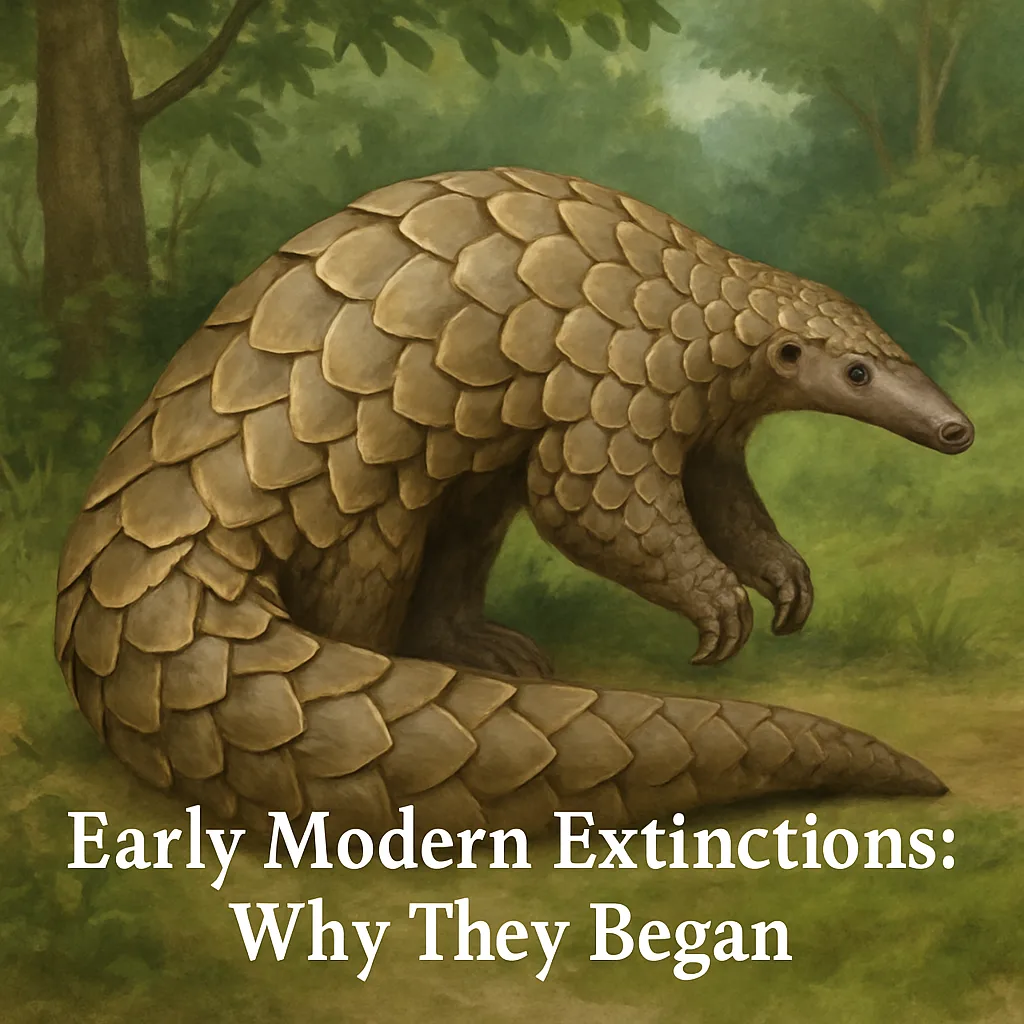
Among the most striking of these extinct animals were various species of flightless birds, large mammals, and reptiles. Notable examples include the Dodo, a flightless bird from Mauritius, and the Quagga, a subspecies of the plains zebra. These animals shared ecosystems with other creatures, contributing to biodiversity through their roles as grazers, predators, or seed dispersers.
This article will explore where these extinct animals lived, their daily lives, the unique characteristics that set them apart, and the factors that contributed to their extinction. By understanding these aspects, readers can better comprehend the complex processes of extinction that marked the early modern period.
🧭 Where It Lived
Many animals that became extinct during the early modern era inhabited isolated regions and islands, increasing their vulnerability to external pressures. Notable among these were the Dodo, native to the island of Mauritius in the Indian Ocean, and the Great Auk, indigenous to the North Atlantic.
These islands provided unique ecological niches with distinct habitats. Islands like Mauritius offered forests and coastal regions that supported various flora and fauna adapted to these environments. Unfortunately, such isolation also meant that these animals had less capacity to adapt to sudden changes, such as the introduction of invasive species or human activities.
On the mainland, animals like the Quagga roamed the grasslands of Southern Africa. These regions supported a wide range of wildlife and provided resources essential for the survival of these animals. However, as human populations expanded, these habitats often faced significant alterations.
🌿 Habitat and Daily Life
The climates of these regions varied greatly. Mauritius, with its tropical climate, provided warm temperatures and seasonal rainfall, nurturing lush forests. In contrast, the grasslands of Southern Africa experienced a continental climate, with dry and wet seasons influencing the availability of resources.
Animals like the Dodo relied on scavenging and foraging within their forest environments, while the Great Auk swam adeptly in cold waters to catch fish. The Quagga, as a grazer, roamed in herds across vast grasslands, maintaining the ecosystem by controlling vegetation growth.
Reproductive strategies also varied. The Dodo, for example, laid a single egg and cared for it meticulously, whereas herd animals like the Quagga exhibited more communal care for their young. These reproductive traits influenced the survival odds as ecological pressures intensified.
🧬 What Made It Unique
Each extinct animal species possessed unique adaptations shaped by their environments. The Dodo, with its robust, flightless body and large hooked beak, adapted to a ground-based lifestyle in Mauritius. It utilized its beak to access a variety of foods, from fruits to seeds.
The Great Auk, resembling a larger penguin, had streamlined bodies for efficient swimming, allowing it to pursue fish in cold ocean waters. Its powerful wings, adapted for diving rather than flight, made it a remarkable hunter in its niche.
In terms of cultural significance, these animals often captured human imagination. The Dodo, for instance, became famous through art and literature, symbolizing the fragility of life on isolated islands. Its odd appearance and unique traits were a subject of fascination, even leading to its status as a symbol of extinction.
⏳ When It Disappeared
The timeline of extinction for these animals often began with initial human contact, followed by rapid population declines. The Dodo was last seen in the late 1600s, merely a few decades after humans arrived on Mauritius. The Great Auk disappeared from breeding sites in the mid-1800s, with the last known colony located off Iceland.
Extinction declarations pose a challenge due to sparse records and occasional unverified sightings. The term "Extinct in the Wild" implies the species survives only in captivity, contrasting with total extinction where no living members remain.
Determining extinction often involves reviewing historical accounts, trade records, and even folklore. Thus, the understanding of when these animals disappeared remains an evolving field as new evidence occasionally emerges.
⚠️ Why It Went Extinct
The drivers behind early modern extinctions were numerous and interconnected. Habitat loss through deforestation and land conversion often played a central role, as human settlers transformed landscapes for agriculture and development.
Overhunting also significantly impacted these species. For example, the Great Auk was targeted for its feathers and meat, leading to widespread declines. Similarly, the Dodo fell victim to hunting pressures and the introduction of invasive species, such as rats and pigs, which preyed on eggs and young birds.
Climate shifts and extreme weather events occasionally compounded these pressures, influencing food availability and habitat conditions. Pollution was less of a concern during this period but still occasionally contributed to ecological stress.
🧩 How We Know (Evidence and Records)
Researchers rely on a variety of evidence to understand early modern extinctions. Fossils and subfossils, along with museum specimens, provide tangible proof of these animals' existence and characteristics.
Historical records, including field notes and explorers' journals, complement physical evidence, offering insights into the animal's appearance, behavior, and habitat. Oral histories and indigenous accounts sometimes provide additional perspectives, though they require careful interpretation due to potential biases or inaccuracies.
Verification of species identity and extinction dates involves meticulous examination of this evidence, often corroborated by genetics when feasible. However, verifying the status of rare or cryptic species remains a complex task, subject to ongoing scientific inquiry.
🛡️ Could It Have Been Saved
In hindsight, several conservation measures might have altered the fate of these species. Protecting critical habitats could have provided a refuge from human encroachment and invasive species. Implementing hunting limits might have alleviated pressures from commercial exploitation.
For island species, biosecurity measures to prevent the introduction of invasive species could have preserved native populations. Captive breeding programs, although rare at the time, potentially could have maintained some genetic diversity for future restoration.
Unfortunately, awareness and commitment to conservation were often lacking, and in many cases, conservation science was in its infancy. Thus, intervention typically occurred too late to reverse population declines.
🔁 Are There Any Survivors or Close Relatives Today
While the extinct animals themselves are gone, many have close living relatives that provide insight into their ecology and behavior. The pigeon family, for example, includes several related species to the Dodo. These birds share similar traits, such as body shape and feeding habits.
Ecological replacements also arise in some cases. For example, in ecosystems where grazing animals like the Quagga lived, other ungulates may now fulfill similar ecological roles, maintaining balance within the plant community.
Reintroduction projects are occasionally considered for extinct species that have close genetic relatives. Efforts to revive the Quagga through selective breeding programs using Zebra genetics illustrate the potential and complexities of such initiatives.
❓ Common Questions and Misconceptions
- Was it hunted to extinction? Overhunting played a role, but extinctions were often multifactorial.
- Why didn’t it adapt or move? Many extinct species lacked adaptive capacity due to isolation or specialization.
- Could it still be alive somewhere? While unlikely, some reported sightings ignite hopes and debate.
- What does 'declared extinct' actually mean? It signifies no known living individuals exist, despite extensive searches.
- What is the difference between endangered and extinct? Endangered species risk extinction; extinct species have no surviving members.
- Why are island species so vulnerable? Limited resources and isolation heighten vulnerability to new threats.
📌 Summary
- Topic: Early modern extinctions of animals.
- Locations: Islands and isolated regions.
- Habitats: Forests, grasslands, coastal areas.
- Diet/Behavior: Varied diets and ecological roles.
- Unique Adaptations: Flightlessness, specialized hunting.
- Extinction Period: Late 1500s to early 1900s.
- Main Drivers: Habitat loss, overhunting, invasive species.
- Evidence: Fossils, records, and oral histories.
- Relatives: Some have close living relatives.
- Conservation Lesson: Importance of early intervention.
- Takeaway: Extinction highlights ecosystem fragility.